

Blog
Ceramic vs Porcelain Tea Cups: What’s Actually Different?

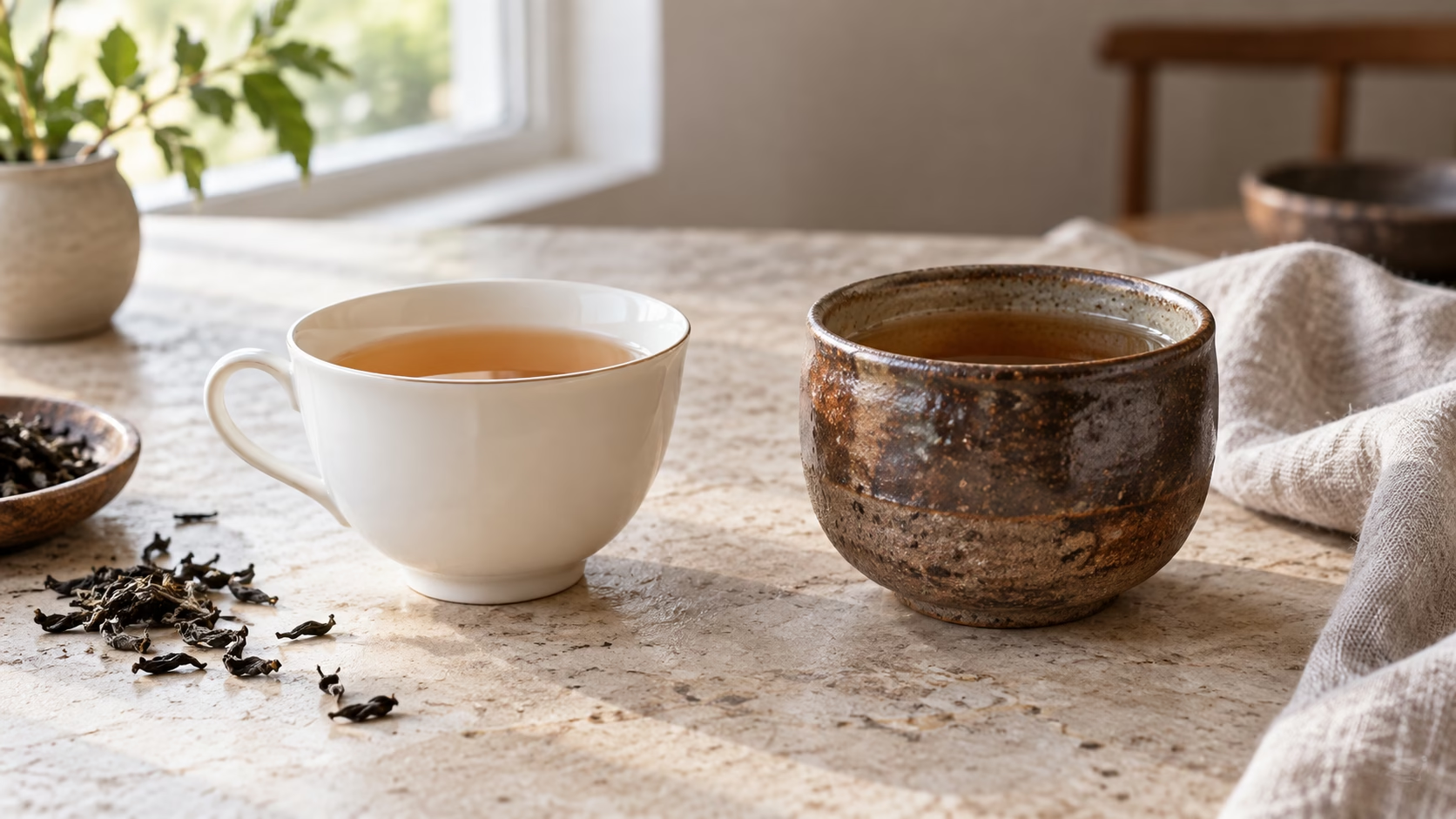
A store shelf can make three familiar labels look like three competing materials: ceramic, stoneware, porcelain. Then you turn over a cup, compare the prices, and wonder whether the more expensive one will actually make afternoon tea better.
Here is the useful correction: porcelain is ceramic. Stoneware is ceramic too. Ceramic is the family name, not the alternative to porcelain. When retailers compare ceramic vs porcelain cups, they often mean a stoneware or other non-porcelain cup versus a porcelain one.
Start with the parts you will notice every day: the edge against your lips, the amount of tea the cup holds, and whether you can lift it comfortably when full. None of those details is settled by a material name.
The interest in crafted drinkware has a timely example. In a September 1, 2026 announcement, Seattle-based MiiR said its first ceramics collection, featuring three handcrafted mugs, would launch September 29. That is one brand expanding its range, not evidence that Americans have collectively changed their cupboards. It does give shoppers another reason to understand what ceramic labels actually tell them.
First, Ceramic Is the Family Name
For everyday pottery and tableware, three familiar ceramic families are earthenware, stoneware, and porcelain. They describe different kinds of fired clay body. The body is the material forming the cup beneath any glaze or decoration.
Ceramic Arts Network’s pottery glossary describes porcelain as a high-fired, vitreous body made with ingredients including kaolin, silica, and fluxes. In plain language, firing develops a dense body with a glassy phase; the cup does not become a drinking glass. Porcelain is commonly white or eggshell-colored, and some formulations become translucent in thin sections.
Stoneware is another high-fired ceramic family. Its formulation and firing determine how densely it matures and how much water the body can absorb. Those are manufacturing questions, not properties you can measure from a product photograph. A seller’s word “ceramic” leaves the specific body unidentified.
Earthenware generally matures at lower temperatures and remains more porous than mature stoneware or porcelain. Functional pieces are frequently glazed. It can make useful tableware, but its care requirements deserve attention. You do not need firing charts to shop; you need a clear material description and instructions for the finished piece.
What Stoneware and Porcelain Usually Feel Like
Many stoneware cups have substantial walls, opaque bodies, and surfaces that invite a closer look. You might see a speckled clay edge, a glossy pool of glaze, or subtle throwing lines. These features can be appealing if you enjoy noticing the object while you drink.
There is plenty of stoneware that looks nothing like a chunky brown mug. Makers also work with pale bodies, smooth finishes, and relatively thin walls. Extra weight tells you there is more cup to lift; it does not prove better clay.
Porcelain gives makers the possibility of fine walls, precise profiles, and light-colored bodies. In a thin cup, that can translate into a lighter-feeling object and a less prominent rim. A bright white interior is also helpful when you want to see the tea’s color clearly.
Consider the thick porcelain mug at a diner or a hand-thrown porcelain cup with a colored glaze. Neither belongs exclusively to a formal tea service. Stoneware also turns up on carefully set restaurant tables. Form and finish establish the mood.
When shopping online, compare dimensions and empty weight if the seller provides them. Two equally large-looking photographs may show very different capacities. If weight is important to your hands, ask rather than trying to estimate it from the glaze.
The Rim May Matter More Than the Label
The rim is where you meet the cup. A fine edge feels different from a broad rounded lip, even when both cups are made from porcelain. A slightly flared opening can feel different again from a straight-sided vessel.
Pay attention to the thickness where you sip, the smoothness of the finish, and how far you have to tilt the cup. These affect the physical act of drinking. They are not proof that one material reveals more flavor.
Our guide to choosing a tea cup for loose leaf tea looks more closely at shape and serving habits. The short version for this comparison: a comfortable small stoneware cup may suit you better than an awkward porcelain one, and the reverse is just as plausible.
Think about the full cup, too. A 14-ounce mug adds the weight of the drink to the weight of the ceramic. Check whether the handle gives your fingers enough clearance and whether the base sits securely. For smaller handleless cups, consider where your fingers rest without needing to grip a hot wall tightly.
Which One Keeps Tea Hot Longer?
You cannot reliably answer this from “stoneware” or “porcelain” alone. Cup mass, wall thickness, shape, opening size, starting temperature, the amount of tea, and whether there is a lid all influence cooling.
A cold, heavy cup initially takes heat from the tea poured into it. The same cup starts differently when it has been warmed first. A wide opening exposes more liquid to the air than a narrower opening of comparable serving volume. These details make blanket material rankings unhelpful.
Prewarming with warm water, following the maker’s temperature guidance, is a practical thing to try before buying another cup. Empty that water before pouring the tea. Avoid abrupt temperature changes, especially with a chilled or damaged vessel.
If you routinely leave tea beside a laptop for half an hour, consider serving size and a suitable lid rather than assuming a heavier stoneware mug will solve the problem. If you drink small pours promptly, prolonged heat retention may not be a buying priority at all. Tea that stays uncomfortably hot is not necessarily an improvement.
Does Porcelain Make Tea Taste Better?
Not inherently. A properly made, food-safe glazed drinking surface is intended to hold the beverage, not contribute its own flavor. There is no sound reason to promise that the word “porcelain” on a box will improve your tea.
You may prefer how a particular cup presents the drink. A white interior makes the liquor easier to see; an opening changes how you approach its aroma; a rim changes how the liquid reaches your mouth. Temperature, clean surfaces, and the tea you brewed also matter. Those observations do not establish a universal stoneware-versus-porcelain taste hierarchy.
You can enjoy black tea from thin porcelain and green tea from glazed stoneware. Choosing a favorite is reasonable. Claiming that either body removes bitterness or chemically enhances flavor requires evidence that a pleasing drinking session cannot supply.
Durability: Look at the Whole Cup
Thin-looking porcelain is not automatically fragile, and thick stoneware is not drop-proof. Clay formulation, firing maturity, wall shape, rim design, and manufacturing quality all contribute to the finished cup’s performance.
Glaze fit matters as well. The glaze and body need compatible expansion and contraction as temperatures change. Ceramic Arts Network explains how glaze fit affects strength; a sturdy appearance cannot tell you whether that technical work was done well.
For household use, inspect the places likely to take a knock: the lip, handle, and base. Either ceramic family can chip against a sink or another cup. Stacking pieces that were not designed to stack can put pressure on their rims. A purchase decision based on the word “durable” should still leave room for ordinary careful handling.
Handmade and Reactive Glaze Are Different Questions
Handmade describes a process. It does not guarantee balance, comfort, proper firing, or food safety. A handmade cup should still sit steadily, have a usable drinking edge, and be finished appropriately for its intended use.
A slightly varied silhouette or glaze pattern may be exactly why you choose it. A sharp lip, unstable foot, or poorly attached handle is a functional problem, not a charming irregularity. Ask whether photographs show the actual piece or a representative example, particularly when variation is part of the appeal.
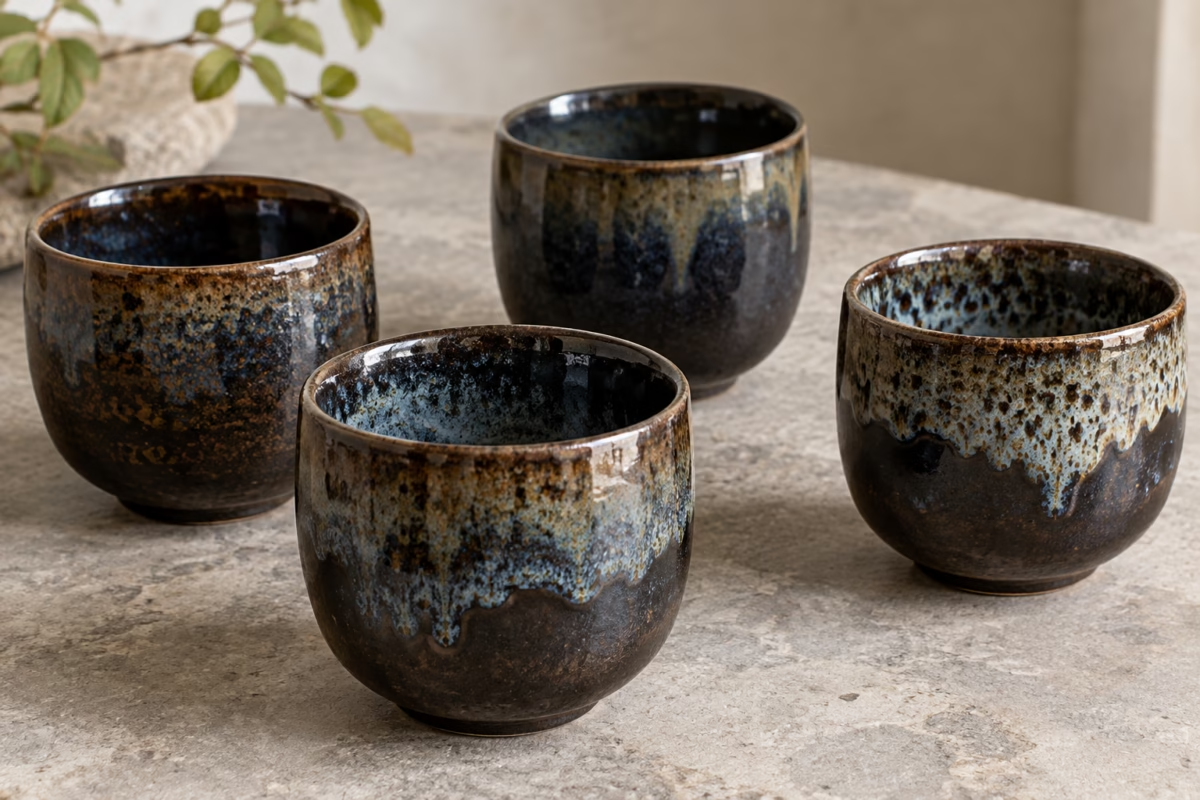
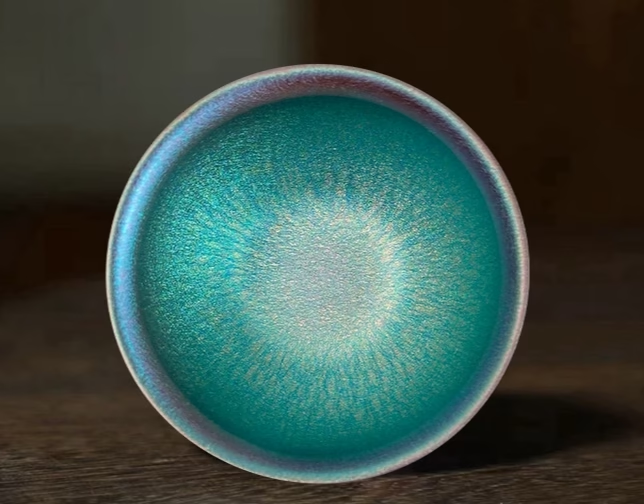
“Reactive glaze” describes a surface effect, not a separate ceramic body. Porcelain and stoneware can both be glazed. A dramatic mottled finish does not establish which clay lies underneath, and a plain white surface does not prove porcelain.
For a collected table, you can mix materials intentionally. Similar cup heights or a repeated color can make different pieces comfortable together without demanding an identical set. Our fall hosting ideas explore that approach. When guests will actually use the cups, capacity and handling deserve as much attention as the photograph.
Food Safety Is Not a Material Competition
Porcelain is not automatically safe simply because it is porcelain. Handmade stoneware is not automatically unsafe. Proper manufacture and suitability for food use are the important questions.
The FDA explains that lead in some ceramic glazes or decorations can leach into food and drinks when pottery is improperly manufactured. The agency also maintains guidance on extractable cadmium in ceramicware. Neither statement makes glaze color or national origin a reliable safety test.
Buy from a maker or retailer who clearly identifies the piece as drinking ware and can answer questions about its food-contact suitability. Check documentation and any warnings, particularly for vintage, decorative, or damaged pieces. Do not use a vessel marked for decoration only to serve tea. Appearance and the word “handmade” cannot replace reliable product information.
Check the Dishwasher and Microwave Instructions
Do not infer appliance compatibility from the ceramic family. Glazes, metallic decoration, construction, and the manufacturer’s instructions can change what is appropriate for a specific cup.
If reheating tea is part of your day, look for an explicit microwave-safe statement before buying. If everything in your kitchen goes into the dishwasher, a hand-wash-only cup creates a new chore. That might be acceptable for a piece you love, but it should be a conscious trade-off.
Keep care information when you buy. A reassuring answer about another mug from the same brand does not necessarily apply to a different glaze or decorated finish.
Where Jianzhan Fits
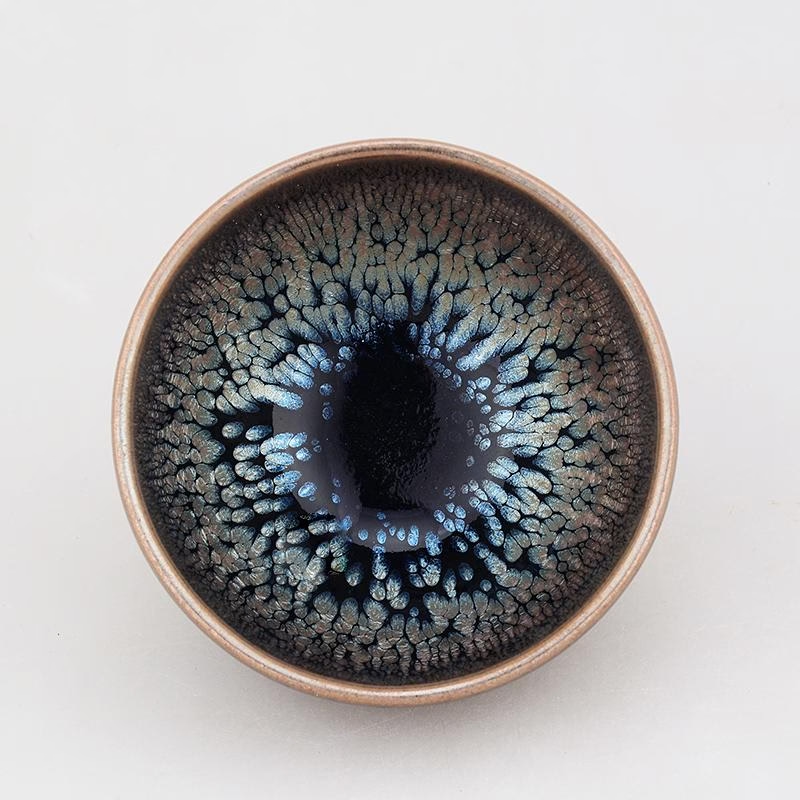
Jianzhan belongs in this ceramic discussion, not outside it as a mysterious fourth material. Historical Jian ware is associated with Jianyang in Fujian, China. The British Museum catalogues bowl PDF.301 as Jian stoneware, with a dark iron-spotted glaze.
Its appeal lies in the ceramic tradition, form, glaze, and individuality of particular pieces. Dark iron-rich glaze effects and variation produced in firing can reward looking closely. Our introduction to what a Jianzhan tea cup is provides the wider background without turning every cup purchase into a history lesson.
A smaller contemporary Jianzhan cup may suit someone who enjoys modest pours of loose leaf tea and tactile handmade ceramics. It should not be presented as inherently better tasting, healthier, or technically superior to porcelain. Check each modern piece’s actual dimensions, manufacture, and care details rather than borrowing specifications from a museum object.
If what you want is a bright white interior and a fine, light lip, choose a porcelain cup designed that way. If you want a 16-ounce handled vessel for milk tea and repeated reheating, a conventional mug with suitable care instructions is likely more useful than a small Jianzhan cup.
So Which Should You Buy for Tea?
For a large cup at your desk
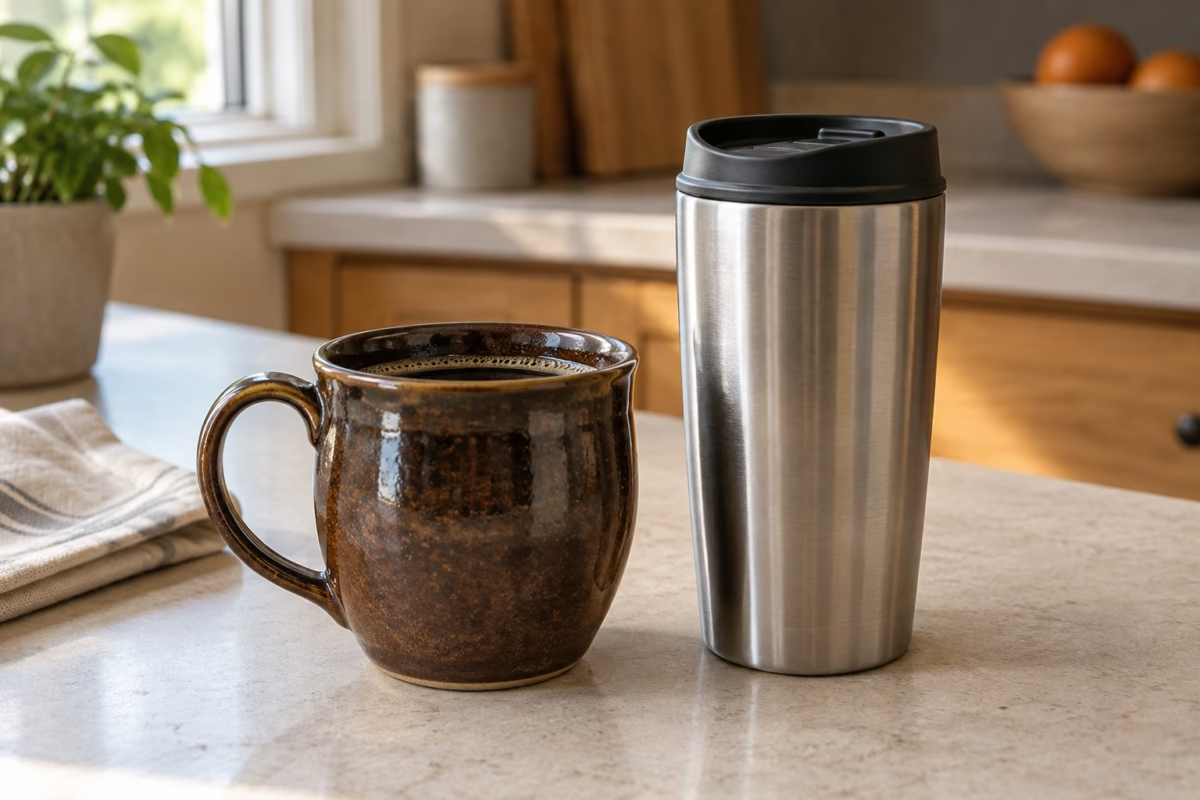
Start with capacity, handle clearance, and filled weight. A 12-to-16-ounce mug can work for Earl Grey, breakfast tea, herbal infusions, or coffee. Check that your infuser fits if you use one. Either porcelain or stoneware can serve this routine; an inconvenient handle will bother you more often than a technical difference you cannot identify.
For smaller, deliberate servings
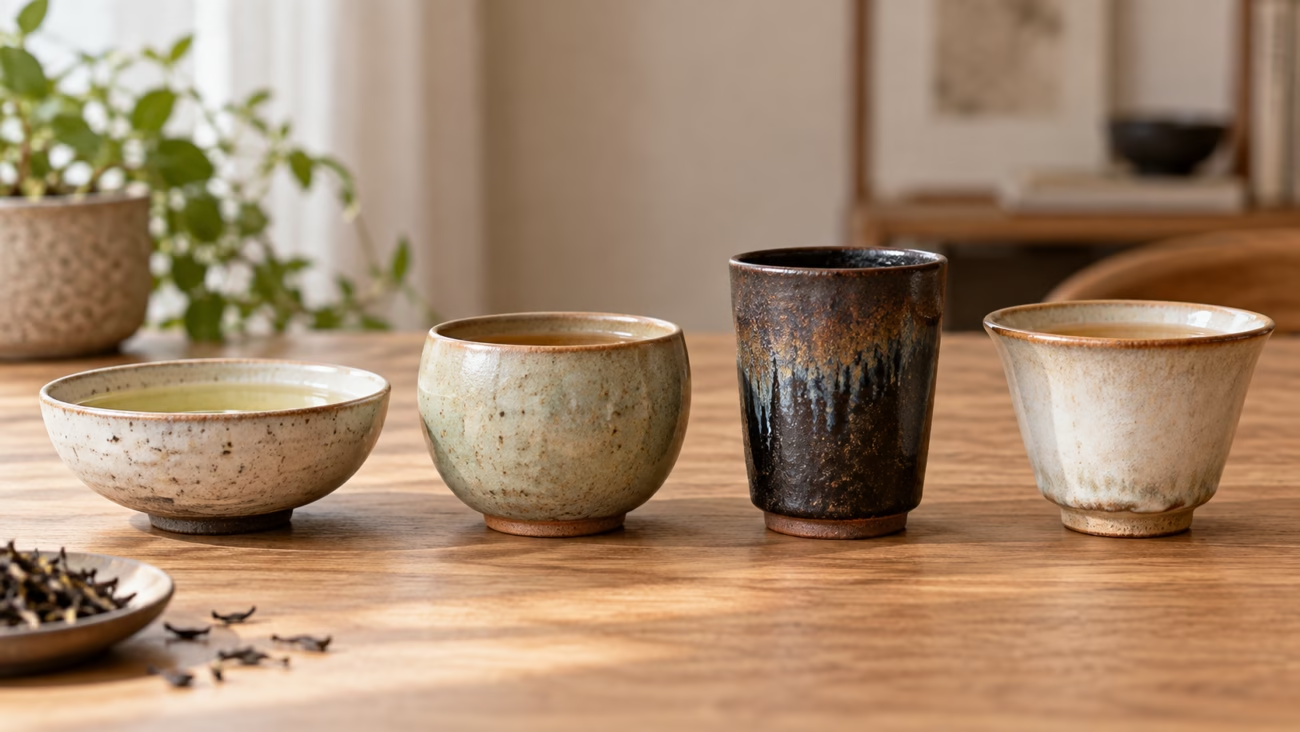
Look at rim comfort and the amount you actually pour. Porcelain is a useful starting point for a fine feel, visible tea color, and matching pieces. Stoneware offers plenty of options for tactile surfaces and glaze variation. Look at the actual design: these preferences are not exclusive to either family.
For whisking matcha
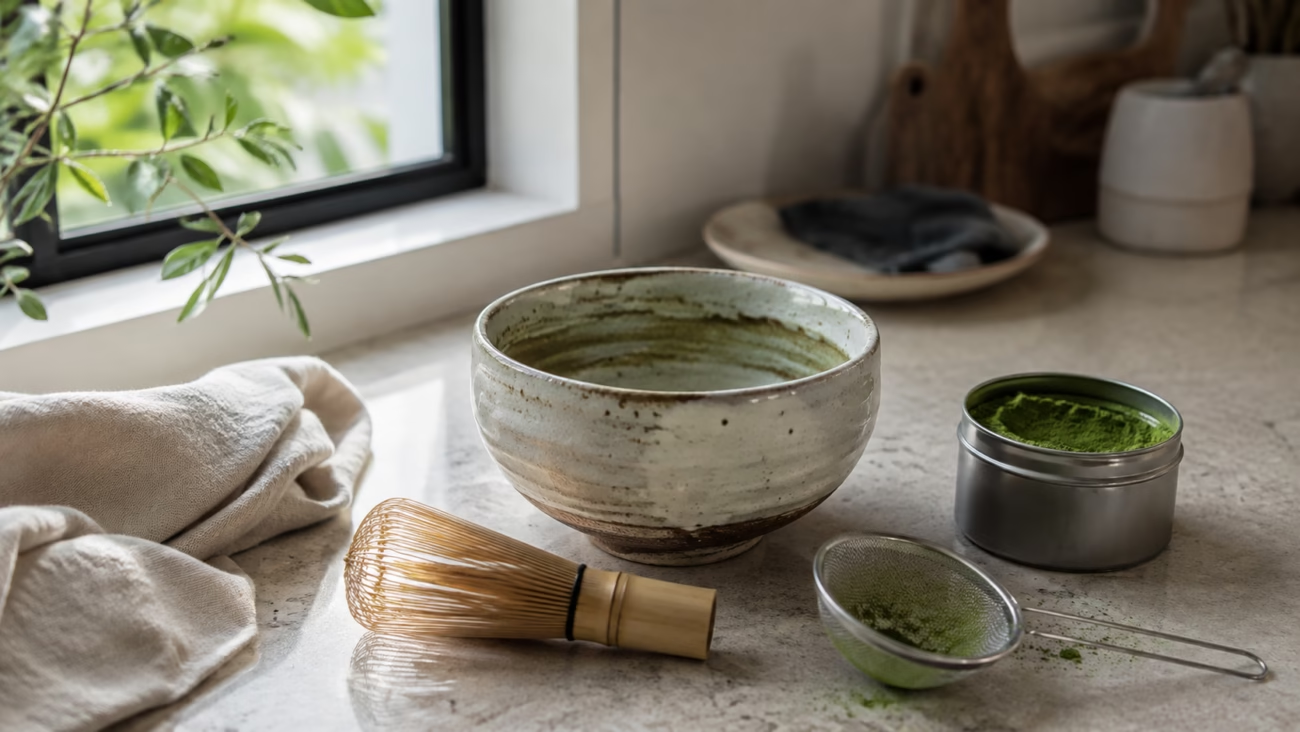
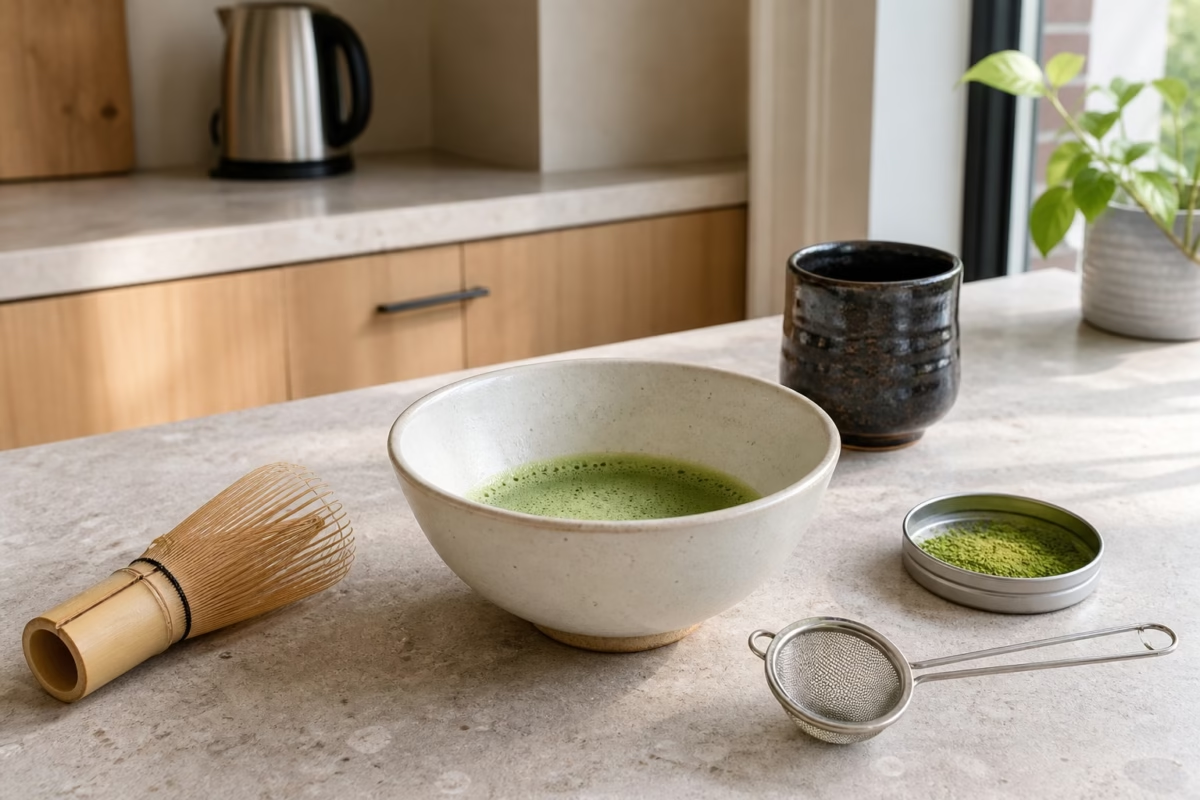
Opening width and room for the whisk come before material comparisons. A small drinking cup does not automatically become a workable preparation bowl. See Do You Need a Matcha Bowl? before purchasing a vessel for that job.
For a handmade cup you plan to keep
Ask for the body type, usable capacity, dimensions, care instructions, and clarity about variation. Decide whether you want an individual piece or a repeatable set. If smaller expressive cups fit your routine, the AEROVYNX tea cups collection is one place to continue looking; assess each listing on its documented details.
Before checkout, picture the cup beside your usual kettle. Will it hold your normal pour with room to spare? Can you lift it comfortably? Will you actually follow its care instructions? If the answers are clear, you have learned more about the purchase than a material ranking could tell you.





One thought on “Ceramic vs Porcelain Tea Cups: What’s Actually Different?”