
Blog
What Is a Jianzhan Tea Cup? A Modern Guide

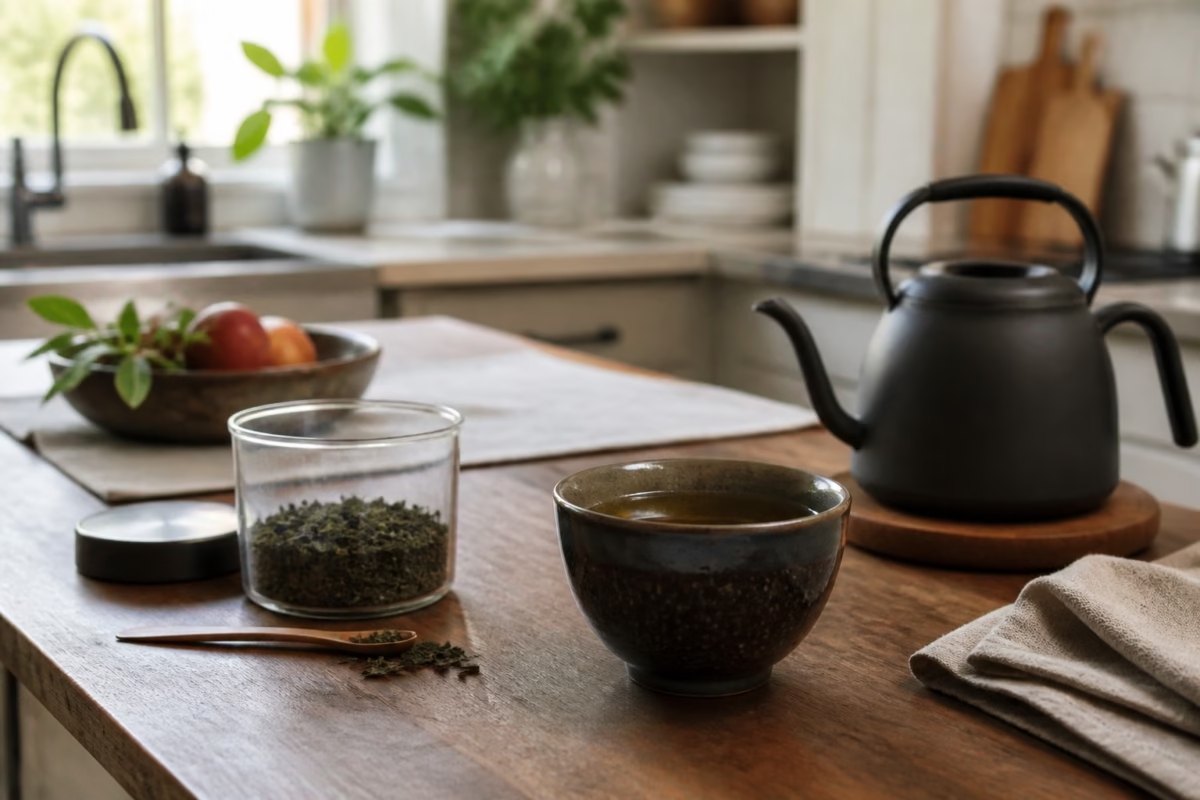
Recent U.S. design coverage has given more attention to tactile surfaces, natural materials and objects that show the maker’s hand: uneven glaze, warm wood grain, a hand-finished edge. Some tea drinkers notice a comparable shift once they begin paying attention to leaf origin, water and preparation. The cup is no longer background.
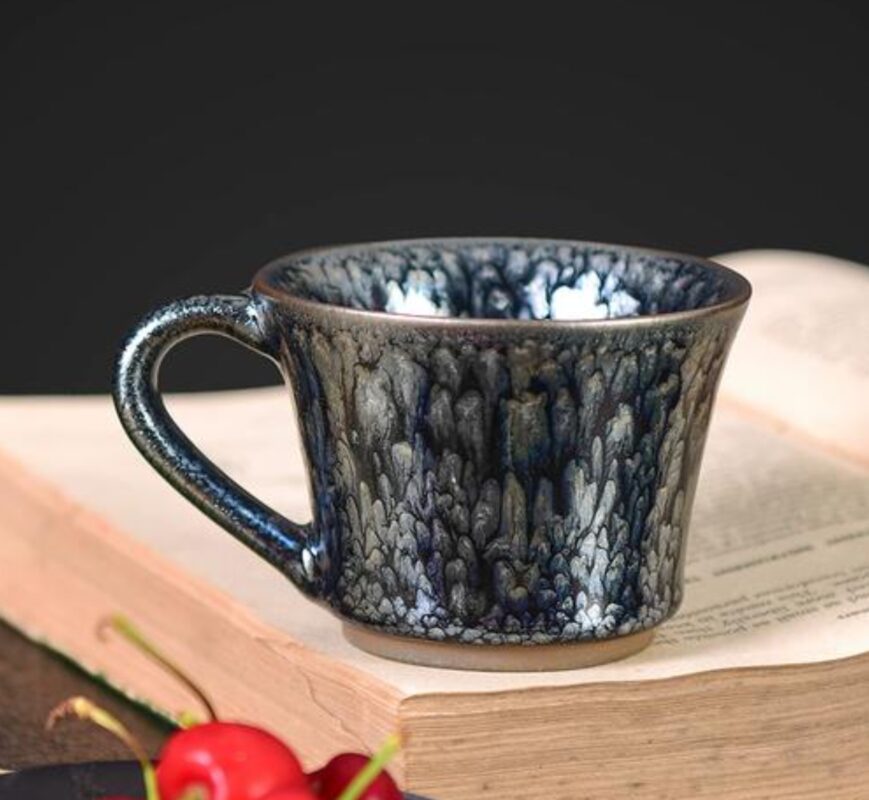
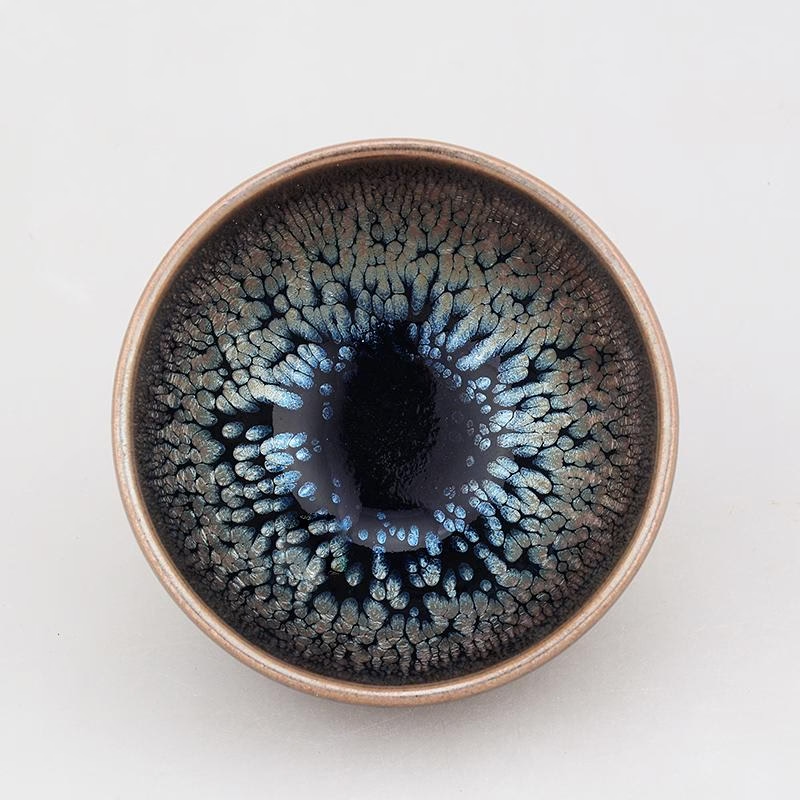
The short answer to “what is a Jianzhan tea cup?” is this: it is a dark-glazed stoneware cup or bowl rooted in the Jian ware tradition of Jianyang, Fujian, China. In historically grounded examples, an iron-rich body and iron-bearing glaze react during high-temperature firing; characteristic streaks, spots and pooling develop within the glaze rather than being painted onto the finished surface.
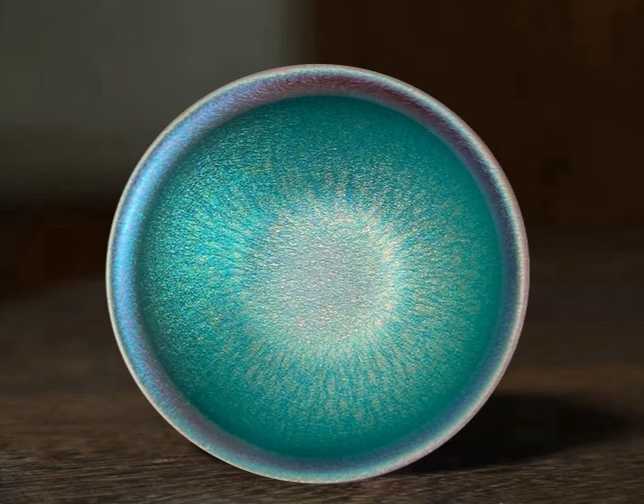
From across a room, many Jianzhan cups read as nearly black. Move one into daylight and the glaze may break into streaks, spots and pooled color. The useful question is how the kiln produced them.
What Exactly Is a Jianzhan Tea Cup?
English-language museum catalogues usually classify historical objects as Jian ware, the broader name for ceramics associated with the Jian kilns in present-day Jianyang, Fujian. Jianzhan commonly refers to Jian tea bowls and, today, cups made in that tradition. English-language sellers may call the same general form a tea cup, tea bowl or drinking bowl, depending on its dimensions and intended use.
The tradition became especially important during the Song dynasty, when dark Jian tea bowls were valued for preparing and serving powdered tea. A surviving 11th- to 12th-century Jian bowl at The Metropolitan Museum of Art is identified as stoneware with a hare’s-fur glaze and was used for tea whisked into a white foam.
Contemporary Jianzhan varies in shape, glaze and production method. A modern listing should document its own origin and process rather than borrowing every fact from a Song-dynasty bowl.
History gives the tradition context; the modern cup in front of you still has to earn its value through workmanship, documentation and accurate representation.
Why Does Jianzhan Look So Different?
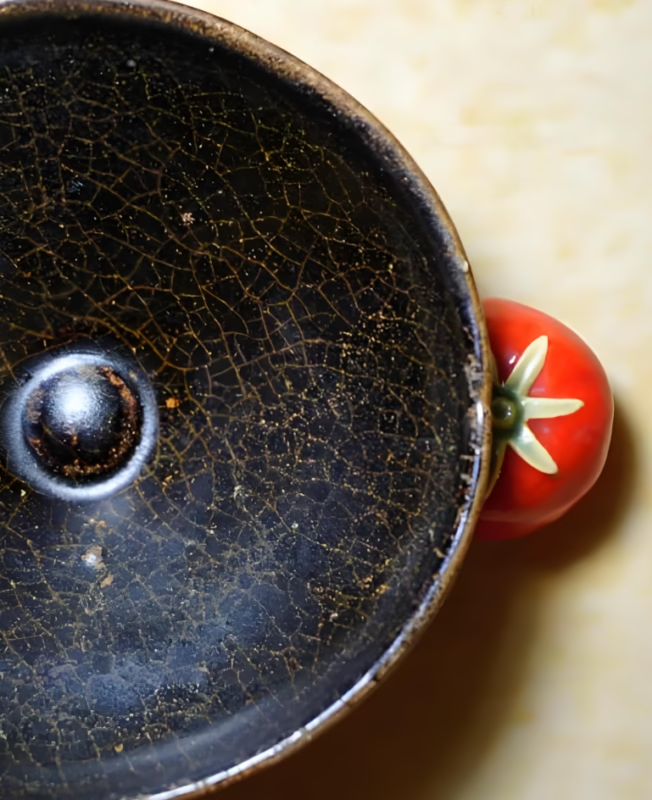
Start with the body. Historical Jian bowls often reveal an iron-rich stoneware body ranging from dark reddish brown to nearly black where the lower wall or foot remains unglazed.
During firing, the glaze melts and moves. A materials study of historical Jian sherds found that iron was redistributed toward the glaze surface and that iron-oxide crystals formed during cooling; firing temperature, atmosphere and cooling conditions affected the result. A modern look-alike glaze should not be assumed to reproduce that exact chemistry without documentation.
Two historically recognized effects help explain what buyers see.
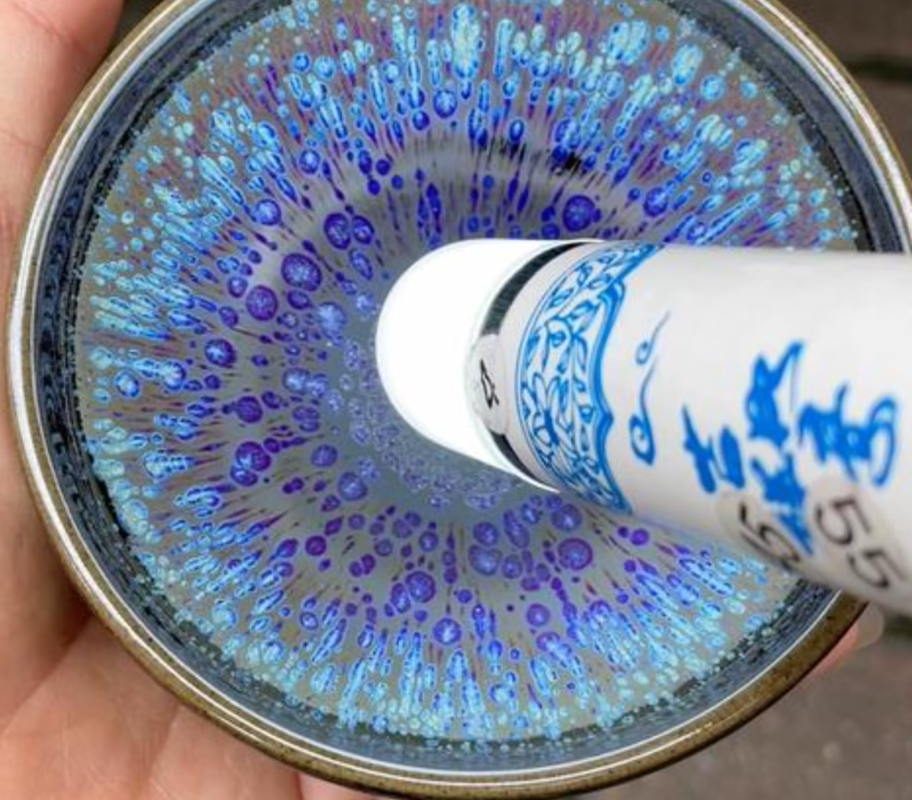
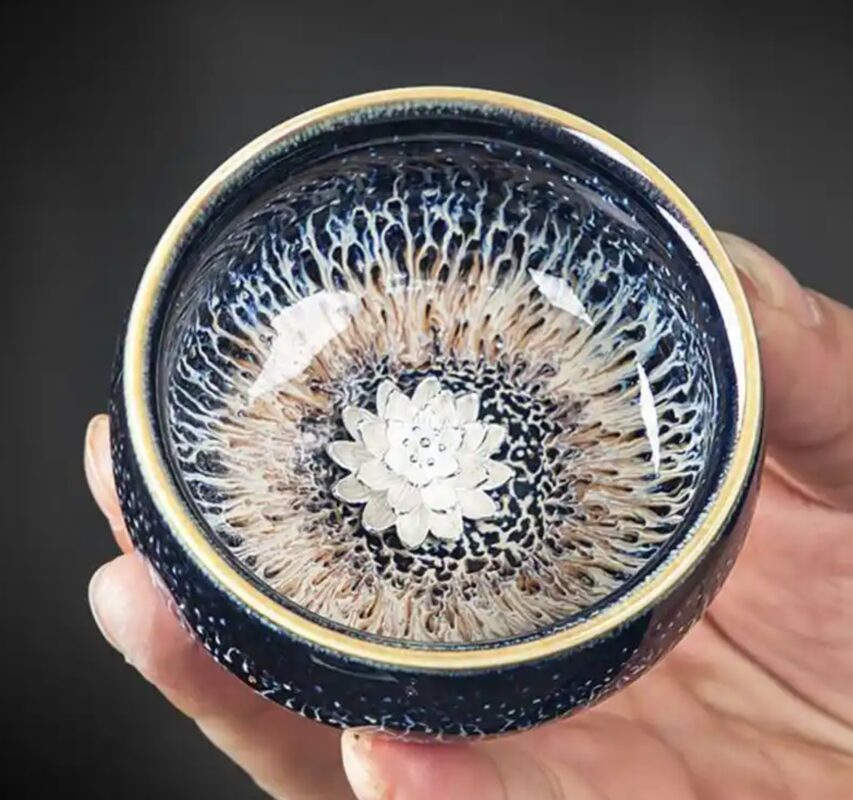
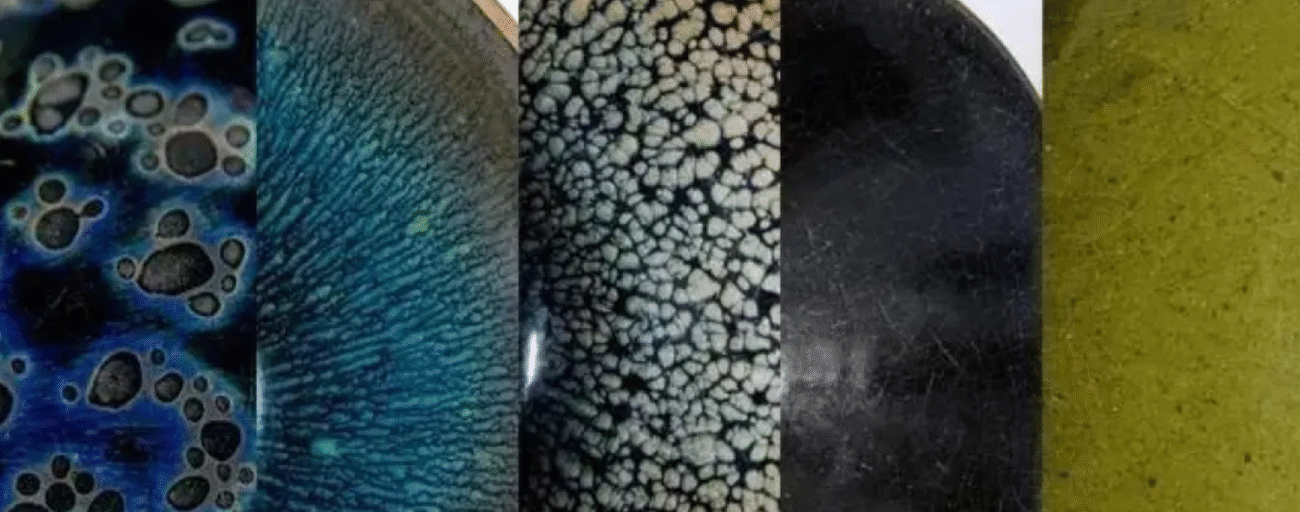
On historical Jian ware, hare’s-fur refers to fine radial streaks, often rust brown or grayish-brown, across a dark glaze. Oil-spot describes round or oval metallic-looking markings, often silvery or coppery. A Song-dynasty oil-spot bowl in the Smithsonian’s National Museum of Asian Art also shows a thick dark glaze flowing and pooling above an exposed dark reddish-brown foot.
These names describe visual families rather than standardized patterns. Contemporary labels sometimes point only to resemblance; the composition and firing may differ from the Song examples.
Jianzhan and Tenmoku Are Related, but They Are Not the Same Word
Confusion begins because Jian bowls entered a second naming tradition in Japan.
Jian ware originated in China. Chinese dark-glazed tea bowls later reached Japan and became important within Japanese tea culture. The conventional museum account traces tenmoku to the Japanese pronunciation of Tianmu, the mountain name associated with monks who brought Chinese tea bowls to Japan.
The Kyoto National Museum’s guide to tenmoku tea bowls groups several Chinese wares under tenmoku and notes that Seto potters later made Japanese tenmoku bowls. Jian ware is therefore part of tenmoku history, while tenmoku is broader than Jian ware.
For a modern shopper, “Jianzhan” is the more precise primary term for a cup tied to Jianyang and the Jian ware tradition. “Tenmoku” may be useful historical or search language, but it should not replace the origin of the object or become a catchall label for every dark glaze.
A credible listing should make clear whether it is describing a Jianyang-connected Jianzhan cup, a Japanese-style tenmoku bowl or simply a contemporary glaze inspired by that broader family.
Why an Old Ceramic Tradition Feels Surprisingly Current
Jianzhan did not become relevant because a design forecast discovered texture. Recent U.S. design coverage simply offers a familiar vocabulary for qualities the tradition already possessed.
Based on year-over-year U.S.-based searches on its own platform, the 2026 U.S. Houzz Emerging Summer Trends Report highlights tactile materials, warm earthy colors and interest in limewash’s imperfect finish. Good Housekeeping’s 2026 designer-forecast roundup emphasizes natural materials, honest texture, handcrafted details and rooms that feel evolved rather than newly installed.
These reports capture a design moment; no single report speaks for every American household. A Jianzhan cup has weight, glaze depth and visible variation. Its surface rewards close viewing and can sit comfortably among warm wood, stone and linen without becoming themed décor.
AEROVYNX’s guide to why tea rituals are becoming popular in America looks at the behavioral side of this shift. Here the relevant point is physical: a Jianzhan cup is handled, warmed, refilled and seen at arm’s length. Its weight and glaze are experienced rather than merely displayed.
Handmade Does Not Mean Random
“Handmade” is a process claim, not a quality grade.
A skilled craftsperson can control clay preparation, forming, wall thickness, trimming, glaze application and the way a piece is placed in the kiln. Firing schedules and kiln conditions also require informed decisions. None of this is casual. At the same time, an iron-bearing glaze may develop differently from one firing position or vessel to another.
Variation can coexist with quality; it cannot prove it. A wobbling foot, a sharp or badly finished rim, a structural crack or an inaccurately described glaze does not become desirable because the piece carries a handmade label. Small visual differences can show process; careless construction still shows careless construction.
Buyers should also ask what “handmade” means on a particular listing. Was the vessel thrown, molded, trimmed, glazed or finished by hand? A clear answer is more useful than a romantic paragraph about imperfection.
How Jianzhan Fits Into a Modern American Tea Routine
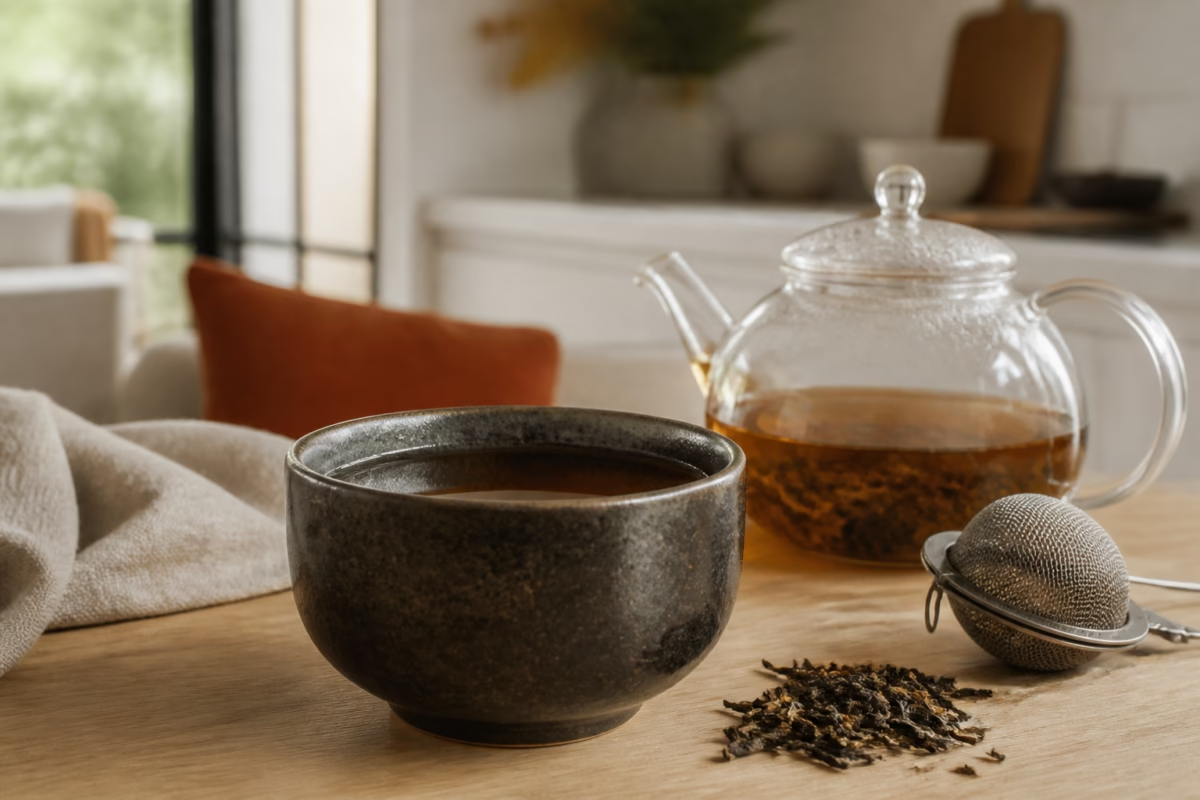
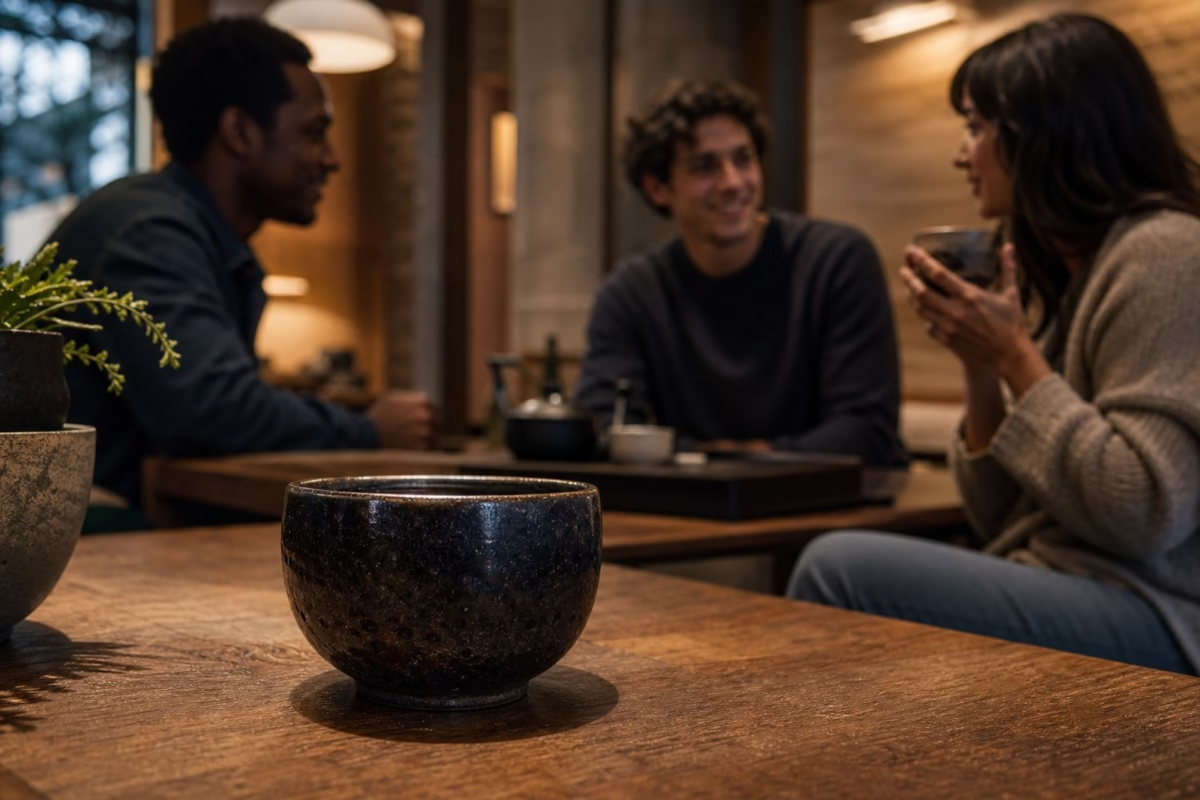
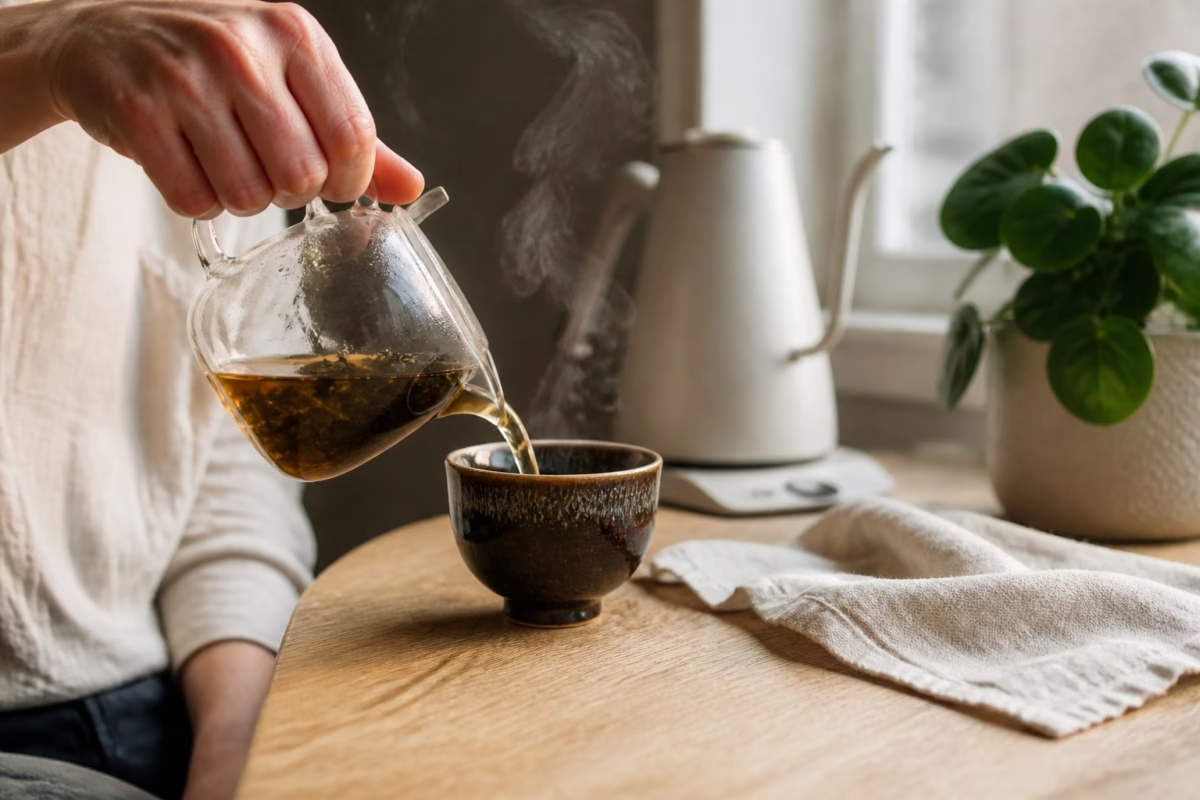
A Jianzhan tea cup does not require a formal ceremony. As modern tea houses in America show, traditional teaware can sit comfortably in a contemporary setting; at home, the cup works beside an electric kettle, basket infuser or glass teapot.
Loose leaf black tea, oolong, green tea and white tea can all be served in an appropriately sized cup. The brewing vessel can remain exactly what the drinker already uses. Pouring from a glass pot into a smaller handleless cup can change the pace: less tea per serving, more frequent refills and more awareness of temperature.
That is a different rhythm from a large handled mug. It is not inherently superior. A large mug is practical for a long meeting, a commute or anyone who wants one generous pour. A smaller cup makes more sense when the teapot is already on the table and the drinker enjoys watching a tea develop over several servings.
AEROVYNX’s article on specialty coffee and premium tea culture examines the larger shift toward more considered tools. Adding one Jianzhan cup can be just as incremental: the familiar kettle and brewer stay.
Because Jianzhan is commonly handleless, size and wall thickness affect comfort. A cup that suits one setup may be too small or too warm for another, and close-cropped photography rarely tells you that.
What About Matcha?
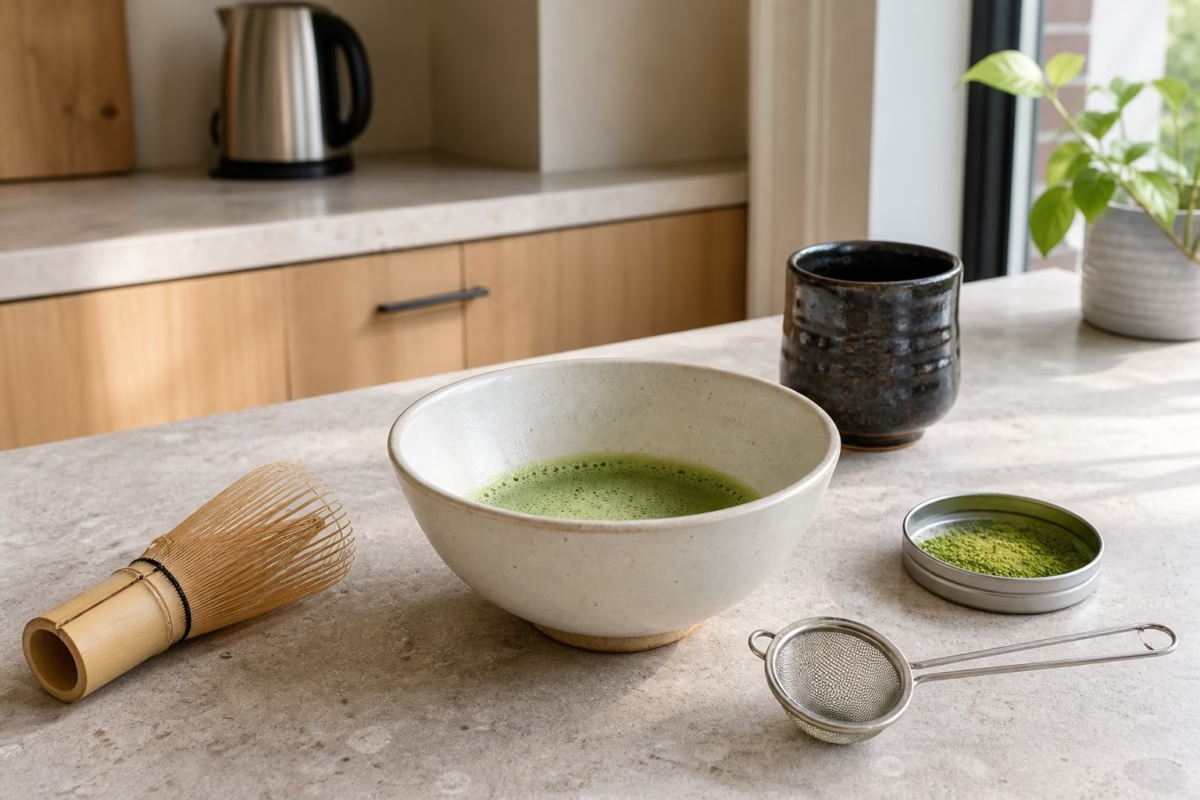
Jian bowls have a real historical connection with whisked powdered tea: during the Song dynasty, tea powder was mixed with hot water and whisked into foam inside dark bowls. Modern Japanese matcha ceremony developed in a different cultural setting, with its own preparation and conventions.
For present-day use, shape decides what is practical. A sufficiently wide bowl can provide room for whisking. A small Jianzhan drinking cup may not. In that case, matcha can be prepared in a suitable bowl and poured into the cup for drinking.
“Jianzhan” therefore does not automatically mean “matcha bowl.” Check the mouth diameter, depth and capacity before choosing a vessel for whisking.
Does a Jianzhan Cup Make Tea Taste Better?
The historical and materials evidence behind Jianzhan does not prove that a cup softens water, removes bitterness, releases beneficial minerals, detoxifies or improves health. Treat such claims as unverified unless credible scientific evidence applies to the specific product and claim.
A cup can still change how drinking feels.
Rim shape affects the way liquid meets the mouth. Weight changes how the vessel sits in the hand. Wall thickness and serving size influence how quickly the drink seems to cool. A dark glaze can alter the visual contrast of pale or green tea. Smaller pours can slow the pace enough for temperature and aroma to become easier to notice.
Those are experiential differences. A drinker may prefer them, dislike them or barely notice them. Preference is real without being turned into a laboratory claim.
A visually impressive glaze does not need a story about invisible energy to justify itself. Material, form and use are already interesting.
How to Tell Whether a Jianzhan Cup Is Worth Buying
Begin with accuracy rather than adjectives.
If origin matters to you, look for a clear statement about where the cup was made and how it relates to Jianyang production. “Chinese style,” “Tenmoku inspired” and “made in Jianyang” describe different things. A seller should not blur them.
The materials and process deserve the same clarity. Look for a straightforward description of the clay body, glaze and handmade stages that are actually documented. “Fired at high temperature” can describe a production step, but it does not independently prove food safety or craftsmanship.
Read glaze language with a skeptical eye. Hare’s fur and oil spot are useful terms when the appearance and process support them. Claims such as “royal treasure,” “healing energy” or “rare masterpiece” do little to explain the cup. Historical Jianzhan can be important without making every modern example collectible.
Measurements should match the way you drink. Check capacity, height and mouth diameter rather than assuming that a photographed cup holds the same amount as an American mug. For matcha whisking, usable width is especially important. For drinking from a teapot, a smaller cup may be exactly the point.
Product photography should let you inspect the vessel rather than hide it in atmosphere. A useful gallery includes the interior, side profile, rim and foot. The AEROVYNX Arctic Jianzhan Tea Cup, for example, documents a 150 ml capacity and a hand-thrown process in Shuiji, Jianyang alongside multiple gallery views. That is far more useful than relying on one dramatic angle.
Food-contact claims should be specific and responsible. High firing temperature alone does not certify a glaze. Look for documented safety information where it is offered, along with care guidance that applies to the actual product.
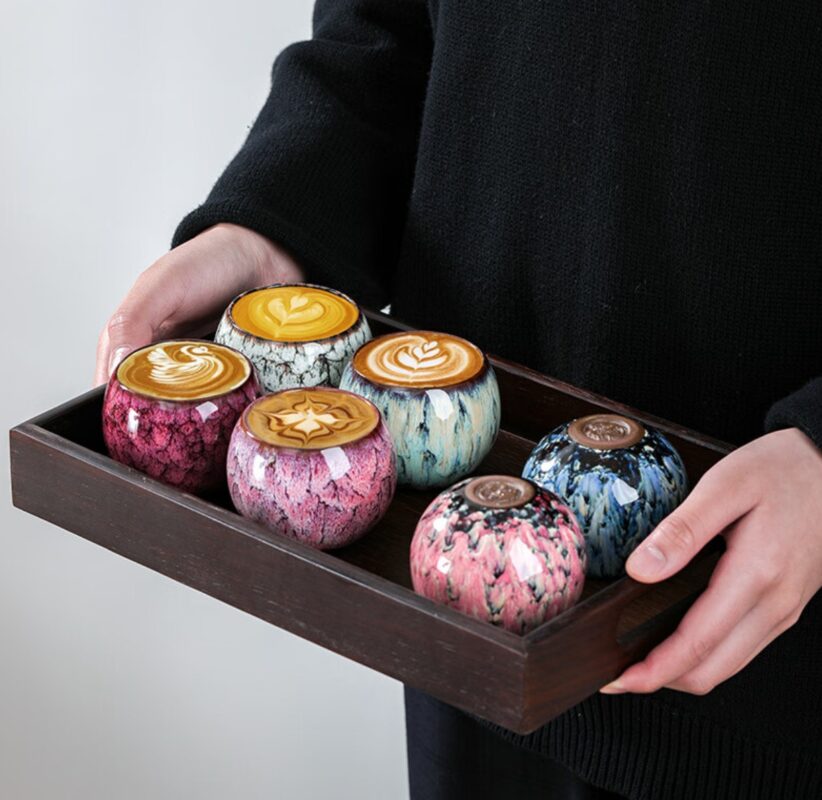
Compare more than pattern. Look across several cups for silhouette, scale, rim and glaze photography; the loudest surface may not be the best fit in the hand.
Who Will Actually Enjoy a Jianzhan Tea Cup?
Jianzhan is likely to appeal to loose leaf tea drinkers who enjoy smaller servings, ceramic enthusiasts who notice form and finish, and people who prefer one distinctive object to a perfectly matched set. It also suits anyone who likes seeing subtle changes in a glaze as daylight moves across a table.
It may be a poor fit for someone who wants a large handled mug, the lowest possible price or a set in which every piece looks identical. Buyers who want universal dishwasher or microwave assurance should rely on product-specific guidance rather than assumptions about the category.
A smaller handleless cup asks for a particular kind of use. That specificity is part of its attraction, but it also means Jianzhan does not need to be sold to everyone.
The Cup You Reach for on Purpose
Set beside a glass teapot or electric kettle, a Jianzhan cup looks entirely at home. The tradition gives those materials context; ordinary use determines whether the modern cup earns its place there.
A Jianzhan tea cup does not have to replace the everyday mug. Its role can be narrower and more personal: the vessel chosen when there is time to pour less, look closely and stay with the tea for another cup.
If that kind of use appeals, explore AEROVYNX’s Jianzhan tea cup collection and compare capacity, shape and glaze across individual listings.