
Blog
Matcha at Home: What You Actually Need — and What You Don’t

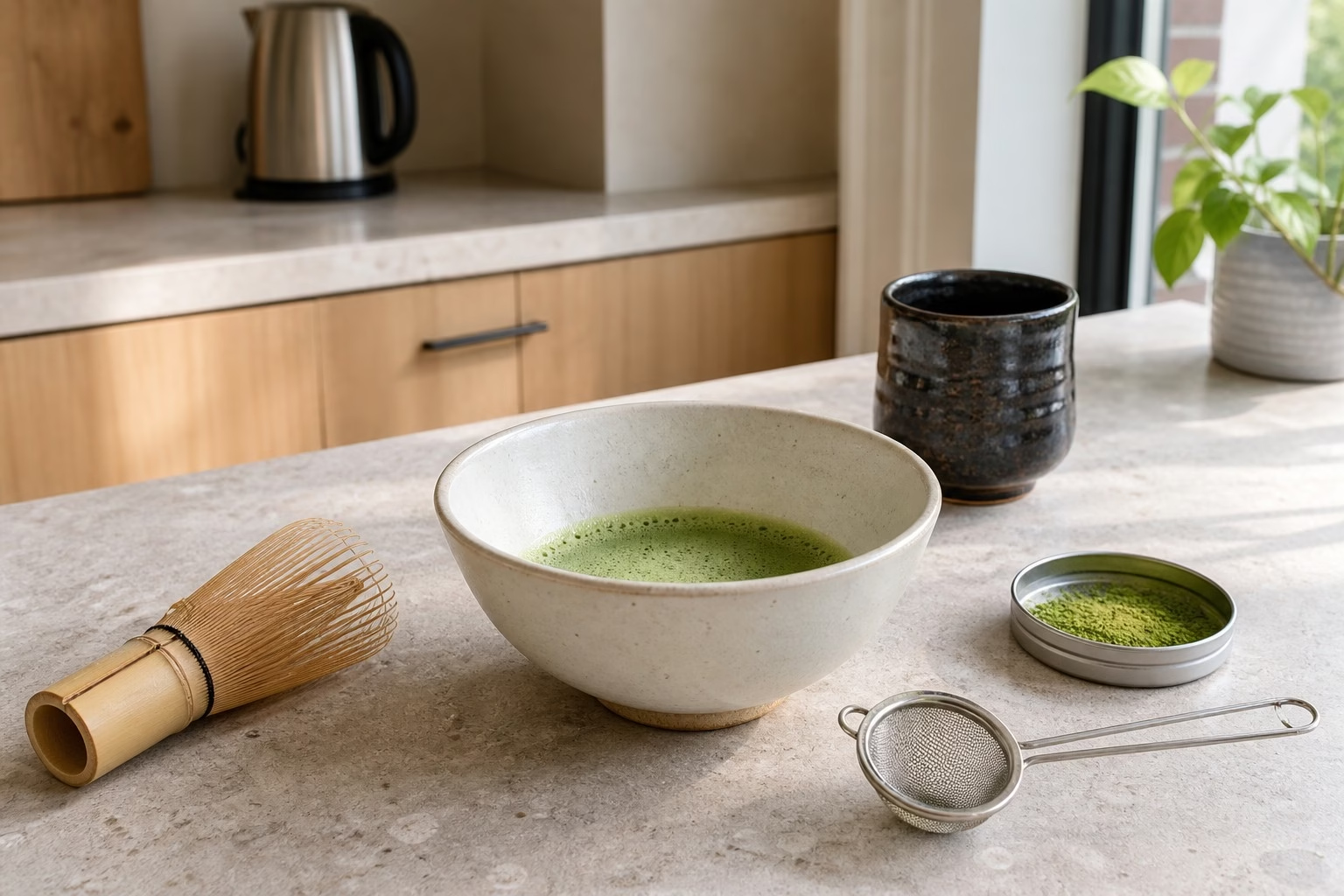
After one too many café matchas, the first question is financial: could I make this at home? Five minutes online produces another: do I need a whisk, special bowl, stand, sifter, scale, temperature-control kettle, and an organizer to hold it all?
That second question is where a simple drink turns into a shopping list. Making matcha at home can be as spare or as specialized as you want, but the useful starting point is not the accessory set. It is the drink you actually order.
The interest is real, although it is easy to overstate. Forbes reported in August 2026 that U.S. consumers were paying $5 to $8.50 for matcha drinks and that specialty businesses were beginning to teach customers about matcha beyond the latte. At the same time, an August 2026 Statista survey of 1,000 Americans ages 18 to 64 found regular consumption still in the single digits across age groups. Matcha is highly visible and growing while remaining far from a default American drink.
That makes this a good moment for a practical guide. The goal is not to reproduce a formal tea setting or an Instagram matcha station. It is to make the drink you like with the least friction, then add equipment only when you understand what it changes.
First Decide What Kind of Matcha You Actually Drink
“Making matcha” describes three different routines in an American kitchen. Treating them as one creates unnecessary purchases.
Iced matcha latte
For the café-style drink most Americans recognize, you need matcha, a small amount of water, something that disperses the powder, milk, ice, and a glass or tumbler. Syrup, fruit purée, or cold foam is optional. Because the matcha is mixed with a larger volume of milk and served cold, the final glass often matters more to daily convenience than the bowl used for mixing.
A wide ceramic bowl can be pleasant to work in, but it is not a prerequisite for an iced strawberry matcha latte. A small mixing bowl, a jar with a secure lid, or a handheld frother can all be reasonable starting tools.
Hot matcha latte
A hot latte rewards a little more attention to the mixing vessel. You need enough room to turn matcha and water into a smooth concentrate before adding milk. A vessel with a clean pouring edge also reduces green drips across the counter. The finished drink can go into a handled mug, a glass rated for hot beverages, or a handmade ceramic cup large enough for the serving you prefer.
Straight matcha
If you want matcha whisked with water and served without milk, bowl geometry and whisking technique become more noticeable. Usucha means “thin tea,” a common Japanese preparation with a fluid consistency. It can be made casually at home; using the term does not mean you are reenacting a formal Japanese tea ceremony.
For this style, the bowl is both a working tool and the drinking vessel. Width, depth, stability, and room for the whisk matter in a way they simply do not when you are building a 16-ounce iced latte.
The Matcha Powder Matters More Than Most Accessories
If the budget is limited, put the first serious decision into the tea. Matcha is made by grinding processed tencha leaves into powder, as the Japanese Ministry of Agriculture explains in its guide to Uji tea. Because the powder itself stays in the drink, stale or poorly suited matcha cannot be rescued by an expensive bowl.
Look for a seller that clearly states origin, intended use, packaging, and storage guidance. Fresh aroma and a lively green color are useful signals, but color alone is not a complete quality test; photographs can be edited, lighting changes appearance, and cultivars do not all look identical. A matcha chosen for drinking straight may emphasize delicacy and balance. A powder intended for lattes may be selected to remain perceptible beside milk and sweetener.
Smaller, well-sealed quantities make sense while you learn what you like. After opening, follow the producer’s storage directions. A large tin is poor value if the last third tastes tired.
This is similar to the lesson Americans learned through specialty coffee and premium tea culture: the ingredient and preparation deserve attention before the equipment becomes a collection.
Do You Really Need a Bamboo Matcha Whisk?
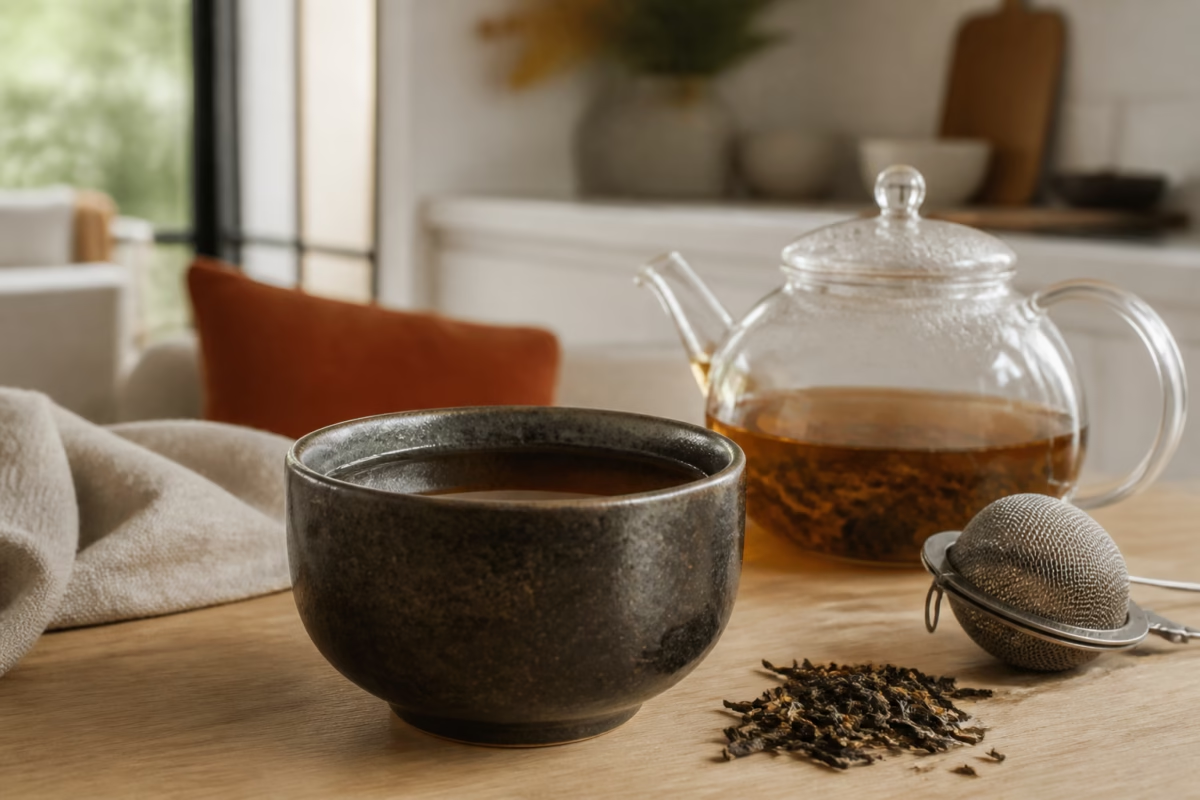
A bamboo whisk, or chasen, is a purpose-built tool. Its many flexible tines move through a shallow volume of water quickly, dispersing matcha and producing a fine foam without the heavy circular stirring of a kitchen whisk. For straight matcha, it is the most worthwhile traditional tool to try.
A handheld electric frother is fast and familiar, especially for a latte concentrate. It can create larger bubbles or leave powder around the edges, but those differences matter less after the mixture meets ice, milk, and syrup. A sealed shaker also works for a cold preparation. The Global Japanese Tea Association, while preferring a chasen, describes shaking matcha in a sealed container as a practical alternative.
The decision is straightforward. If you mainly make flavored iced lattes, begin with the effective mixer you already own. If you want to understand straight matcha, buy a decent chasen and learn what it is designed to do. You are comparing different results and routines, not passing or failing a test of authenticity.
Do You Need a Matcha Bowl?
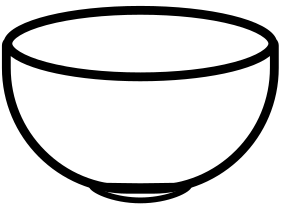
For whisking directly, a wide and stable bowl is genuinely useful. The whisk needs horizontal room to move without repeatedly striking the sides. A moderate depth helps contain splashes, while a stable foot keeps the bowl from skating across the counter. An interior that is easy to see and clean is more valuable than elaborate decoration.
A cereal bowl you already own may satisfy all of those conditions. A narrow tea cup usually will not. Calling a vessel handmade, premium, or tea-related does not give it the geometry required for whisking.
Once the matcha has been prepared elsewhere, the options broaden. You can drink it from a mug, glass, small bowl, or handleless ceramic cup. This separation between preparation vessel and drinking vessel is particularly useful for lattes and for anyone who wants to use a favorite cup that would be awkward to whisk in.
The Sifter Is Useful, but It Is Not a Permission Slip
Matcha clumps readily. Pushing it through a small fine-mesh sifter before adding water makes dispersion easier and gives the whisk less work to do. If you already own a clean kitchen strainer with a fine mesh, it may be all you need.
A dedicated sifter is inexpensive and earns its place if matcha at home becomes a regular habit. For a latte, work the powder with a little water into a smooth paste, then add the remaining liquid. A shaker is another workable route for cold drinks. The result may not have the same foam as well-whisked usucha, but a beginner can learn without a complete toolkit.
You Probably Already Own a Kettle
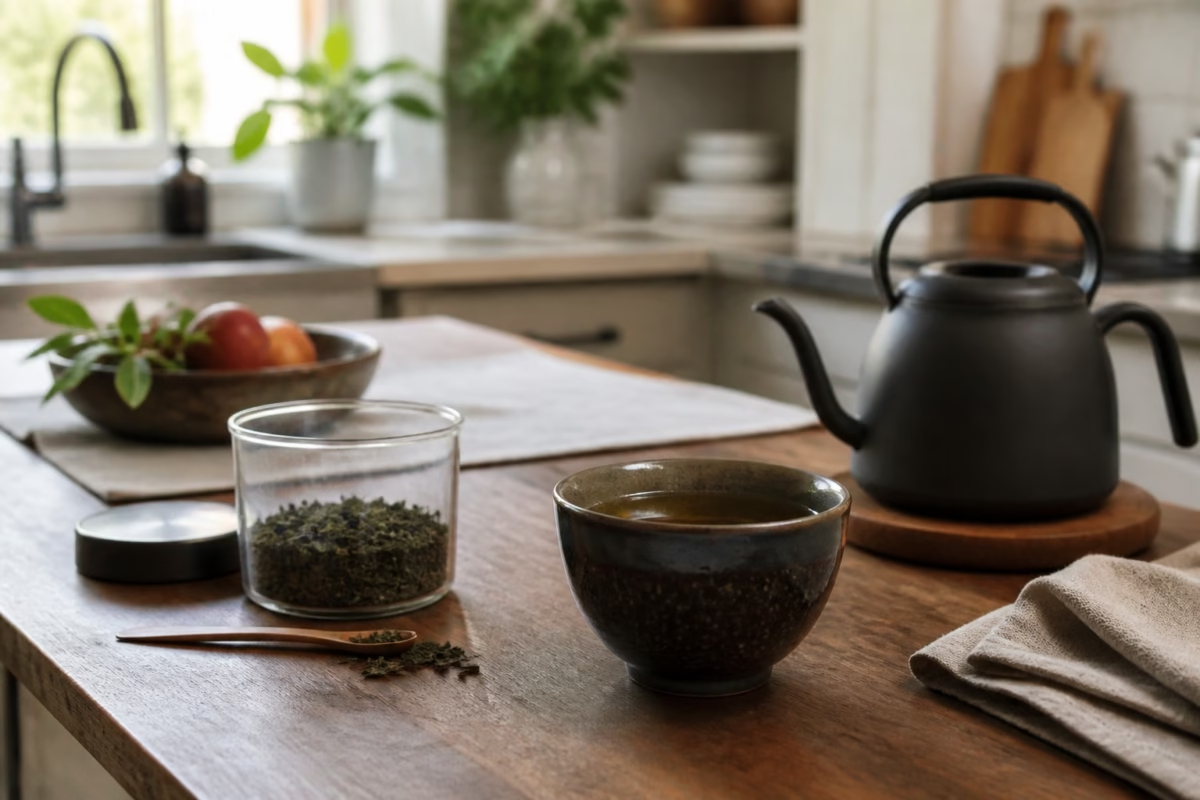
A specialized matcha kettle is rarely a first purchase. An electric kettle, a stovetop kettle, or hot water cooled briefly in another vessel can all work. Temperature control is convenient because boiling water can make many matchas taste harsher, but one universal number does not suit every product or preference.
For a useful reference point, Ippodo’s basic usucha recipe uses 2 grams of matcha, 60 milliliters of water at 80°C (176°F), and 15 seconds of whisking. That is a recipe from an experienced Japanese tea company, not a law for every tin. Start with the producer’s directions, then adjust deliberately.
A scale helps with consistency, but a teaspoon and repeatable routine can get a latte drinker started. Precision earns its place when it answers a question.
The Cup Matters, Just Not for the Reason Instagram Suggests
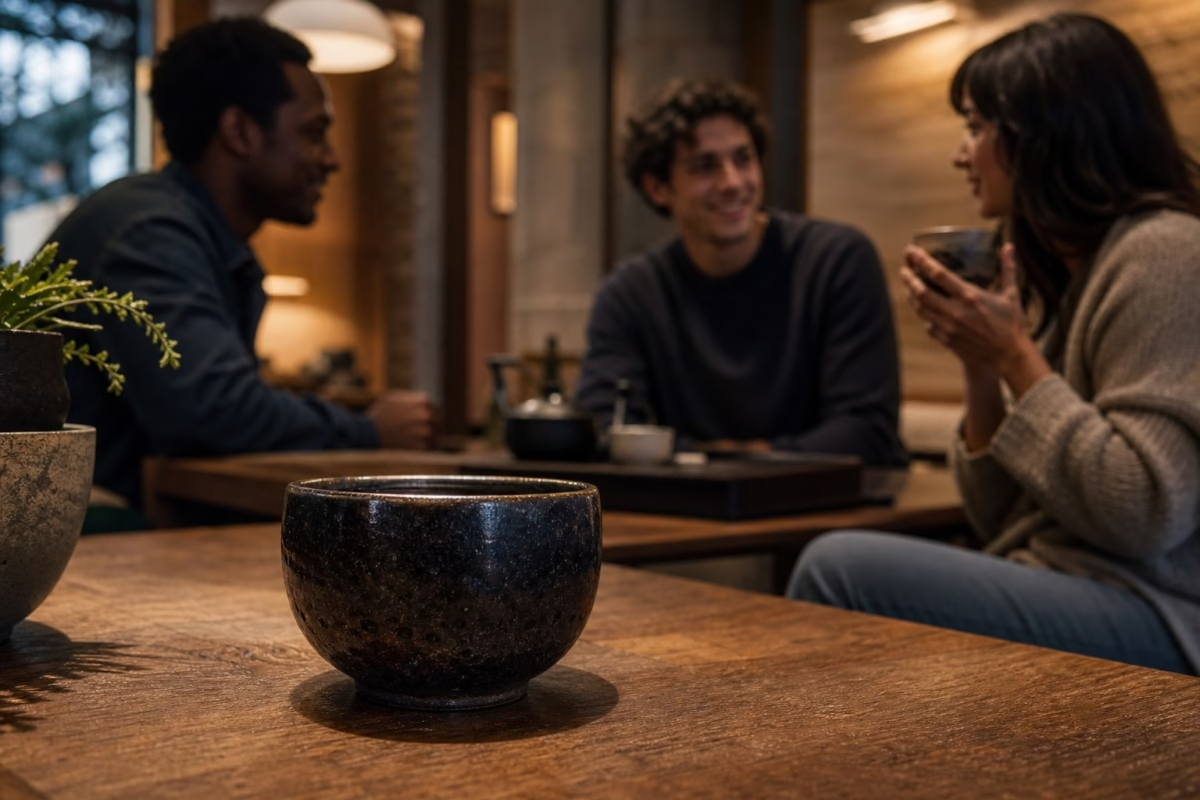
A serving vessel needs no mystical story to affect the experience. Size changes the drinking pace; the rim changes how liquid meets the mouth. Weight, handle, texture, and heat retention shape how the cup feels in the hand.
For an iced latte, a tall clear glass may be the most useful choice. It holds ice, shows the proportions of milk and matcha, and takes a straw or lid. For a hot latte at a desk, a handled mug can be hard to beat. For straight matcha or a small hot serving, a bowl or handleless handmade cup can invite a slower pace.
That is a more credible reason to care about drinkware than claiming a premium cup automatically makes matcha taste better. The same distinction appears in the broader rise of tea rituals in American homes: an object can shape attention without being medically necessary or chemically transformative.
Where Jianzhan Does, and Does Not, Fit
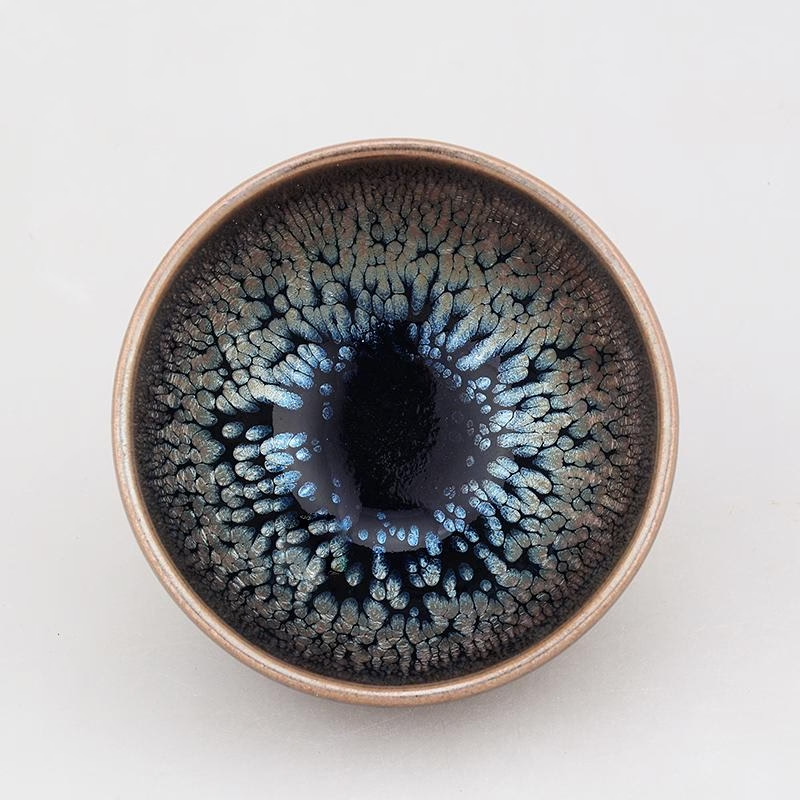
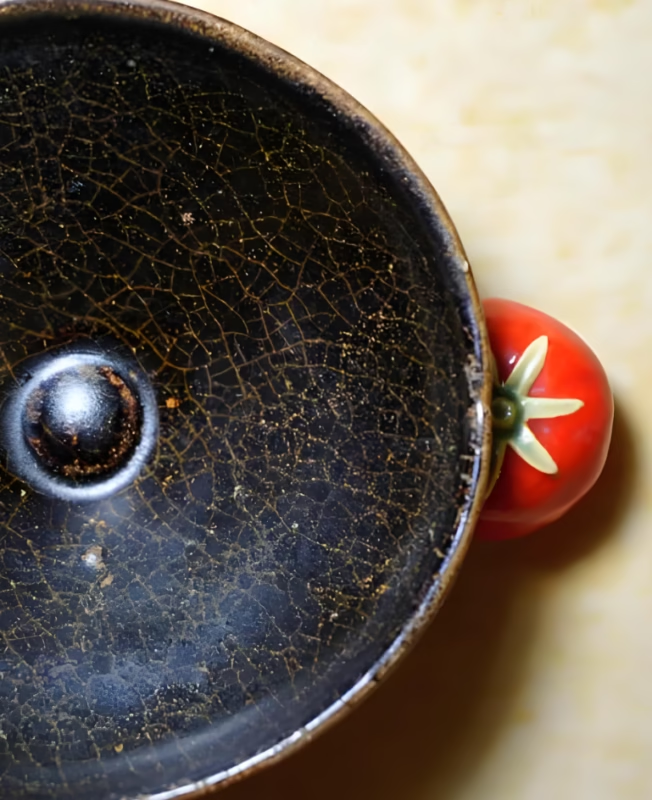
Jianzhan belongs to a Chinese ceramic tradition, not to Japanese matcha ceremony. A Smithsonian-developed guide to a Song-dynasty Jian bowl explains how powdered tea was whisked with hot water in these dark vessels. Jian ware later traveled to Japan; the Metropolitan Museum of Art’s Jian bowl record documents that Chinese origin and the connected history of the Japanese term tenmoku. The historical connection is real, but Song-dynasty Chinese powdered-tea practice and modern Japanese matcha culture are not the same tradition.
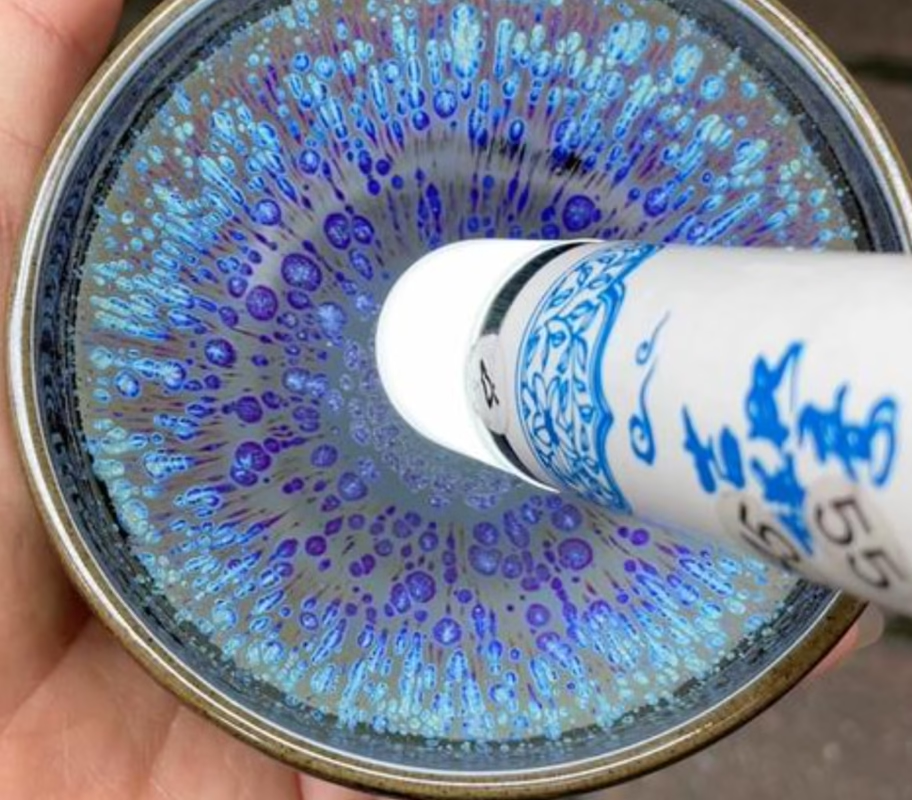
In a contemporary home, shape decides use. A sufficiently wide Jianzhan bowl may physically accommodate whisking, but only if its dimensions, interior, base, and rim make sense for the job. A small Jianzhan tea cup should not be marketed as a matcha bowl merely because it is dark-glazed and handmade.
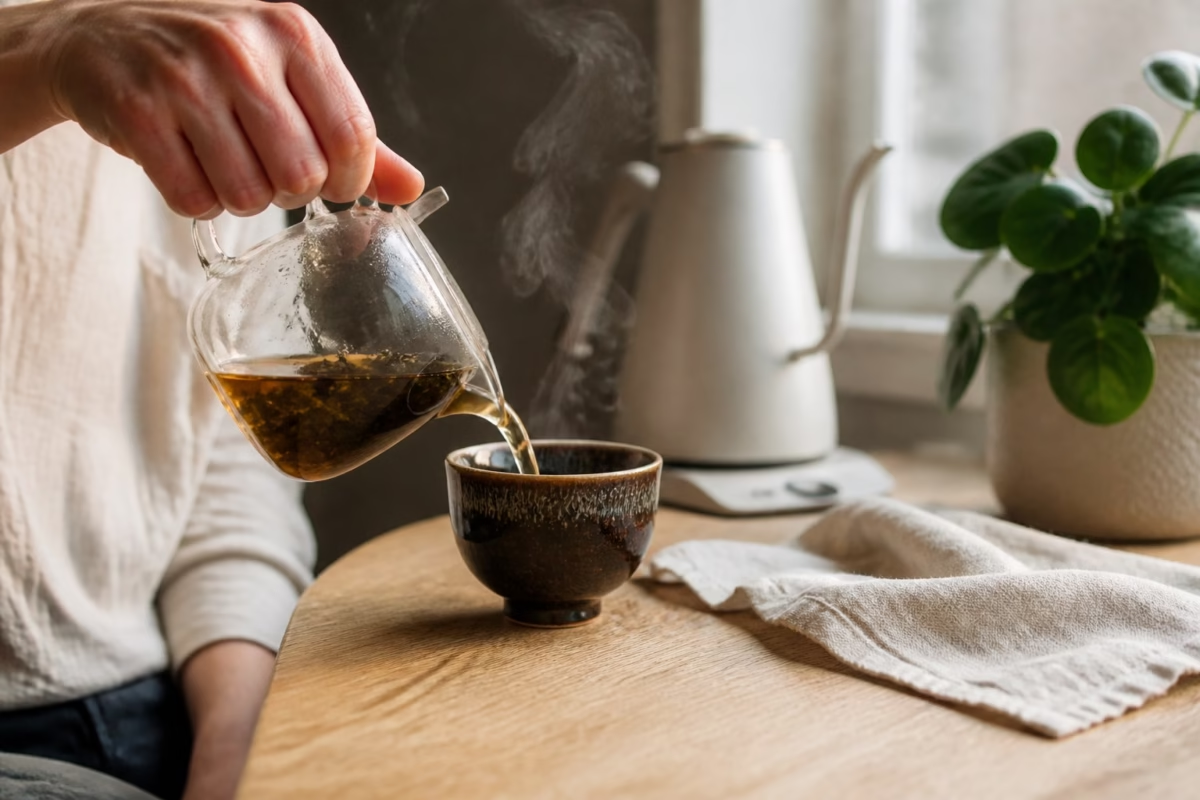
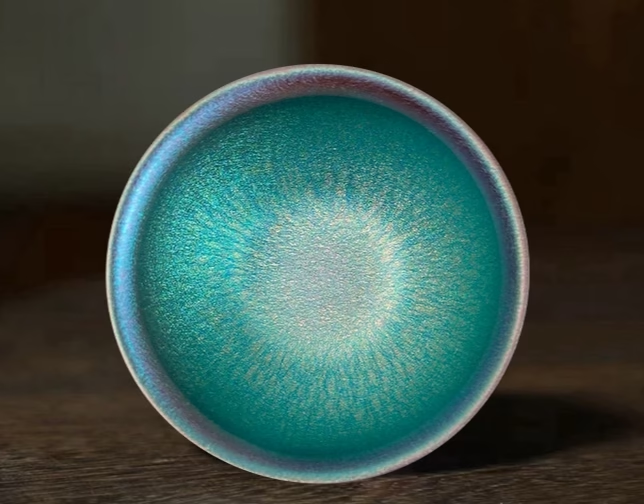
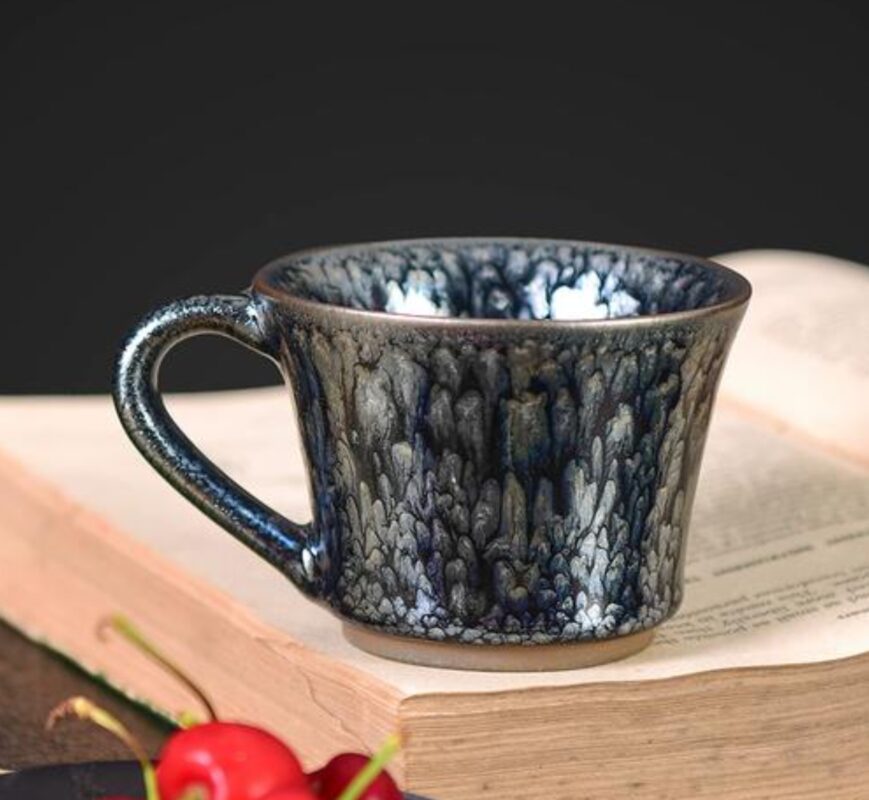
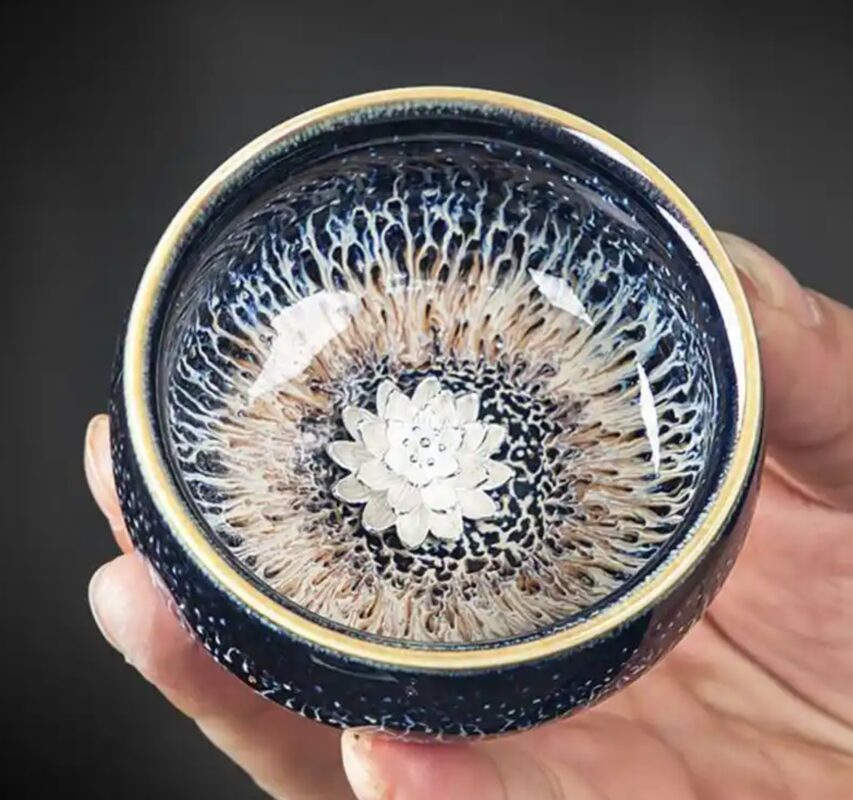
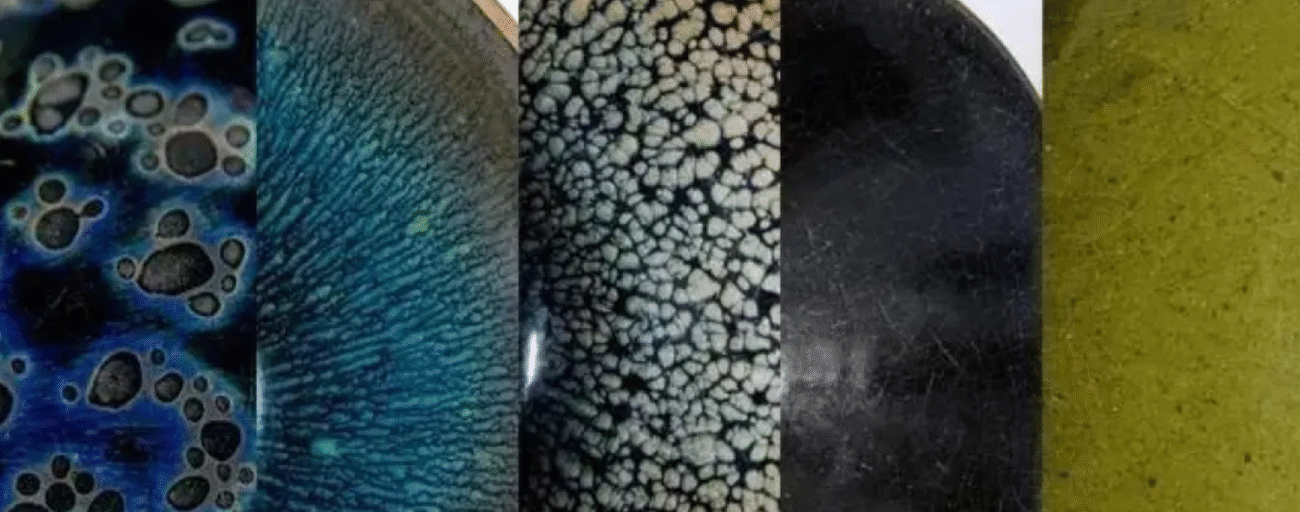
It can still be a compelling drinking vessel. Prepare the matcha in a suitable bowl, then pour a small serving into the cup. The bright green tea against a black-brown iron-bearing glaze creates strong visual contrast, and the weight and surface of handmade ceramic provide a tactile change from glass. Those are experiential qualities, not proof that the cup alters the tea’s chemistry.
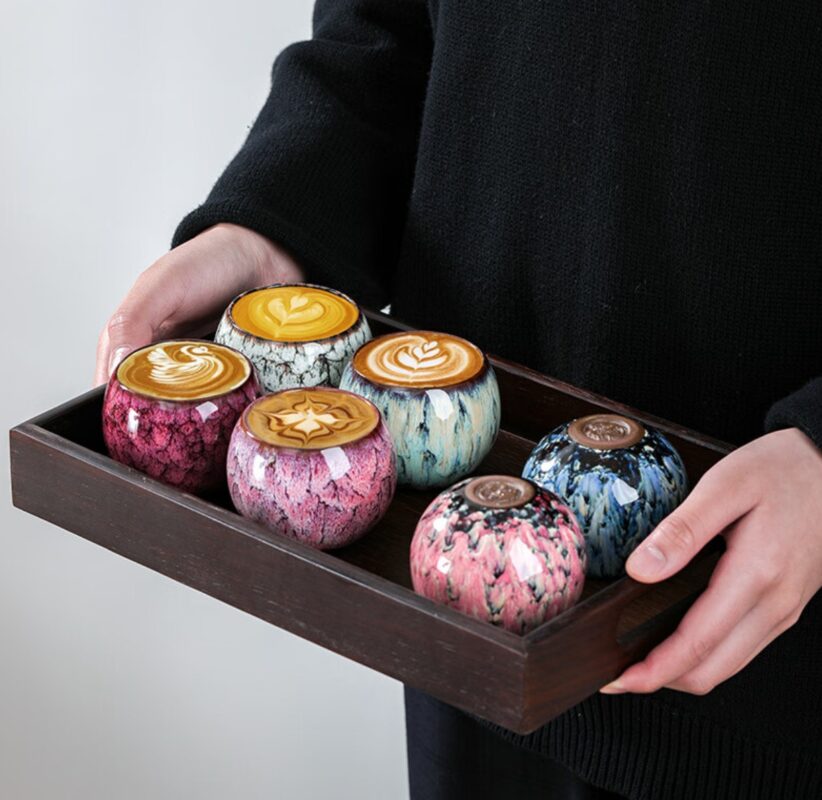
AEROVYNX’s Jianzhan tea cup collection is best approached with that distinction in mind: browse the pieces as drinking cups, check the listed dimensions, and choose one only if its size suits the way you serve tea. Anyone curious about how deliberate service changes a drink can also look at the role of cups in modern American tea houses.
A Simple Beginner Setup
If you mostly make iced matcha lattes
Start with matcha suited to milk, water, a frother or leakproof shaker, milk, ice, and the glass you already like. A fine sifter is the first sensible add-on if clumps keep appearing. A dedicated bowl and chasen can wait until you become curious about straight matcha or want more control over the concentrate.
If you mostly make hot lattes
Use a mixing vessel with enough room to disperse the powder and a lip that pours cleanly. Add a frother if you want textured milk. The serving mug or cup is a matter of volume, heat, and comfort. A thermometer or temperature-control kettle is useful when you want repeatable results, not compulsory on day one.
If you want straight matcha
Put the budget toward fresh matcha, a wide stable bowl, and a chasen. A sifter is a small upgrade with a noticeable practical benefit. Add a scale, scoop, whisk holder, or dedicated kettle later if each one makes preparation more consistent or protects a tool you use often.
Matcha at Home Does Not Need to Become Another Expensive Hobby
There is nothing wrong with a beautiful matcha station. Specialized tools can be functional, pleasurable, and worth collecting. The problem begins when appearance hides purpose and every accessory is presented as an entrance fee.
FoodNavigator’s August 2026 reporting describes canned lattes and stick packs designed to remove the friction of bowls and whisks. Some people want tactile preparation; others want a cold matcha in thirty seconds before work. Many will move between the two.
The best setup is built around the drink you actually make. Begin with matcha, water, a mixing method that works, and the right vessel for the finished drink. Add a tool when it solves a recurring problem or adds pleasure you can name.
A handmade ceramic cup can eventually earn a place in that routine. It does not need to pretend it is essential. Its value starts when you understand why you reach for it.