
Blog
How to Choose a Tea Cup for Loose Leaf Tea

By late August, American drink menus start changing before the weather does. Pumpkin returns. Chai gets warmer. Iced drinks begin sharing the spotlight with flavors that signal fall, even when the afternoon still feels like summer.
This year made the shift unusually visible. Starbucks launched its U.S. fall menu on August 25 with Pumpkin Spice Chai, Iced Pumpkin Cream Chai, and Iced Pumpkin Cream Matcha. Three days later, the company said August 25 had been its strongest fall launch day in the United States and Canada. The official menu and August 28 announcement do not prove that everyone wants the same drink. They show how quickly seasonal beverages regain attention.
At home, that attention often leads somewhere more practical. You buy a good Earl Grey, a fragrant oolong, or an English Breakfast with leaves that need room to open. Then you wonder whether you also need a special tea cup for loose leaf tea.
The cup matters, but probably not as marketing suggests. It affects serving size, comfort, heat at your hands and lips, drinking pace, and appearance. It cannot rescue stale leaves or a badly timed brew. The useful question is: what fits the way I actually drink tea?
Start With How You Actually Drink Tea
Material is easier to discuss than routine, so buying guides often begin with ceramic, porcelain, and glass. That reverses the decision. Start with an ordinary Tuesday.
The 12–16 oz desk-mug drinker
If you make one large serving of Earl Grey or English Breakfast and carry it to your desk, a 12–16 fl oz (about 355–475 mL) handled mug is hard to improve upon. You can move it with one hand, keep hot ceramic away from your fingers, and use a roomy basket infuser. A stable base and straightforward care may matter more than an elaborate glaze.
A small handleless cup is probably not the right primary vessel for this routine. That is not a lack of sophistication. It is simply the wrong tool for a long work session.
The loose-leaf enthusiast
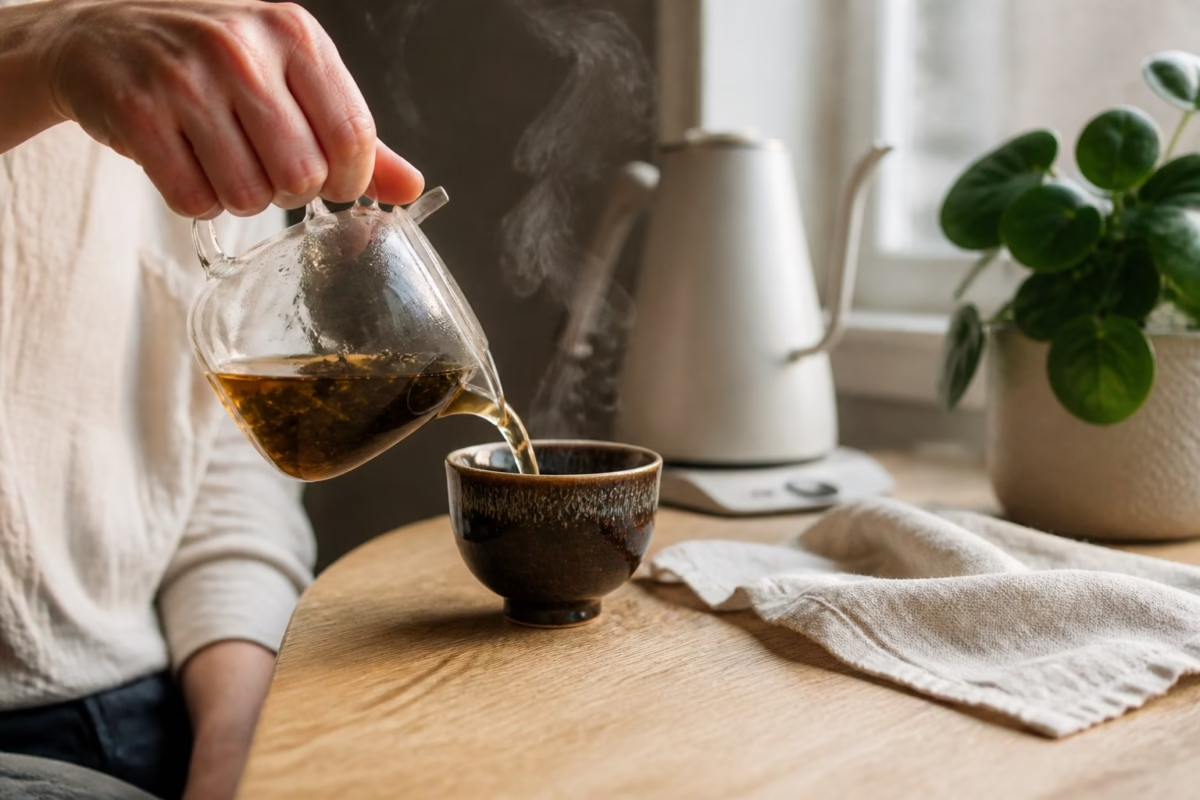
Someone who brews in a glass or ceramic pot and pours smaller servings has more freedom. The cup does not need to hold the infuser. Rim, weight, glaze, and hand feel become easier to notice.
Here, a handmade cup can earn its place. Once the brewer handles the practical work, the drinking vessel can be chosen for comfort and character.
The evening tea drinker
After dinner, a smaller ceramic cup can create a slower rhythm. You pour less, finish it before it cools too far, and return to the pot when you want more. Some people enjoy that pause; others find repeated pouring annoying. Both reactions are reasonable. If you are interested in the broader habit behind it, our article on tea rituals in American homes explores why an everyday drink can become a deliberate break.
The iced-tea drinker
If most of your tea arrives over ice, choose for that reality. A tall glass with enough room for ice and dilution may be far more satisfying than a small ceramic cup. Handmade stoneware does not need to win every comparison to be worthwhile.
Cup Size Matters More Than Most People Expect
Capacity changes behavior. The ranges below are useful reference points, not universal standards, and a manufacturer’s maximum capacity may be higher than the amount you would comfortably pour.
A cup around 4–6 fl oz (about 120–180 mL) suits smaller servings and repeated pours. It works well when tea is brewed separately and keeps the cup light in the hand.
An 8 fl oz cup (about 240 mL) sits in a flexible middle. It is large enough for a substantial serving yet compact enough to feel different from a coffee mug. For many Western-style home setups, this is an easy size to live with.
A 10–12 fl oz vessel (about 300–355 mL) begins to behave more like a mug, useful for one longer drink, chai, or a basket infuser. At 12–16 fl oz, the advantage is convenience: fewer refills and more room.
The right tea cup for loose leaf tea is therefore connected to the amount produced by your brewer. A 5-ounce cup makes sense beside a small pot. It becomes tedious if your normal recipe produces 14 ounces and you simply want to answer email.
Do You Actually Need a Handle?
A handle solves a real problem. It lets you lift a hot vessel without wrapping your hand around it, makes a larger serving easier to carry, and feels natural beside a laptop or book. For black tea brewed with near-boiling water, that separation can be particularly welcome.
A handleless cup offers a different kind of information. You feel the surface, the weight, and some of the warmth directly. Its compact form suits smaller servings and puts more of the ceramic in contact with the hand. That tactile quality is one reason handmade cups can feel personal.
There is also an obvious limit: if the cup is too hot to hold, it is too hot to hold. A handleless form is not automatically more authentic, more mindful, or better designed. Wall thickness, fill level, and your own heat tolerance all matter. Anyone who routinely carries hot tea from the kitchen to another room may be happier with a handle.
Ceramic, Porcelain, or Glass?
Specialty coffee taught American drinkers to notice beans, brewers, and cups. Tea is developing a similar interest in origin and tools, as we discussed in our guide to specialty coffee and premium tea culture. It still does not produce one correct material.
Glass makes the tea visible
Clear glass lets you see the color of an amber black tea, a pale green infusion, or an unfurling whole leaf. It feels visually light and fits naturally into a modern kitchen. Construction varies, so broad claims about durability or heat performance are not useful; a thin single-wall cup and a double-wall cup are different objects. Judge the specific piece.
Porcelain offers a smooth, familiar surface
Porcelain is common in classic tea service for good reason. It can be thin, smooth at the rim, and visually quiet enough to work with many kinds of tea. White interiors also make tea color easy to read. It is not automatically the best choice for every delicate tea, but it is a versatile one.
Stoneware and handmade ceramic bring material character
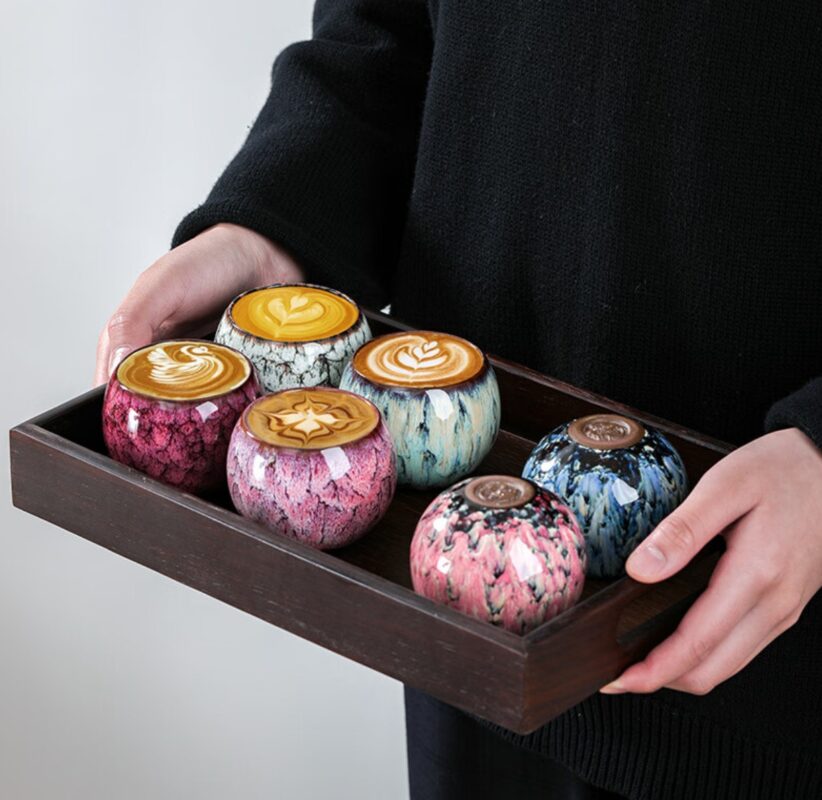
Stoneware can feel more substantial, though the weight depends on the form and wall thickness. Handmade ceramic adds visible and tactile variation: a glaze that pools differently, a foot that shows finishing work, or a surface that does not look mechanically repeated. Those qualities can be compelling when the cup itself is part of the pleasure.
Rim Shape Can Matter More Than the Glaze
Glaze photographs well, so it dominates online shopping. The rim is where the cup actually meets you.
A thinner rim can feel precise and unobtrusive. A thicker, rounded rim may feel softer and more substantial. A slightly flared rim can guide liquid differently from a straight wall, while a wide opening brings the surface of the tea closer to the nose. None of these features guarantees a better flavor. They change the physical experience of taking a sip.
Look closely at product photographs. Is the rim even? Does it appear smoothly finished? Is the opening wide enough for comfortable drinking? A dramatic glaze cannot compensate for a rim you dislike using.
Weight and Balance Show Up Every Day
A beautiful cup can still be tiring or unstable. Imagine it filled, not empty on a product page. Water adds roughly one gram per milliliter, so a large ceramic mug becomes heavy quickly.
Check whether the foot appears broad enough for the form, whether the base sits flat, and whether the cup looks balanced rather than top-heavy. On a handmade piece, variation can be part of the appeal, but “handmade” is not an excuse for a rocking base, a carelessly finished rim, or poor control of the form. Craftsmanship includes function.
Should You Brew Loose Leaf Tea Directly in the Cup?
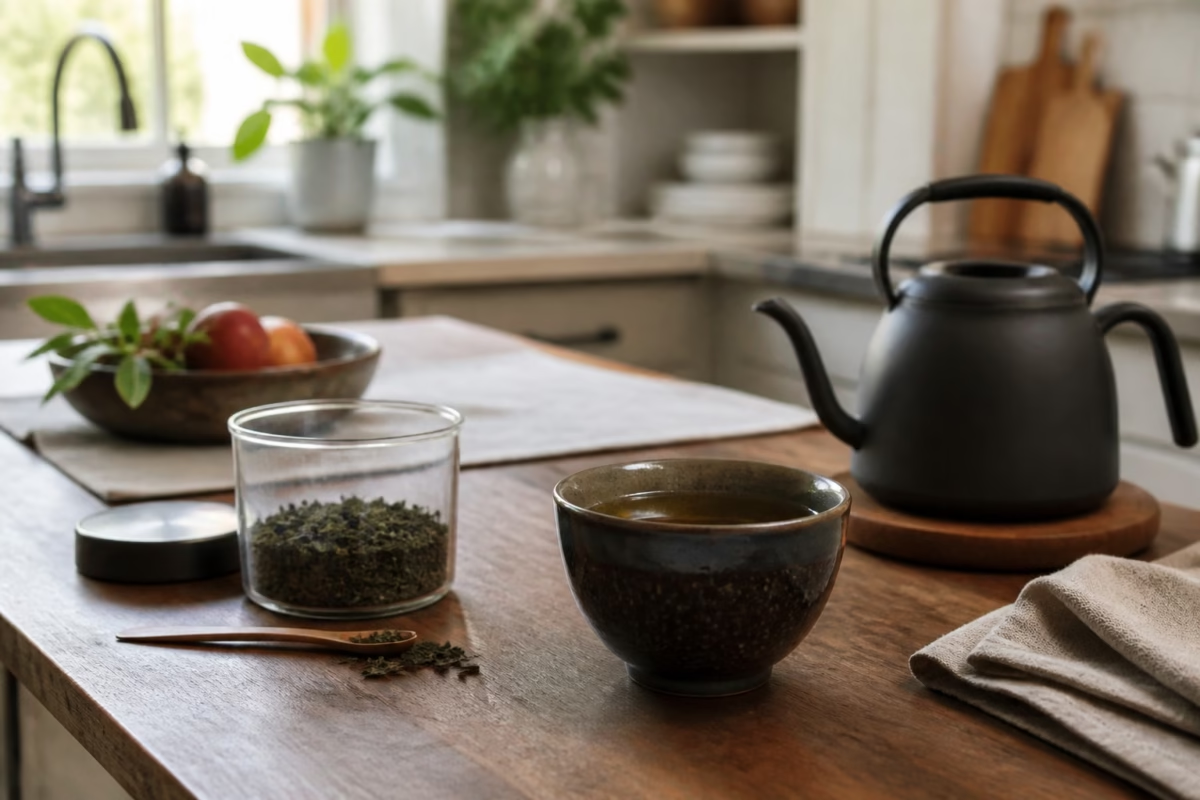
For many American households, a basket infuser inside a mug is the most practical answer. It gives leaves room to open, lifts out cleanly when steeping is finished, and requires very little equipment. If that is how you brew, make sure the mug opening and basket actually fit each other.
Brewing separately changes the decision. A glass pot, ceramic pot, or dedicated brewer holds the leaves; the finished tea is poured into any cup you like. Smaller handmade cups make more sense here because they no longer need to accommodate a filter.
Leaves can also go directly into a cup. That works for some teas and drinking styles, but it is not automatically beginner-friendly. Leaves may reach your mouth, extraction continues while you drink, and rolled or twisted teas can expand far beyond their dry size.
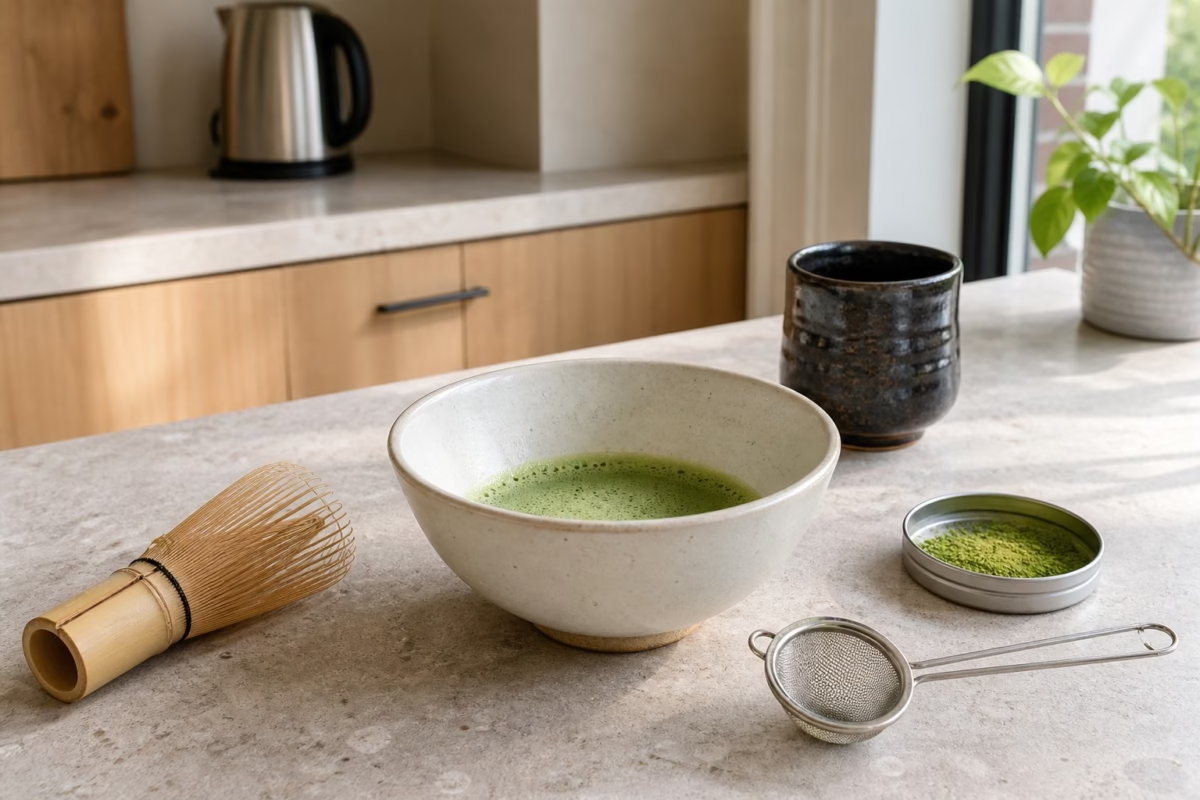
Matcha is a separate case because the powder is suspended rather than strained. If that is your main home drink, our practical guide to making matcha at home explains when a whisking bowl, drinking cup, and ordinary kitchen tools make sense.
Does the Cup Material Make Tea Taste Better?
Be wary of dramatic promises. There is not a responsible basis for saying that a Jianzhan cup releases beneficial minerals, detoxifies tea, removes bitterness, softens water, or reliably improves the chemistry of every brew.
A vessel can still change what you perceive. Serving size affects how quickly tea cools. The opening influences how close your nose is to the surface. Rim, weight, and balance affect the sip. A dark glaze makes pale tea look different from white porcelain. Holding warm ceramic can make a drink feel more comforting.
Those are meaningful sensory effects, but they are not the same as proving that the cup chemically improves flavor. Brewing ratio, water, temperature, leaf quality, and steeping time remain more important.
Where Jianzhan Makes Sense
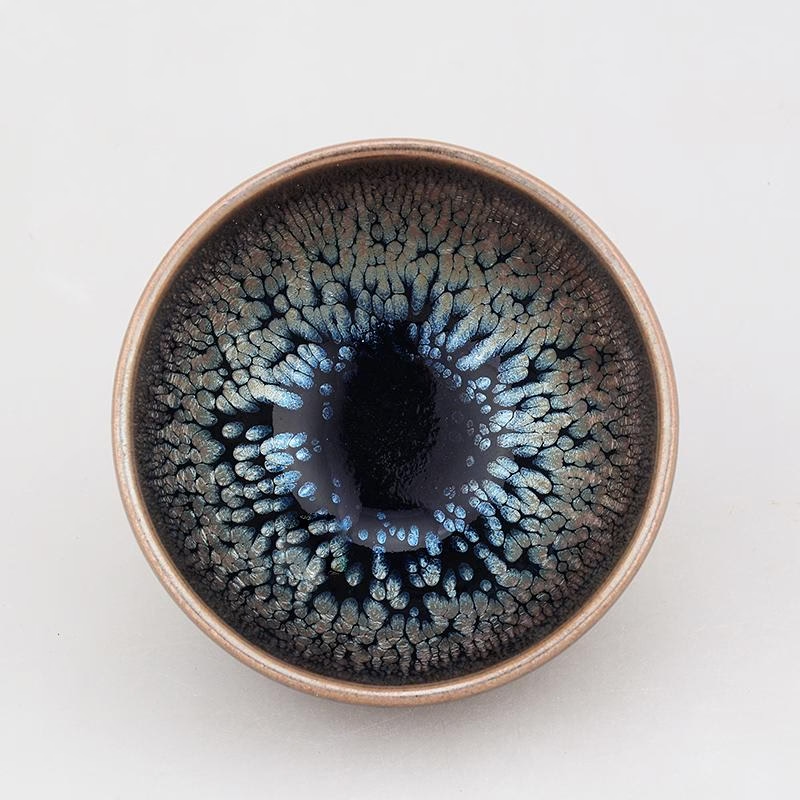
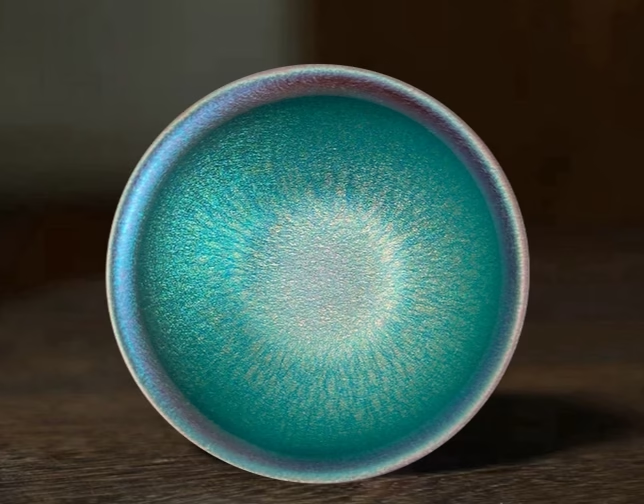
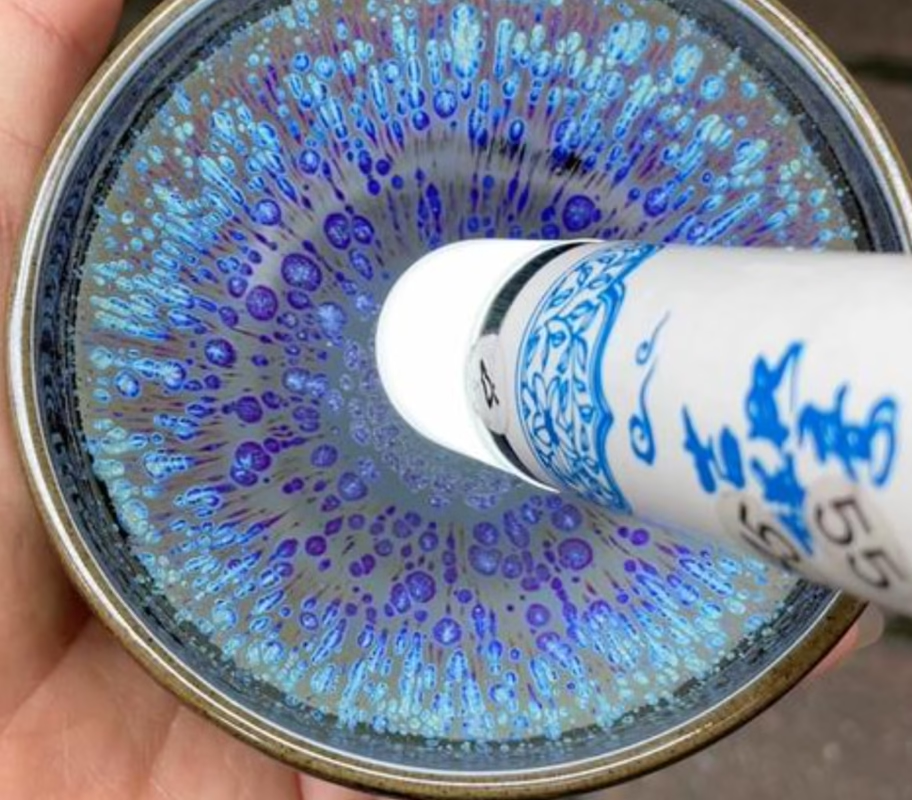
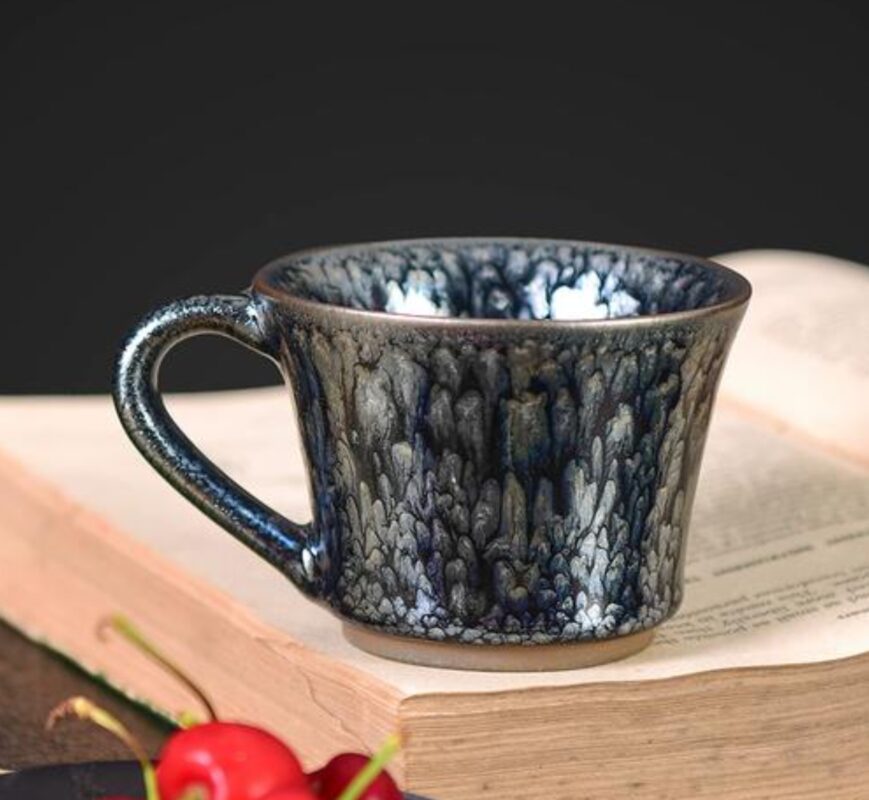
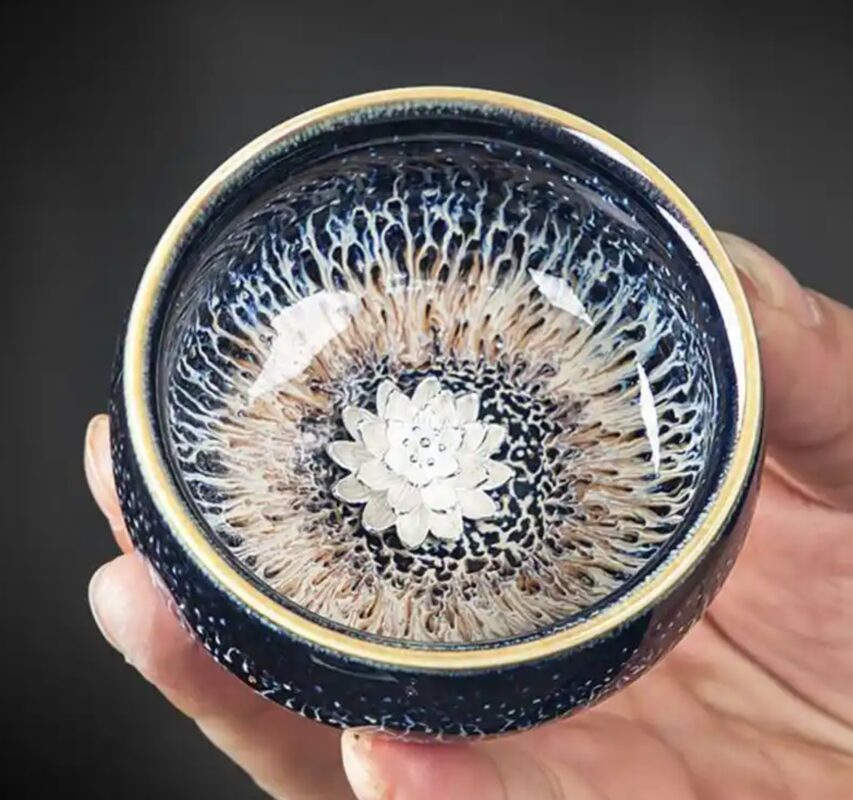
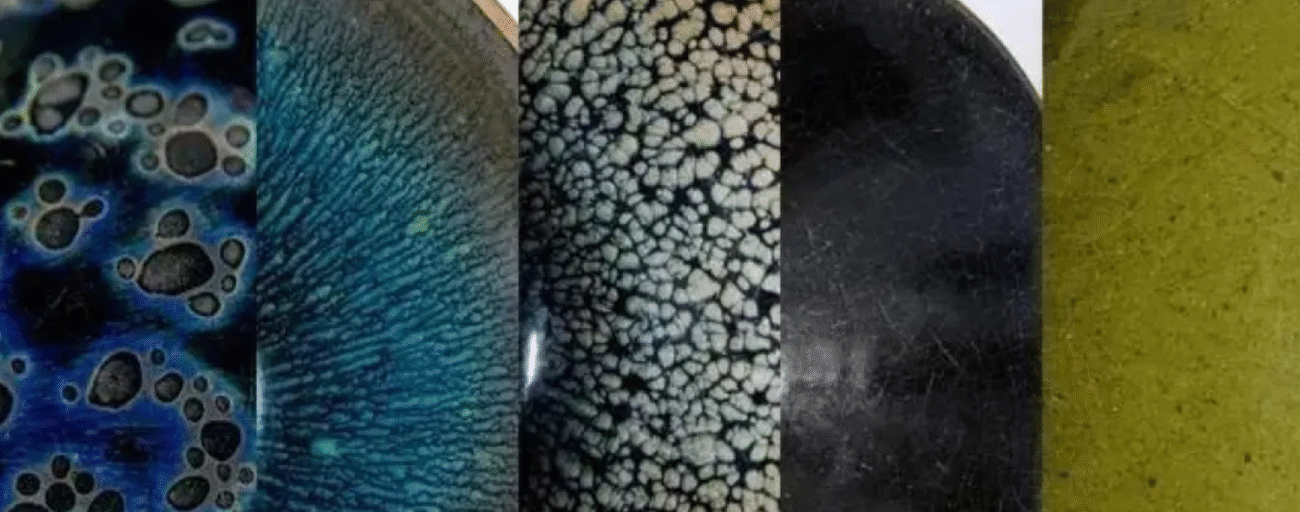
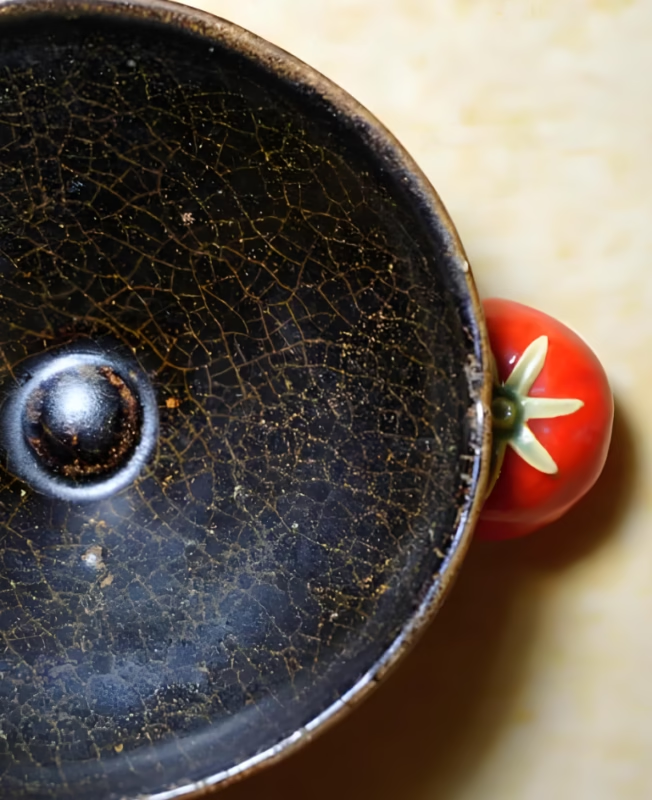
Jianzhan is a dark-glazed stoneware tradition rooted in Jianyang, Fujian, China. Its iron-rich body and iron-bearing glaze are associated with the material and kiln-created visual character that distinguish Jian ware. Our modern guide to the Jianzhan tea cup covers the history, glaze effects, and its relationship to the broader term tenmoku in more detail.
As a modern drinking cup, Jianzhan makes the most sense for someone who brews loose leaf tea separately, enjoys smaller servings, likes holding ceramic directly, and values variation from one handmade piece to another. It also suits the buyer who wants one distinctive cup rather than a perfectly matched set.
The Tea Association of the USA’s 2023–2024 industry report described specialty-tea growth and interest among Millennials and Gen Z in origins, types, flavors, and artisanal teas. That is useful context, not new 2026 survey data.
If this routine sounds familiar, the AEROVYNX tea cup collection provides a place to compare real forms and glaze character. Capacity and product-specific care information should still be checked on each listing.
Where Jianzhan Does Not Make Sense
Jianzhan may be a poor primary choice if you want a 12–16 oz desk mug, strongly prefer a handle, mostly drink iced tea, or plan to place a large basket infuser inside the drinking vessel. It may also disappoint someone who expects every handmade piece to look identical.
Price is another honest dividing line. If your priority is the lowest-cost functional cup, a standard mug or glass can serve tea perfectly well. And if microwave or dishwasher use is essential, do not assume compatibility across a handmade category. Check the care guidance for the exact product; if the seller does not provide it, treat that as missing information rather than permission.
Handmade Is Worth Paying For Only If You Value the Work
The word “artisan” is not a blank check. A buyer may reasonably pay more for forming, finishing, glaze work, firing, human labor, and the lower consistency of small-scale production. But the finished cup still needs to be usable, accurately described, and sold with enough information to make a decision.
Look for clear dimensions, capacity, material, origin when supported, honest photographs of the rim and foot, and restrained glaze language. Avoid listings that rely on “energy,” “healing,” “royal treasure,” or “masterpiece” while saying little about the object itself.
Handmade variation is meaningful when it reveals process and material. Poor workmanship remains poor workmanship.
A Simple Way to Choose
Choose a large handled mug when you want one substantial serving, a basket infuser, and maximum convenience. Choose glass when seeing the tea is part of the pleasure or you prefer a visually light vessel. Choose porcelain when a smooth, refined surface and versatile appearance matter most.
Choose handmade ceramic when texture, individuality, and evidence of the making process add value for you. Consider Jianzhan when you enjoy smaller servings of separately brewed loose leaf tea and want dark glaze, weight, and material variation to become part of the ritual.
Fall drink season is often presented as a list of flavors: pumpkin, chai, cinnamon, apple, pecan. Yet once the electric kettle returns to the counter and hot tea becomes a daily habit again, the object you reach for matters too.
So what is the best tea cup for loose leaf tea? It is the cup that fits the routine you actually have. A person drinking 14 ounces of Earl Grey at a desk may be right to choose a handled mug. Someone pouring a few ounces of oolong at a time may come to love a small handmade cup. Glass may be perfect for one drinker; Jianzhan may become the favorite object of another.
The goal is not to own the most specialized cup. It is to understand why you chose it.