
Blog
Fall Hosting Ideas That Feel Personal, Not Perfect

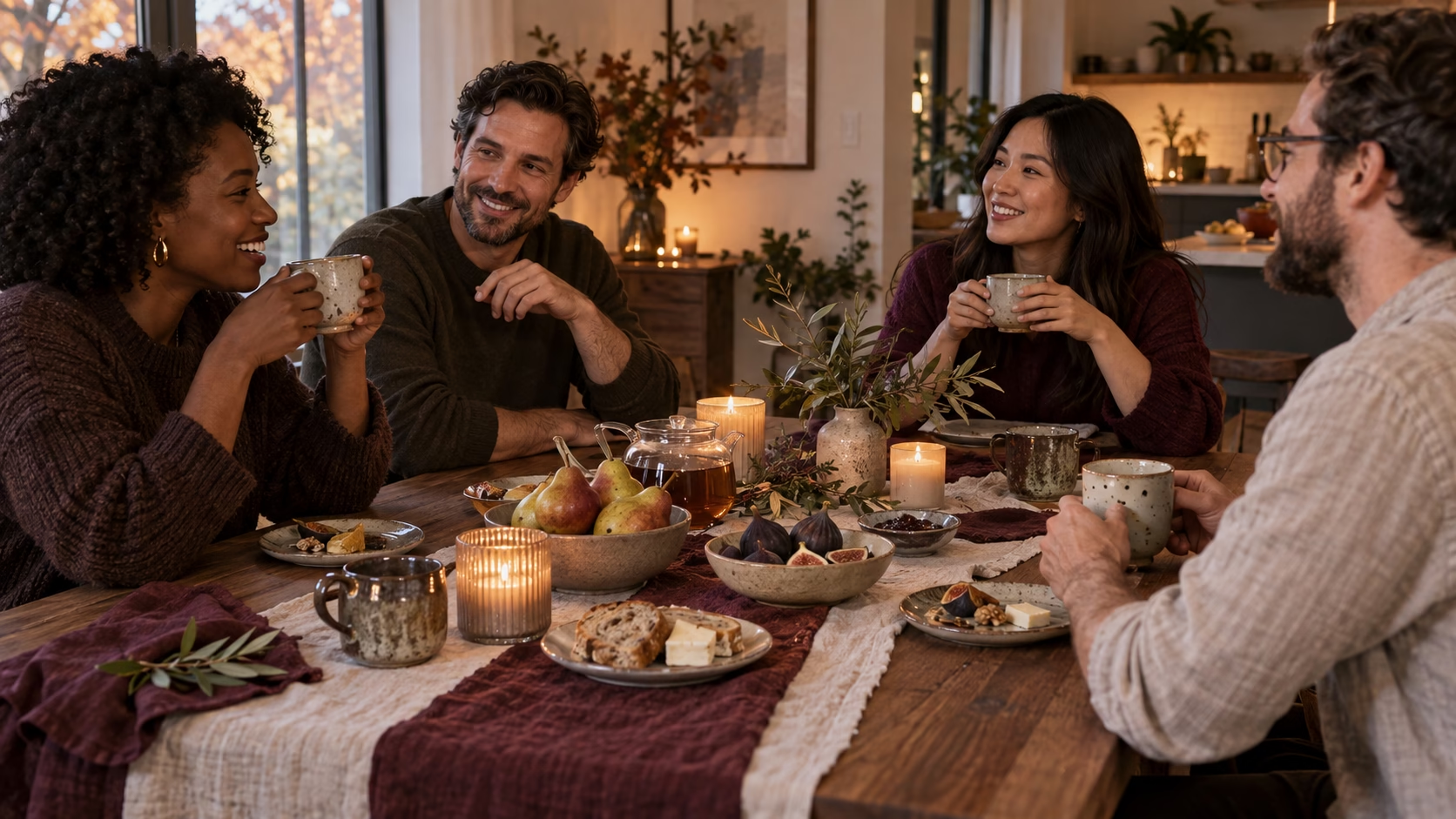
American fall hosting has spent years looking remarkably orange. Pumpkins arrive on the porch, then multiply across the table, the mantel, the napkins and sometimes the drinks. By the time friends come over, the room can feel more like a seasonal retail display than a home with dinner in the oven.
The more interesting fall hosting ideas for 2026 move in a different direction. There are fewer theme props and more texture, fewer matching sets and more objects that look collected. The gatherings are smaller, and nobody minds that the serving bowl came from a thrift store or that dessert is late.
People are genuinely gathering at home more often. In the 2026 International Housewares Association At-Home Entertaining Survey, reported by HomePage News, 57% of respondents said they had hosted a casual gathering in the previous year, up from 47% in the 2025 survey. That does not mean every American is suddenly holding formal dinner parties. The survey defines casual gatherings broadly, including a movie night with food or drinks. That breadth is part of the point: having people over no longer needs to be a production.
Americans Are Having People Over Again
Younger adults are helping drive the increase. The same survey found that 64% of Gen Z respondents and 62% of Millennials had hosted a casual gathering during the prior year. Looking ahead, 47% of Gen Z and 39% of Millennials expected to host more often.
The reasons are ordinary rather than grand. Just over half of respondents said spending time with friends and family motivated them to gather, while 31% said lower costs or more affordable hosting options would encourage them. Dinner at home can answer both impulses. It offers a real evening together without asking everyone to book a restaurant, buy tickets or dress for an occasion.
Survey percentages describe respondents, not every household, and they do not explain what a good gathering feels like. They do show that the home is becoming a more active social setting. The useful question is what kind of evening fits the people, the room and the energy available on a Friday night.
The New Dinner Party Is Smaller and Less Formal
A dinner for four deserves to count. So does soup and bread at a kitchen island, a Sunday potluck in an apartment or takeout transferred to serving bowls before friends arrive. Informal does not mean careless; it means the host has removed work that guests never needed.
Start with the number of people the room can hold comfortably, not the number of place settings that would look impressive in a photograph. Four friends who can hear one another usually have a better night than twelve people squeezed around rented furniture. If chairs do not match, put them at the table before guests arrive and let the arrangement look settled rather than apologetic.
Keep the menu narrow enough that the host can sit down. One main dish, a salad, bread and dessert can carry an evening. A potluck works when assignments are clear; “bring something” tends to produce three desserts and no vegetables. Asking one person for bread and another for a salad feels relaxed while quietly solving the problem.
A Fall Table Does Not Need to Look Like a Pumpkin Patch
Fall can register through materials before anyone sees a seasonal motif. Warm wood, rumpled linen, dark ceramic, pears in a bowl and low candlelight already change the room. A branch clipped from the yard or a few stems from the market can be enough. Keep anything in the center low enough that guests can see across it.
Current design coverage is leaning toward chocolate brown, burgundy, aubergine, olive, tobacco and cream rather than reflexive orange. Veranda’s August 2026 report on fall hosting, based on interviews with event planners and designers, describes moody color, mixed collections and personal references in place of a prescribed seasonal look. That is expert direction, not a national consumer poll, but it offers a useful permission slip: use the colors already present in the room.
If the table is neutral, one burgundy linen or an olive serving bowl can carry the season. If the dining room is already full of dark wood and pattern, cream napkins and clear glasses may provide the needed space. More fall decoration does not necessarily create more atmosphere. Often it just occupies the surface where dinner needs to go.
Collected Looks Better Than Coordinated
Eight identical plates are convenient, but they are not the admission price for hosting. Vintage glasses can sit beside contemporary bowls. Two kinds of plates can alternate around the table. A plain serving dish can make a patterned one feel deliberate.
The trick is to give the mix a shared visual language. Repeat a material, a color family or a sense of scale. Several different cups feel related when their glazes live in the same dark, earthy range. Mismatched plates settle down when the napkins are all the same. Variation needs a rhythm; otherwise, it reads as the contents of a cabinet placed on the table at once.
The table is borrowing from the rooms around it. The 2026 U.S. Houzz Fall Design Trends Report draws on interviews with nearly 50 home-design professionals, who described interest in warm woods, layered textures, natural material variation and rooms with personality rather than showroom perfection. The report reflects what those professionals are seeing among clients, not a universal American preference. At a dining table, the appeal is easy to understand because the objects are touched as well as seen.
Let Useful Objects Create the Atmosphere
A fall gathering does not require a bin of objects that come out for ten weeks and spend the rest of the year in storage. Before buying a decorative piece, ask whether something useful could do the same visual work. A woven tray can hold drinks tonight and mail next month. Linen napkins bring color and texture, then return for birthdays. A ceramic bowl filled with fruit becomes part of dinner instead of competing with it.
Use what is already in the house first. Move a lamp closer to the dining area, turn off the overhead light and collect candlesticks from different rooms. Put water on the table before anyone sits down. Clear one place where a guest can set a bag. These details cost little, yet they affect comfort more than a themed sign or another package of disposable decorations.
Function also keeps styling believable. Guests are more likely to notice that a glass feels good in the hand, a chair has space behind it or a serving spoon is where it should be than whether the centerpiece follows a forecast.
Give the Drinks a Clear Role
You do not need a full bar to give the evening a shape. One arrival drink, water with dinner and one warm option later is a complete plan. The first drink marks the transition into the gathering. The last one can slow the rush toward coats and dishes.
Apple cider, a batch cocktail, sparkling water with citrus or a simple nonalcoholic punch can all work at the door. Choose one that can be poured without measuring every serving. Wine may be right for dinner; so may beer or a nonalcoholic drink. The point is not to eliminate choice, but to avoid spending the night managing it.
The National Restaurant Association’s 2026 Beverage Trends report notes that Gen Z and Millennials drive many beverage-only restaurant occasions, especially in mid-afternoon, and that customers want broader nonalcoholic options including teas and coffee drinks. Restaurant data cannot prove what people serve in private homes. It does suggest that guests are increasingly familiar with a wider beverage menu than wine, beer and soda alone.
If you want a seasonal option without building a bar program, choose one flavor direction. Chai brings spice, while black tea with citrus feels clean and familiar. For an earlier gathering, matcha or cider may make more sense. Our guide to fall tea drinks separates the mood of each drink without treating them as interchangeable fall props.
Tea Works Best When It Is an Ending, Not a Performance
After dinner, putting on the kettle can give the evening another chapter. Dessert comes out, the table relaxes and conversation continues while the water heats. Nobody needs to announce a ceremony. Offer two clear choices rather than opening a cabinet of twenty tins: perhaps one black or oolong tea and one caffeine-free herbal infusion.
That distinction matters in the evening. Tea made from Camellia sinensis naturally contains caffeine in varying amounts; many herbal infusions do not, although ingredients and blends differ. Tea should not be presented as a sleep aid, digestive cure or wellness requirement. Here it is simply a social signal that guests do not have to leave the moment the plates are cleared.
Keep service simple. Brew in a pot and pour into cups at the table, or bring hot water and infusers if the group is small. Set out a place for used leaves and drips. If the host spends twenty minutes explaining specialized tools, the drink has started working against the relaxed mood. A tea ritual earns its place when it supports the people already in the room.
Handmade Cups Make Sense at an Intimate Table
Handmade tableware can add character because each piece carries small differences in form, surface and glaze. Around a table for four or six, those variations are close enough to notice. A guest may turn a cup in the light or ask why two surfaces developed differently. The object joins the conversation without needing to become the subject of the evening.
That appeal is practical only when the cups fit the drink and the host’s habits. Someone serving generous mugs of herbal infusion may need handles and larger capacity. A household that values stackability, identical replacements and unrestricted microwave use may be happier with mass-produced drinkware. Handmade does not make an object morally superior, and visible variation is a benefit only for someone who enjoys it.
Where Jianzhan Fits—and Where It Does Not
Jianzhan is rooted in the Jian ware tradition of Jianyang, Fujian. Its dark surfaces, iron-rich ceramic body and kiln-created glaze variation can suit a table built around warm wood, aged metal and individual pieces. The smaller drinking format can work well for tea brewed separately and shared among a few guests. For readers new to the form, our Jianzhan guide explains the tradition without merging it with Japanese or generic “Asian” teaware.
It is a poor fit when twelve guests need perfectly identical cups, everyone expects a large handled mug, the drink is iced or a particular cup’s care instructions conflict with the household routine. For serving size and material questions, see our practical guide to choosing a tea cup for loose leaf tea.
Nor does hosting create an obligation to buy a set. Mixing existing cups can look intentional when their tones or proportions relate. If a host eventually wants one or two distinctive pieces, that choice can grow from an established routine rather than a deadline imposed by the next dinner.
Build One Evening, Not an Event Production
A workable fall gathering might be six friends on a Saturday. Set the table with the linen already in the closet, a few candles and a bowl of pears. Alternate two sets of plates if necessary. Serve a main dish that can wait ten minutes, plus salad, bread and a dessert made earlier in the day.
Pour one uncomplicated drink when people arrive and keep water within reach. Put on a playlist long enough that nobody has to manage it between courses. After dinner, offer tea, coffee or another warm drink. Guests can remain at the table or move to the living room. Nothing in that plan requires a new dining room, coordinated dinnerware or three days of preparation.
Plan the cleanup with the same restraint. Fewer serving pieces mean fewer dishes. Empty the dishwasher before guests arrive. Keep one counter clear for used plates, and accept help when a friend offers it. Good hosting is not measured by whether the kitchen appears untouched at 10 p.m.
A Table People Want to Stay At
The memorable fall table is rarely the one with the most pumpkins or the newest plates. It is the one where people can see one another, the host sits down, the food reaches the table warm enough and nobody worries that the cups do not match.
Personal hosting comes from editing. Keep the color that changes the room, the object guests can use and the drink that gives the evening a graceful final act. Leave out the props that make the table harder to inhabit.
If tea becomes part of that routine, handmade drinkware may be one useful layer among many. The AEROVYNX tea cup collection offers different shapes, capacities and glaze surfaces to compare. Browse only if those details suit the way you already gather; a comfortable evening with the cups you own is still the right place to begin.