
Blog
What Is Reactive Glaze? A Practical Ceramic Buyer’s Guide

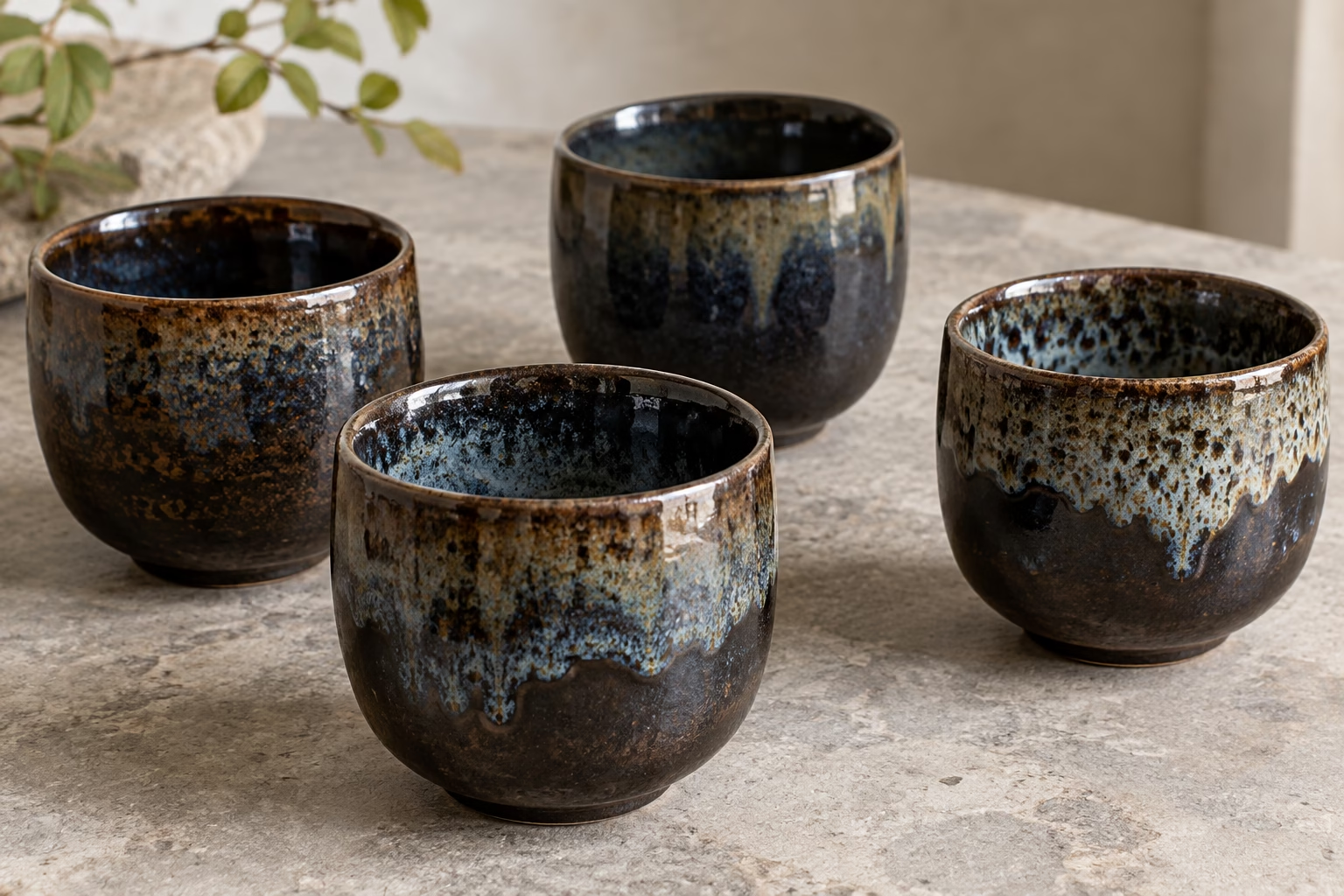
You order two cups in the same color. One arrives with a darker rim; the other has more pale speckles across its side. Neither looks quite like the photograph. Is that the appeal of reactive glaze, or a reason to contact the seller?
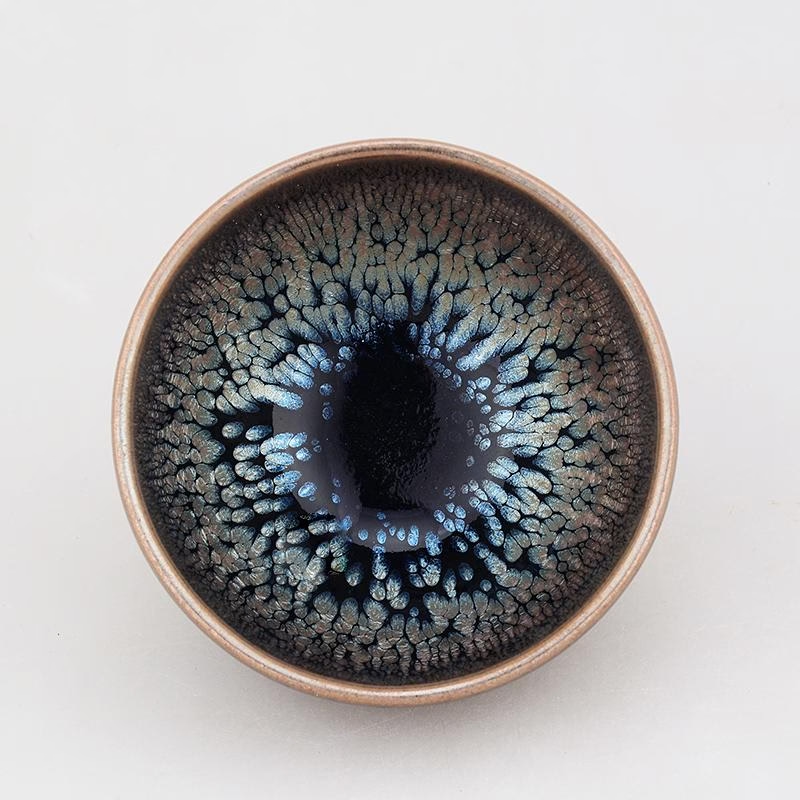
Reactive glaze is a broad term for ceramic finishes that develop visible variation during firing. Colors may mingle, collect in recesses, break across edges or form mottled and crystalline effects. The exact result depends on the glaze and the process, not simply on someone choosing a paint color.
That can make a cup interesting to own. It also makes accurate product descriptions especially important. Variation is something a buyer should understand before ordering—not an explanation offered only after a disappointing delivery.
What Is Reactive Glaze, Exactly?
A ceramic glaze is a coating that melts during firing and forms a glasslike surface on the clay body. “Reactive” describes a family of visibly changing effects rather than one standardized recipe. In contemporary pottery and homeware listings, it can cover several different ways of producing a varied surface.
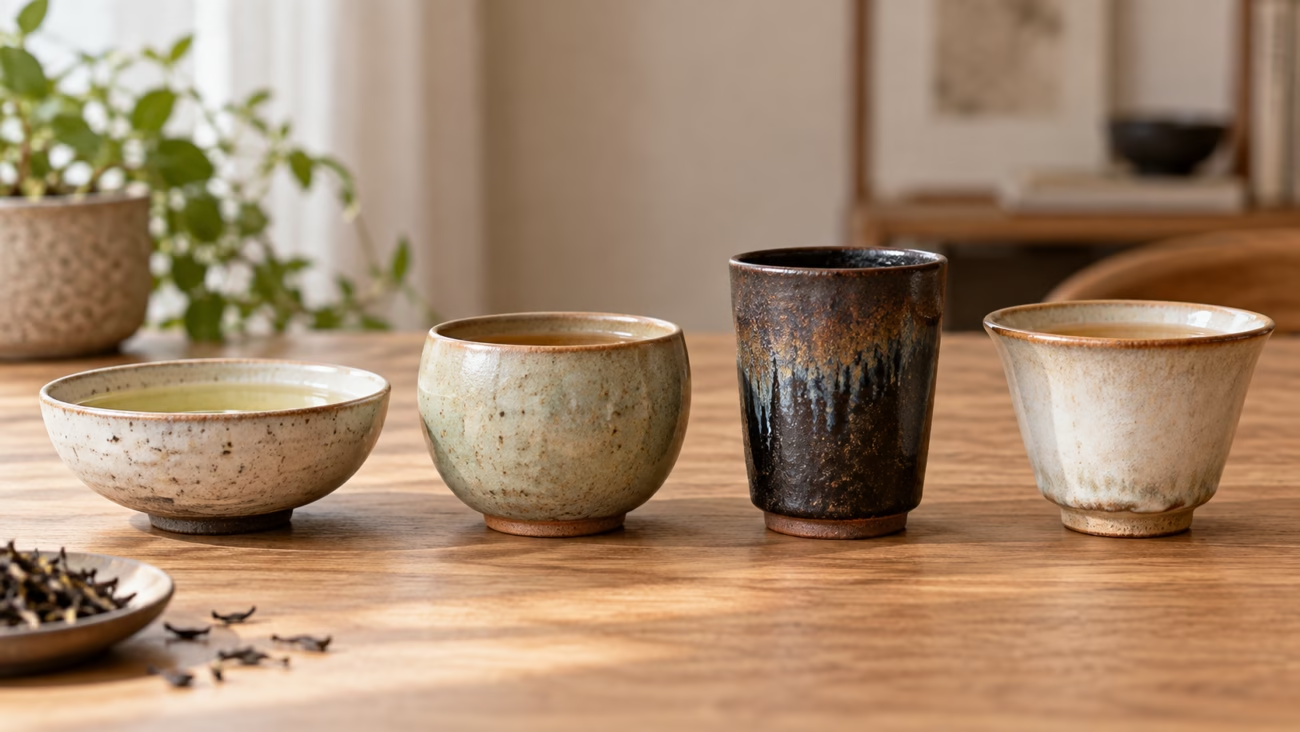
You might see brown showing through blue, small spots against a dark background, overlapping bands of color or a deeper pool inside the cup. Some finishes contain visible crystals; others do not. A smooth surface can look richly textured without feeling rough.
It is worth separating the finish from the material underneath. Reactive glaze is not another clay category alongside stoneware or porcelain. Our guide to ceramic and porcelain tea cups explains that material distinction.
Why Can the Same Glaze Look Different?
Think of the finished surface as a combination of ingredients and conditions. Glaze composition, colorants such as metal oxides, the underlying clay, application thickness and the vessel’s curves all contribute. Kiln temperature, atmosphere, position and cooling can also affect the outcome.
A layer may become thinner over a rim and thicker in a recess. Melt movement can create streaks. In suitable formulations, cooling allows crystals to develop. Digitalfire’s technical explanation of reactive glazes describes several mechanisms behind these varied surfaces; there is no single reaction responsible for every example.
This does not mean the maker simply leaves everything to chance. Recipes, application methods, kiln loading and firing schedules are deliberate decisions. Skilled production aims for a recognizable range of results, even when every spot cannot be positioned precisely.
Are the Patterns Painted On?
Many are developed in the kiln rather than painted line by line. The unfired coating may be dipped, poured, sprayed, brushed or layered before heat transforms it. Brush application and a kiln-developed pattern can therefore exist on the same piece.
But appearance alone cannot establish the process. Printed decoration, hand-painted marks and glaze effects can sometimes resemble one another in a small photograph. If the method matters to you, ask how that particular finish was made.
Reactive Glaze Does Not Automatically Mean Handmade
A studio potter can use a reactive glaze. So can a small workshop or a factory producing a large coordinated collection. Conversely, a handmade cup can have a restrained, relatively uniform finish.
“Handmade” and “reactive” answer different questions: how was the object produced, and what kind of surface effect does it have? Neither word, by itself, establishes quality, rarity or value.
For a more expensive purchase, a useful listing explains which stages involve handwork. Hand-thrown, mold-formed and hand-glazed are not interchangeable descriptions. Buyers should not have to infer the production method from an irregular patch of color.
Normal Variation or an Actual Defect?
Within a clearly described finish, differences in color depth, speckle placement, streak length, edge coloration and pattern density can be normal. One cup might have a larger dark area inside; another might show more of a secondary tone around its shoulder.
The important boundary is function and workmanship. A cup should still sit securely, feel properly finished where it meets your mouth and arrive intact. A reactive finish does not excuse:
- A rocking base on a flat surface.
- Chips, a sharp rim or a structural crack.
- Flaking glaze or damage to the food-contact surface.
- Deformation that prevents the cup from working as described.
Nor should a variation disclaimer cover a fundamentally different color family from the one advertised. A dark blue cup with slightly more brown at its edge is one thing; an unexpectedly pale, mostly unglazed-looking vessel is another.
If a mark looks like damage rather than decoration, photograph it and ask the seller before using the cup. You do not need to become a glaze specialist to question an uncomfortable rim or an unstable foot.
Reactive Glaze vs a More Uniform Finish
Neither is the better choice for everyone. This comparison describes shopping expectations, not formal ceramic grades.
| Buying question | Reactive finish | More uniform finish |
|---|---|---|
| Color consistency | Noticeable tonal shifts may be intended | Usually aims for closer consistency |
| Pattern placement | Spots and streaks can move between pieces | Often simpler or more repeatable |
| Matching a set | Coordinated, not necessarily identical | Easier when close matching matters |
| Surface character | May look layered or mottled | May look quieter and more even |
| Later purchases | Batch variation may be more apparent | Batch differences can still occur |
| Best expectation | Choose an acceptable range | Ask how closely pieces match |
If you want six cups that look almost identical on an open shelf, a more consistent finish may make you happier. Enjoying visible variation is a preference, not a test of whether you appreciate craftsmanship.
Why This Finish Fits Current Tabletop Design
There is a current design context for the interest. Magenta’s Fall 2026 tabletop outlook highlights textured ceramics, reactive finishes and combinations that feel collected rather than perfectly uniform. That is a design company’s perspective, not evidence that every American household is replacing its dinnerware.
The appeal is easy to understand at cup scale: you see the surface closely, turn it in your hand and notice details that are less obvious across a dining table. Still, a compelling finish should not distract from capacity, comfort or care requirements.
Is Reactive Glaze the Same as Jianzhan?
No. Reactive glaze is a broad contemporary descriptive term. Jianzhan belongs to the Chinese Jian ware tradition associated with Jianyang, Fujian, with its own materials, forms and historical context.
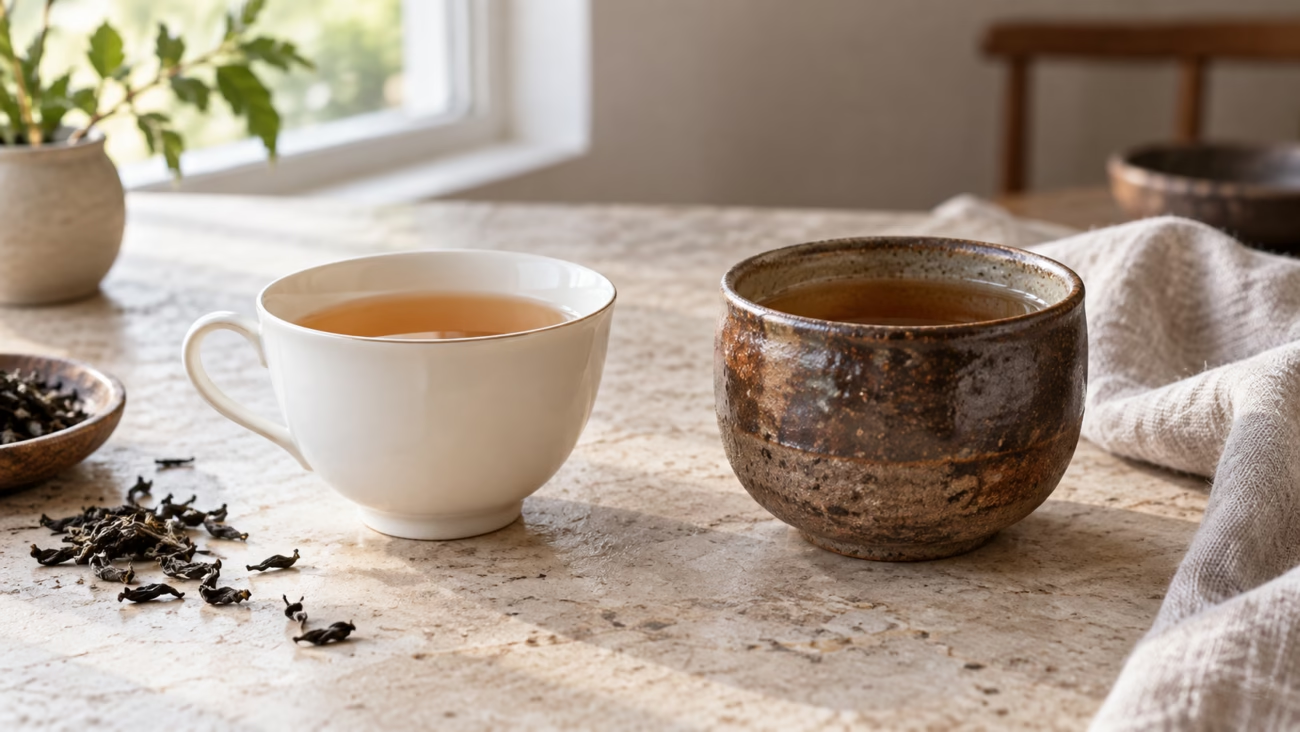
The Metropolitan Museum of Art identifies a historical hare’s-fur Jian bowl as stoneware with iron-oxide glaze. A British Museum Jian bowl has a dark body and iron-brown glaze with lighter streaks. These are specific museum objects—not proof of the recipe or origin of every modern dark-glazed cup.
Related labels also need care. Tenmoku has a Japanese naming and tea-bowl context; yaobian refers to kiln-change effects in Chinese usage; crystalline describes crystal development. These terms can overlap in discussions of ceramics, but reactive glaze, Jianzhan, tenmoku, yaobian and crystalline glaze are not five names for exactly the same category.
If origin and tradition influence your purchase, look for product-specific information rather than relying on surface resemblance. Our guide to Jianzhan tea cups explores the distinction without treating every dark ceramic cup as Jian ware.
What About Food Safety and Everyday Care?
“Reactive glaze” is not a food-safety certification. Suitability for drinking depends on the actual formulation, firing, finished food-contact surface, production controls and relevant testing. Neither an attractive color nor a high firing temperature alone proves that a finished cup is suitable.
The FDA publishes action levels addressing lead and cadmium leaching from ceramicware. The useful buying question is whether the specific finished product is intended for food use and supported by appropriate compliance information—not whether its glaze looks dark, shiny or handmade.
Ask separately about dishwasher, microwave and direct-heat use. A food-contact claim does not answer those questions. Follow the maker’s instructions for that cup; do not assume every reactive surface tolerates the same cleaning or heating routine. An item marked for decorative use belongs outside your drinking rotation.
Does the Glaze Make Tea Taste Better?
There is no basis here for promising that reactive glaze automatically improves tea, softens water or releases beneficial minerals. A visually complex surface is not evidence of a beneficial chemical effect.
You may simply enjoy drinking from it. Color, weight and the feel of the rim can influence your experience of the object. That preference does not require a health claim. For brewing and serving considerations, start with choosing a cup for loose-leaf tea, then choose a finish you like.
What to Check Before Buying Online
Read the Dimensions Before Studying the Pattern
Check capacity in both milliliters and US fluid ounces, plus height and mouth diameter. A tightly cropped photograph can make a small tasting cup look like a generous desk mug. Ask whether capacity is measured to the brim or at a practical filling level.
Shape matters too. A beautiful cup can still have a rim or profile you find awkward. The tea cup shape guide compares wide, tall and curved forms before glaze enters the decision.
Look for Several Honest Photographs
A useful listing shows the interior, rim, base and side, with a scale reference and a close-up of the surface. Photos of several pieces help explain the range better than one unusually dramatic example. Lighting can change how gloss and color appear, so avoid judging the whole cup from a single highlight.
Clarify What the Photograph Represents
Are you buying the exact photographed piece, or one from a glaze family? Both arrangements can be reasonable if they are stated clearly. If the exact distribution of blue and brown matters to you, request a current-piece photograph before ordering.
For matching pairs or replacements, ask about batch differences and the return policy. “Each piece varies” should explain the purchase, not remove the seller’s responsibility to describe it accurately.
Choose the Cup, Not Just the Glaze Name
Reactive glaze suits buyers who enjoy tonal variation and can accept that a pattern will not repeat exactly. If consistency matters more, choose a finish designed for closer matching.
For someone drawn to smaller handleless tea cups and visible glaze detail, the AEROVYNX tea cups collection is a place to compare forms. Check each listing’s dimensions, origin, finish description and care information rather than assuming one label covers every cup.
The satisfying purchase is a cup whose variation you understand and whose everyday use fits your routine. Interesting glaze is a reason to look more closely—not a reason to stop asking practical questions.