
Blog
What Is the best material for tea cup? — And Why It Matters More Than You Think


Most people focus on the tea. Very few think best material for tea cup.
Loose leaf quality.
Water temperature.
Brewing time.
Tea lovers spend hours discussing these details — yet the cup itself is often treated as an afterthought.
But after trying different materials over time, one thing becomes surprisingly obvious:
The material of your tea cup changes the experience more than you expect.
Not just visually.
But in temperature, texture, weight, and even how the tea feels while drinking.
So what actually is the best material for a tea cup?
The answer depends on what kind of tea experience you want.
Glass Tea Cups — Clean, Minimal, and Visual
Glass cups are usually where many people start.
They’re modern, lightweight, and visually clean. You can fully see the color of the tea, which makes them especially popular for lighter teas or aesthetic tea setups.
But glass has one common downside:
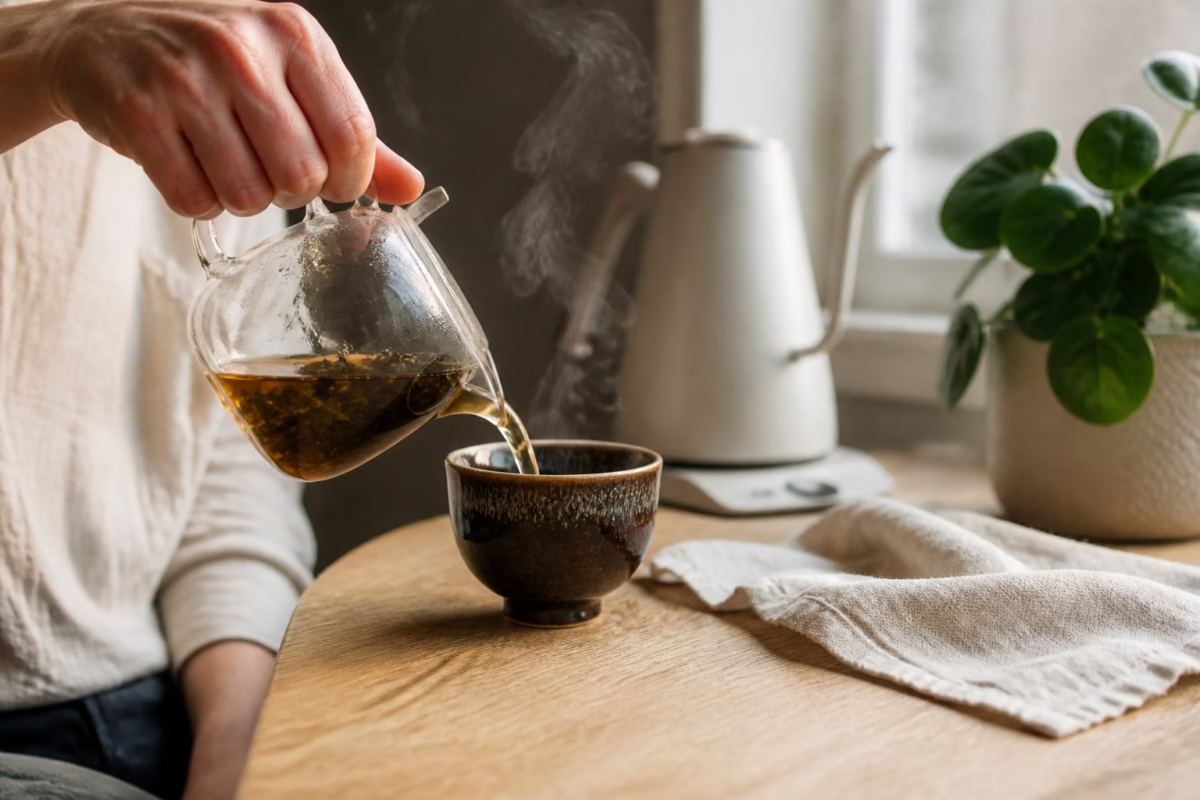
It loses heat quickly.
For some teas, that’s not a huge issue. But for deeper or more aromatic teas, temperature stability matters more than people realize.
And that’s where other materials begin to feel different.
Porcelain Tea Cups — Smooth and Traditional
Porcelain has been used in tea culture for centuries.
It feels refined, balanced, and easy to pair with almost any tea style. Compared to glass, porcelain retains heat better and generally feels softer while drinking.
But many modern porcelain cups are designed for consistency and mass production.
Beautiful, yes.
But sometimes lacking character.

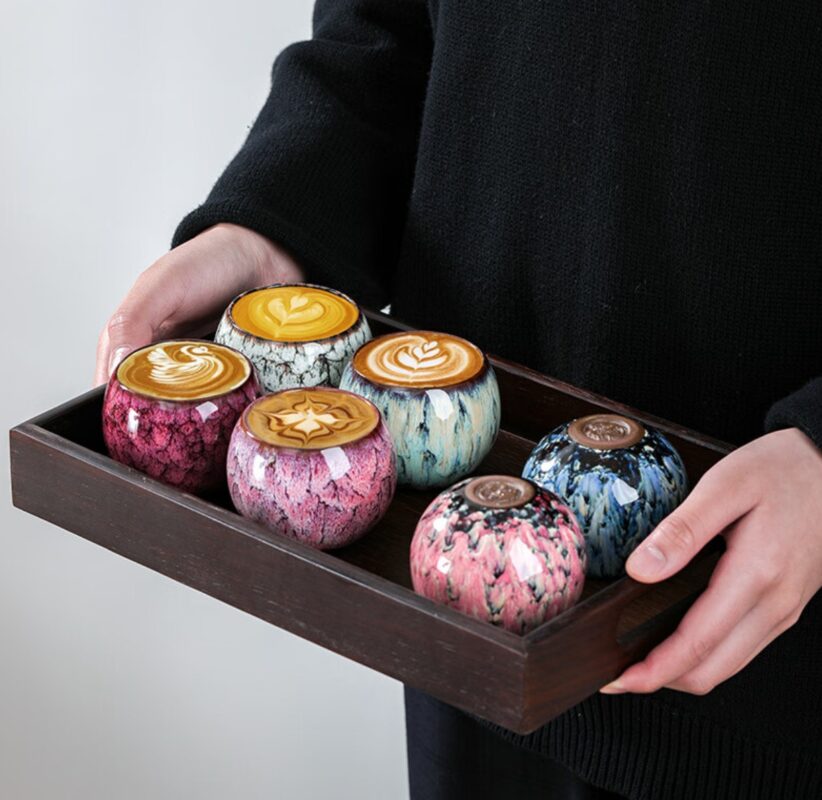
Why Ceramic Tea Cups Feel Different
This is usually the point where people begin discovering ceramic tea cups in a more serious way.
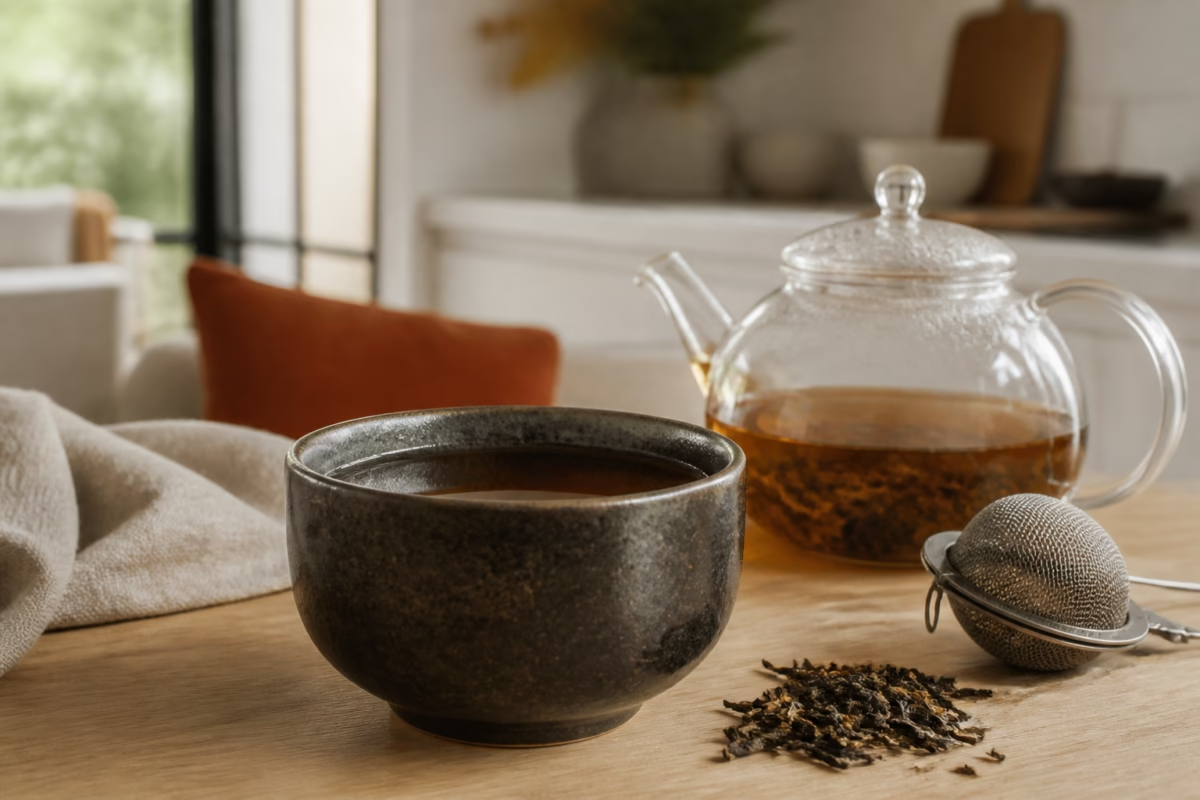
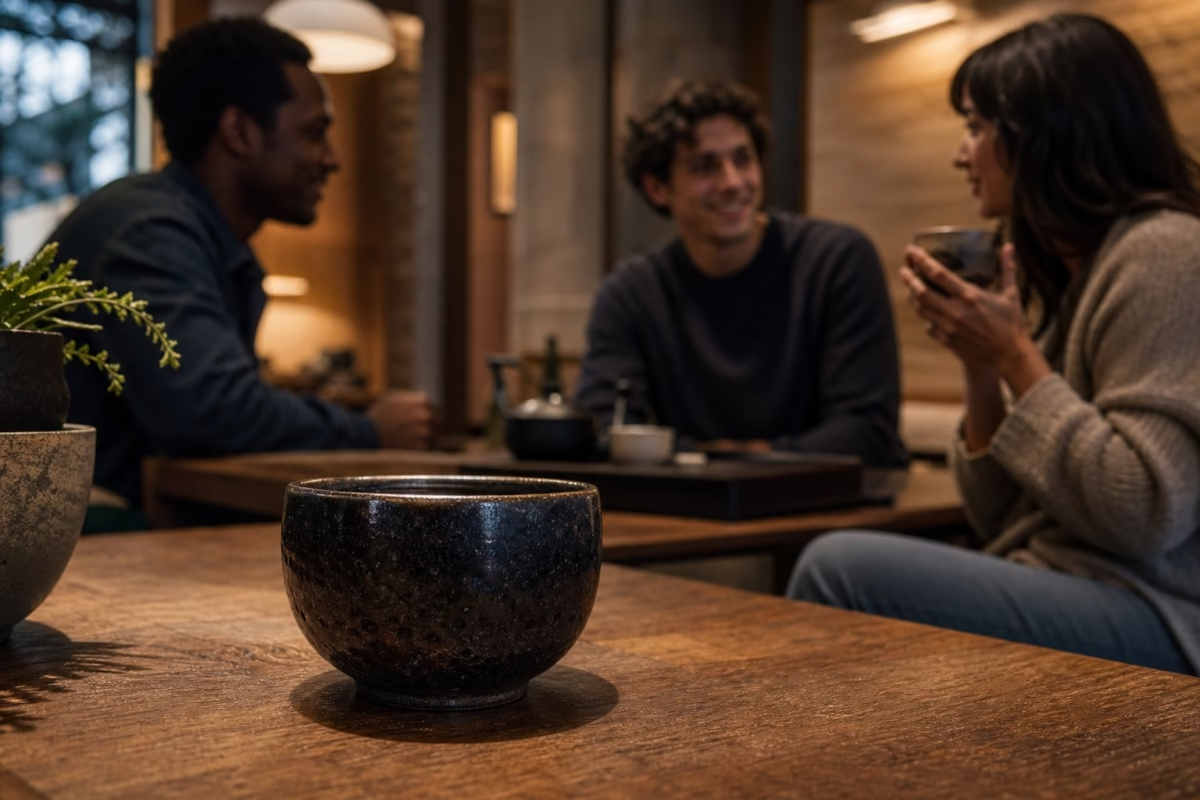
Good ceramic holds warmth naturally, feels more grounded in the hand, and creates a quieter drinking experience overall.
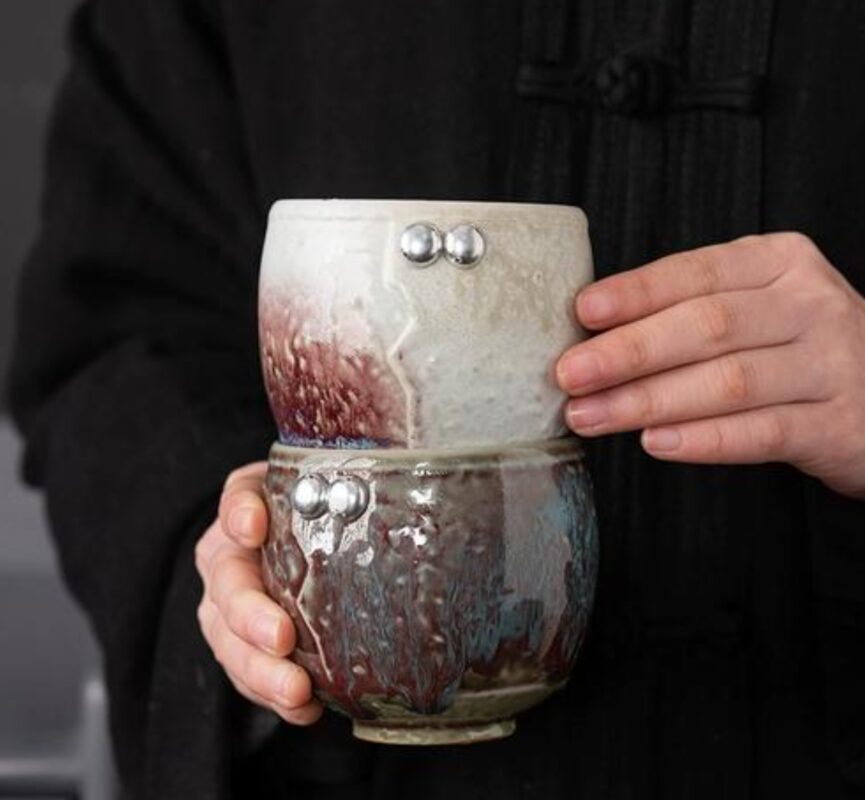
There’s a reason many tea enthusiasts eventually move toward handmade ceramic cups instead of factory-made alternatives.
The experience feels slower. More intentional.
And among traditional ceramic tea cups, one style stands out for a very specific reason:
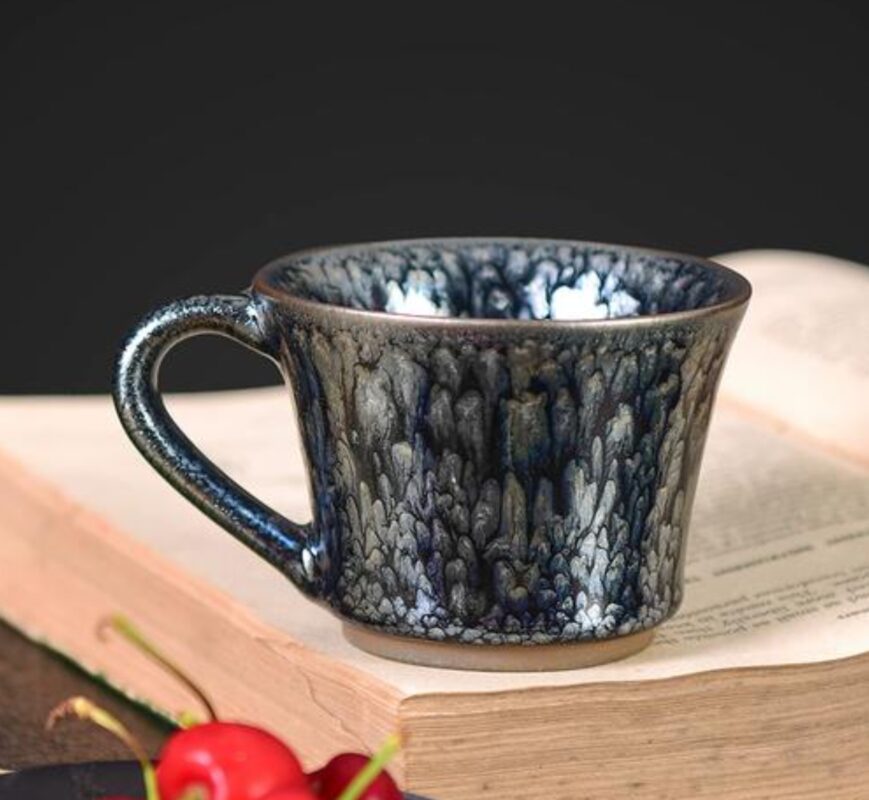
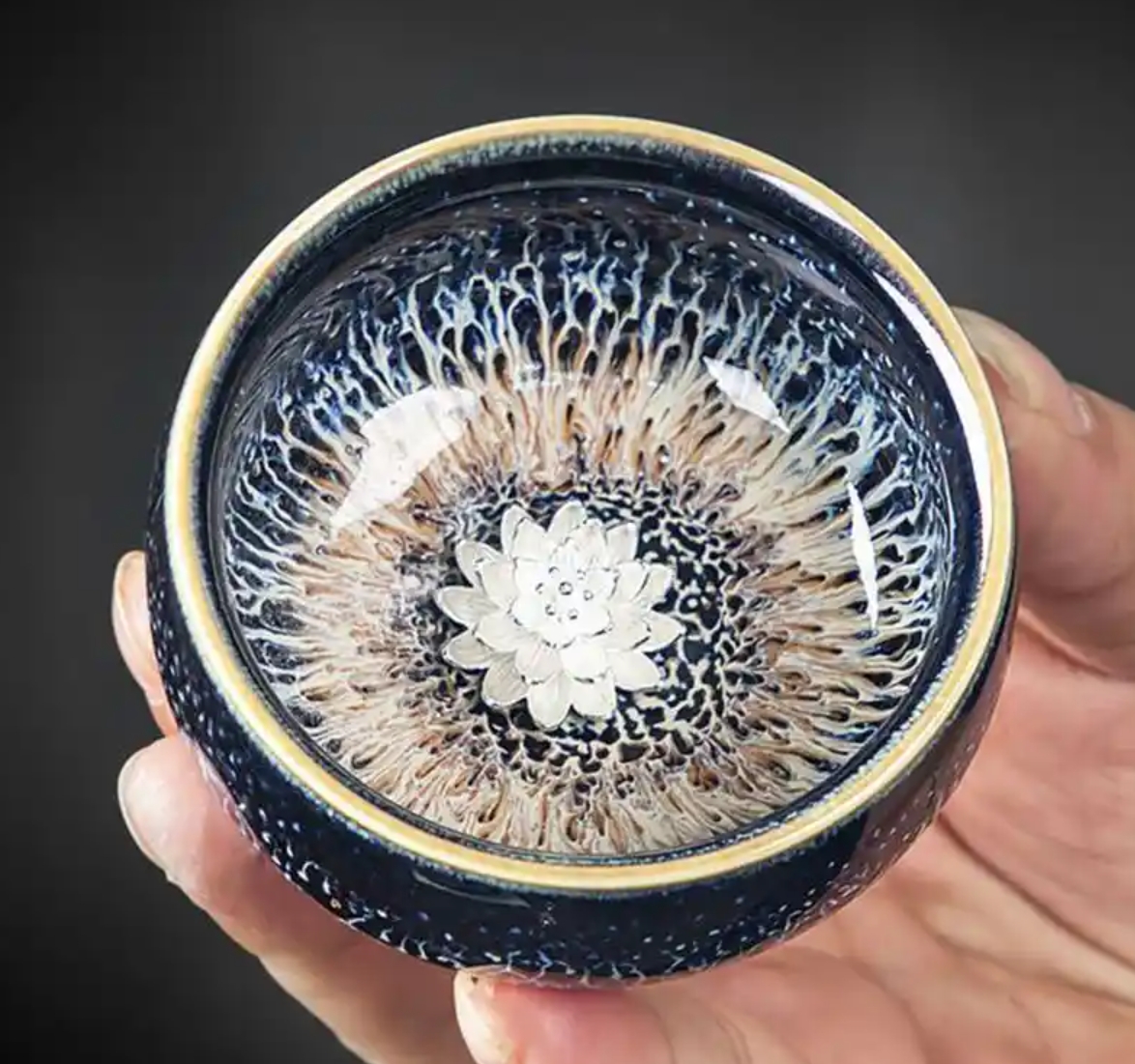
Jianzhan, also known as Tenmoku.
What Makes Jianzhan Different?
Unlike standard ceramic cups, Jianzhan tea cups are made from iron-rich clay and fired at extremely high temperatures.
That process creates two things:
- Better heat retention
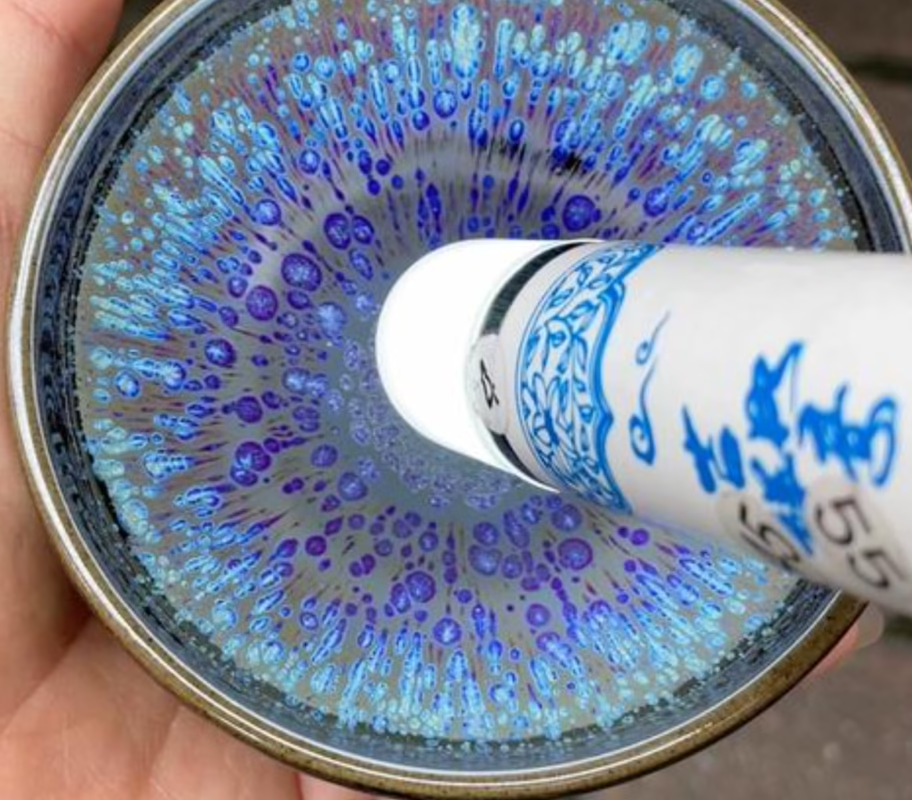
- Natural glaze variation
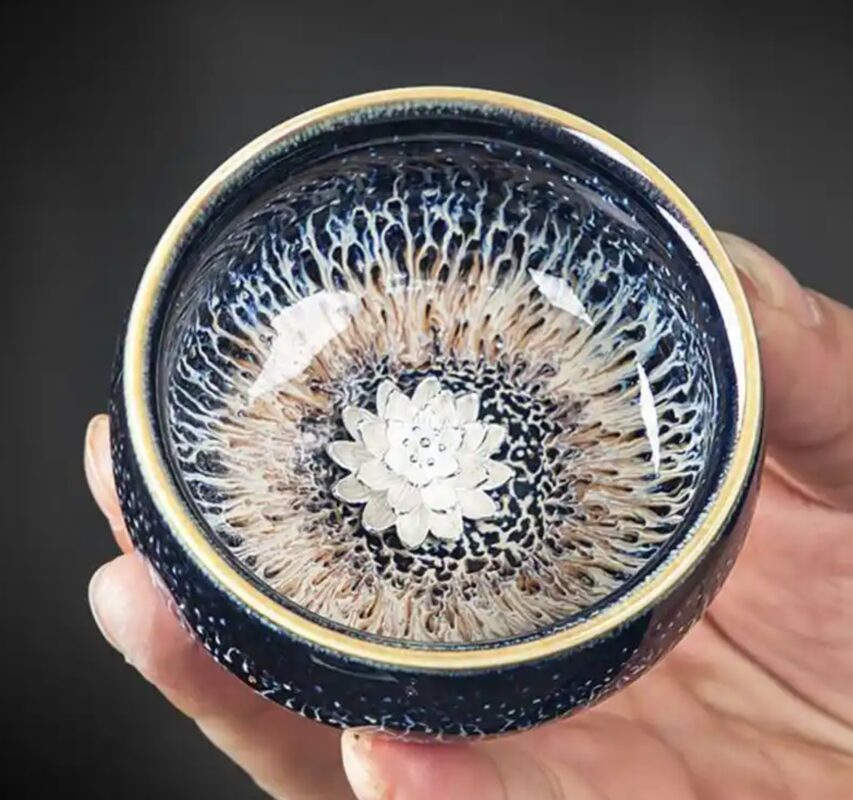
The surface patterns aren’t painted on afterward. They emerge naturally during firing, which means every cup develops its own texture and appearance.
Some tea drinkers also believe the mineral-rich clay subtly softens the taste of tea over time.
Whether you notice it immediately or not, the overall experience feels distinctly different from ordinary ceramic.
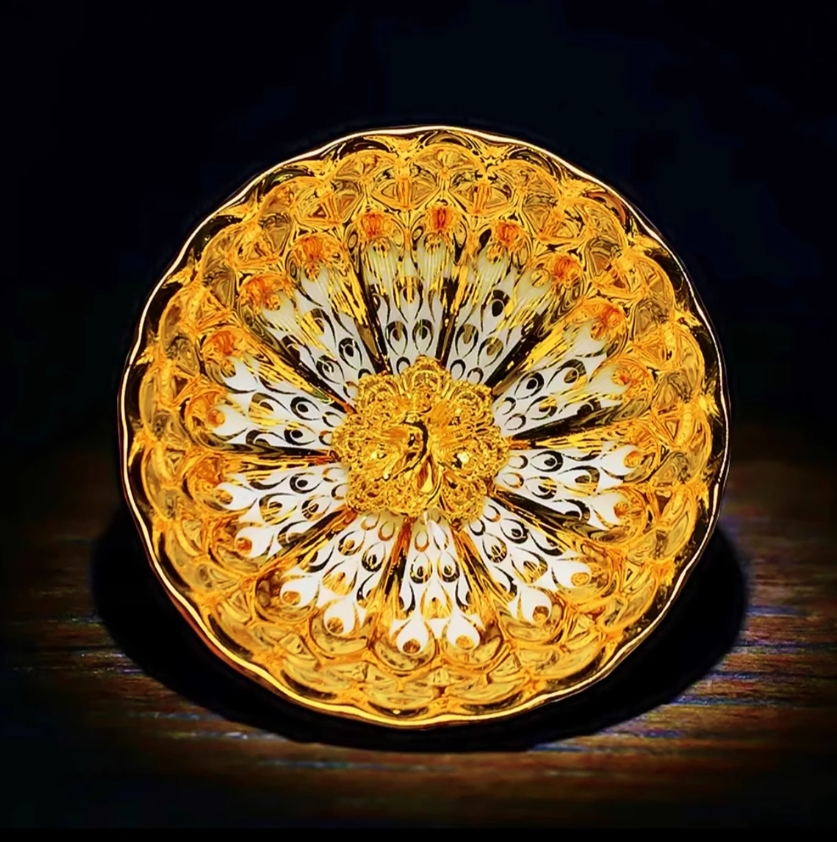
How a Traditional Chinese Tea Bowl Is Made — And Why It’s the Healthiest Way to Enjoy Tea or Coffee
[CURATED PICK] — The Beauty of Dark Glaze
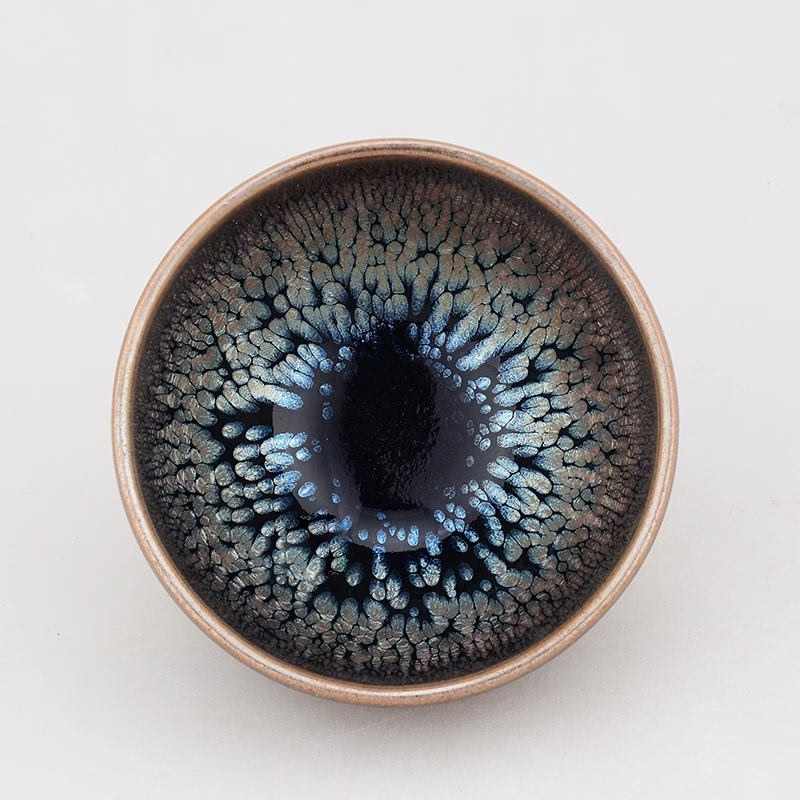
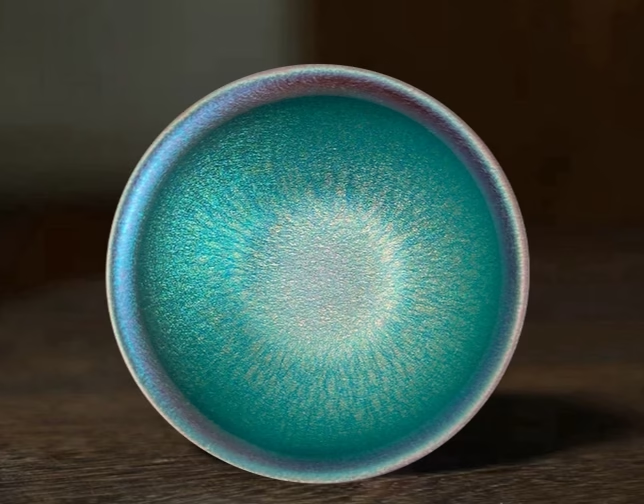
One of the most fascinating things about Jianzhan is how it reacts to light.
At first glance, the cup may appear almost black.
But under sunlight or warm indoor lighting, hidden blue, silver, or oil-spot textures begin to appear beneath the glaze.
It doesn’t feel flashy.
It feels quiet, personal, and deeply crafted.
The kind of object you keep reaching for without fully realizing why.
So… What’s the Best Material?
If your priority is:
- Visual clarity → glass works well
- Lightweight simplicity → porcelain is reliable
- Heat retention, texture, and atmosphere → ceramic stands out
And if you want something that feels more handmade, more intentional, and more connected to the ritual of tea itself, Jianzhan becomes hard to ignore.
A Tea Cup Is More Than a Container
At some point, tea stops being only about taste.
It becomes part of your routine.
Your desk.
Your quiet moments during the day.
And surprisingly, the cup you choose changes how that experience feels.
Explore Handcrafted Jianzhan Tea Cups
If you’re curious about experiencing tea in a different way, explore our curated collection of handmade Tenmoku tea cups designed for everyday use and quiet luxury.