
Blog
Why Does Tea Taste Better in ceramic tea cup? — A Hidden Detail Most People Miss

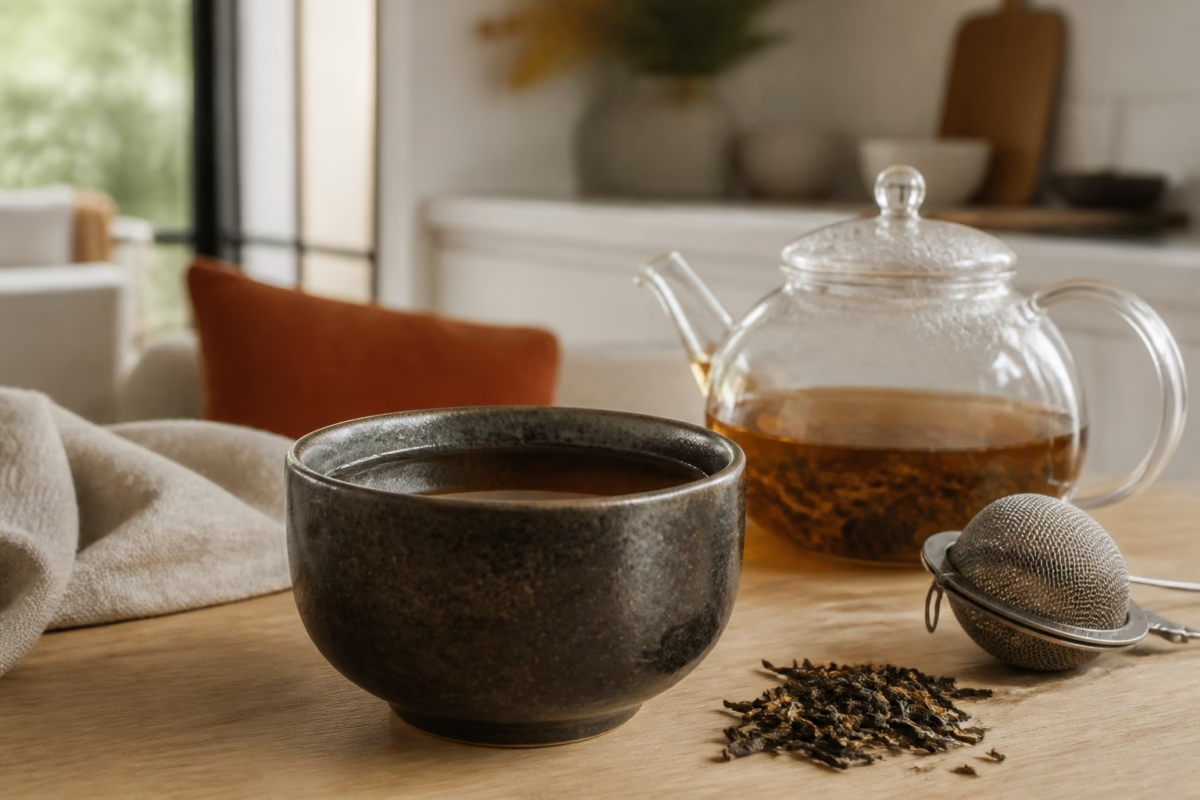
Most people blame the tea. Very few think aboutceramic tea cup.
If tea tastes bitter, too sharp, or somehow “flat,” the first instinct is usually to blame the leaves.
Maybe the tea quality isn’t good enough.
Maybe the water temperature was wrong.
Maybe it brewed too long.
And while those things absolutely matter, there’s another detail that often gets ignored:
The cup itself changes how tea feels and tastes.
Not in a dramatic, magical way.
But in a subtle way that becomes surprisingly obvious once you notice it.
That’s one reason many tea drinkers eventually move from glass or standard mugs to ceramic tea cups.
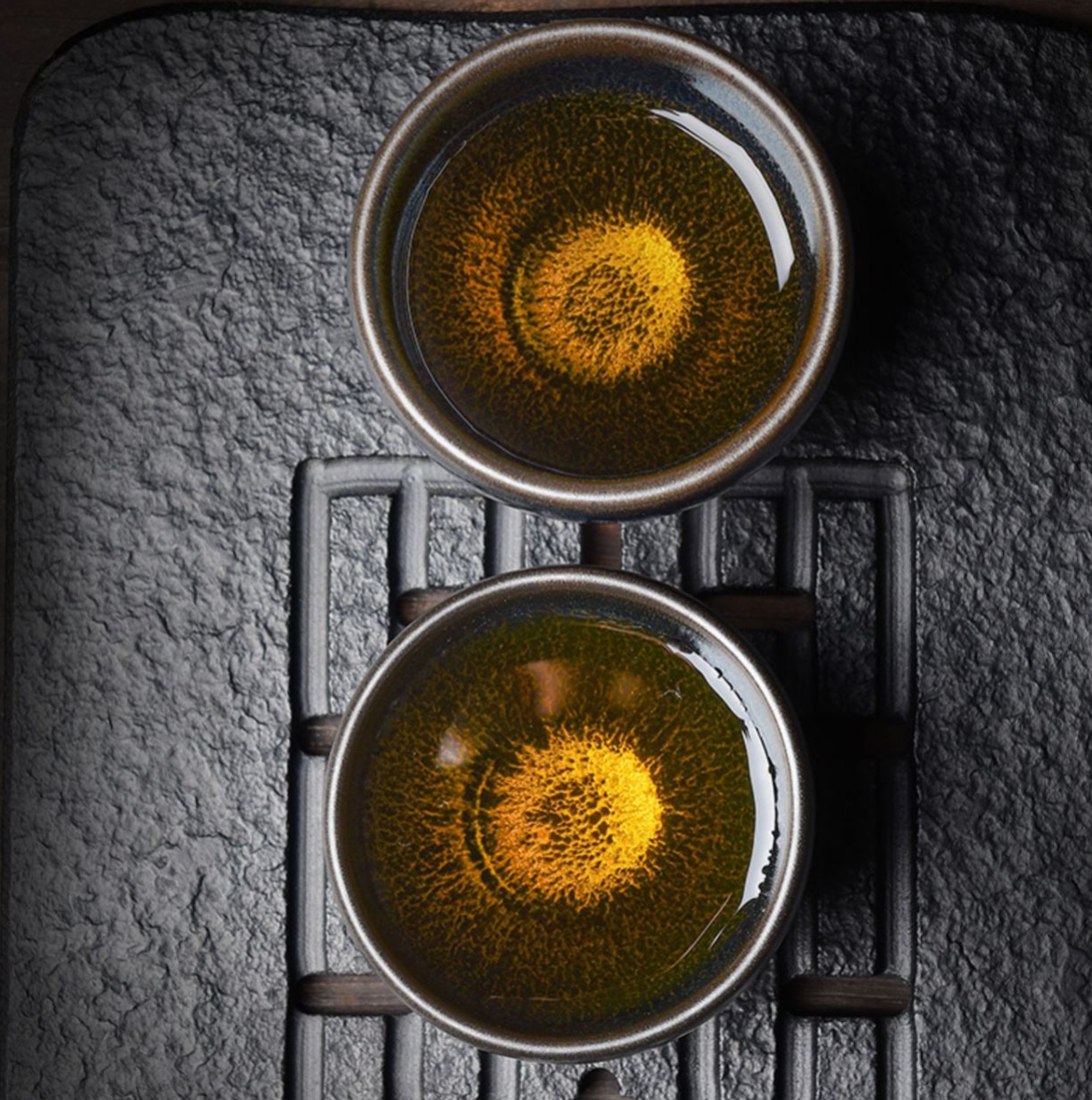
Why ceramic cups feel different
Compared to glass or metal, ceramic interacts with heat in a softer, slower way.
Glass loses temperature quickly.
Metal can make tea feel sharper or overly hot.
Ceramic, on the other hand, tends to create a more balanced drinking experience.
The heat stays stable longer, which affects how aromas develop while you drink. That alone can make tea feel smoother and more rounded.
But there’s another part people rarely talk about:
Texture.
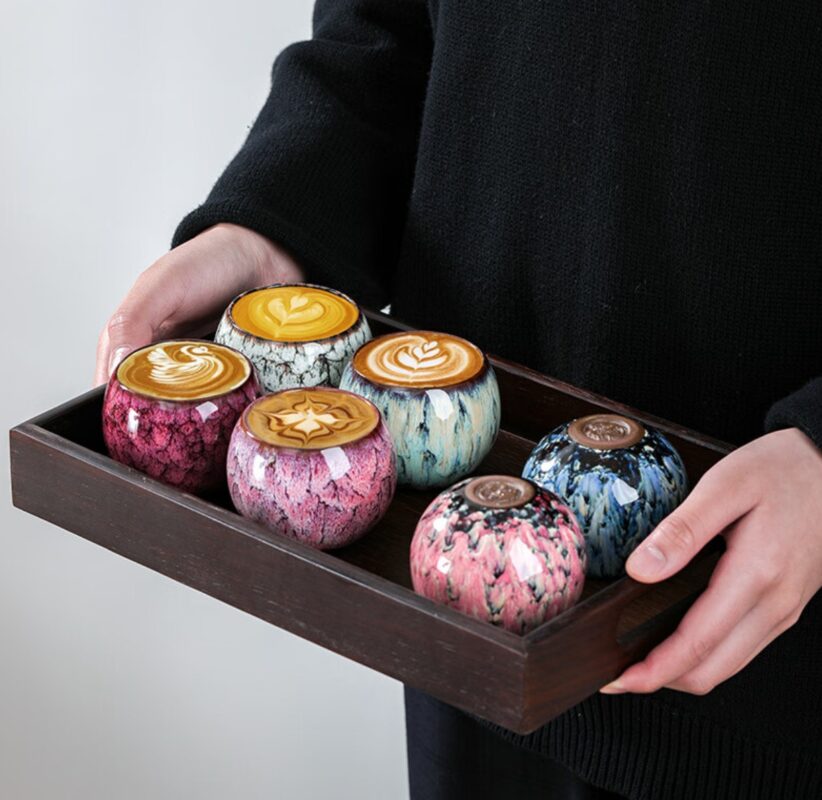
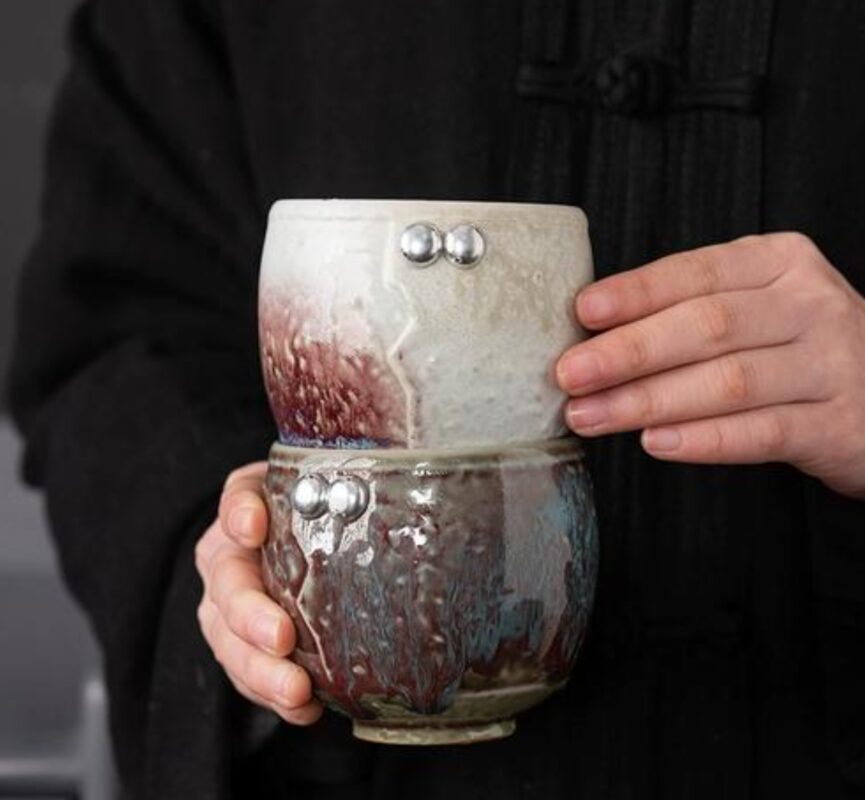
A handmade ceramic tea cup simply feels different in your hand and against your lips. The experience becomes quieter, slower, and more intentional.
And strangely enough, that changes how you perceive the tea itself.

Does ceramic actually affect flavor?
In some cases, yes.
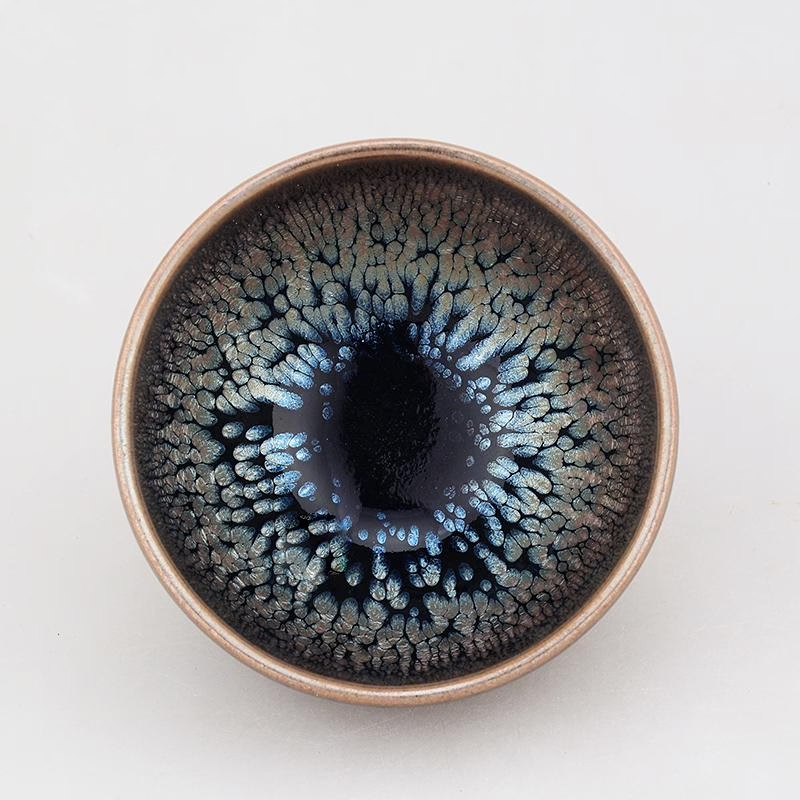
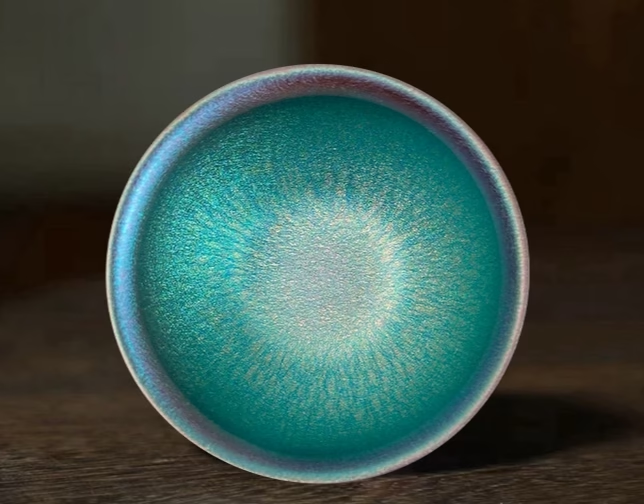
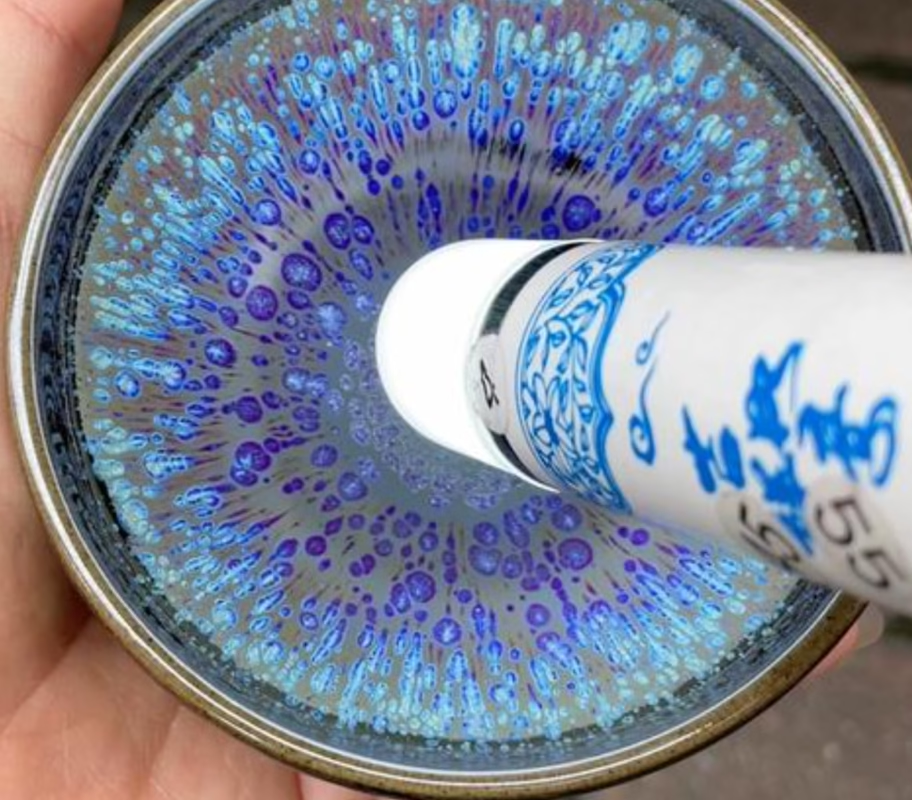
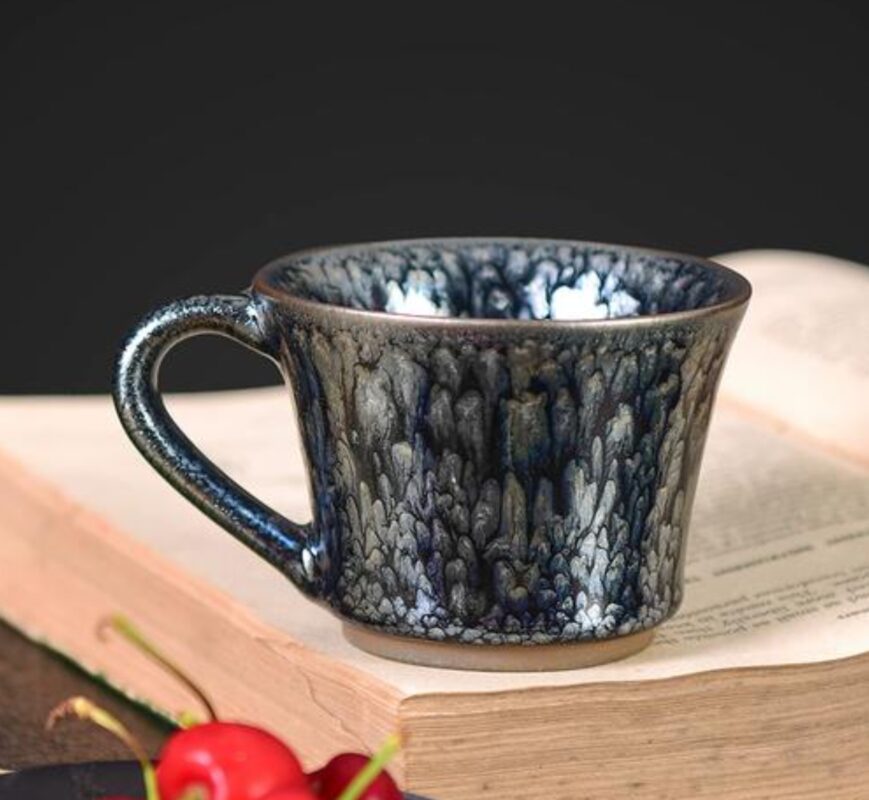
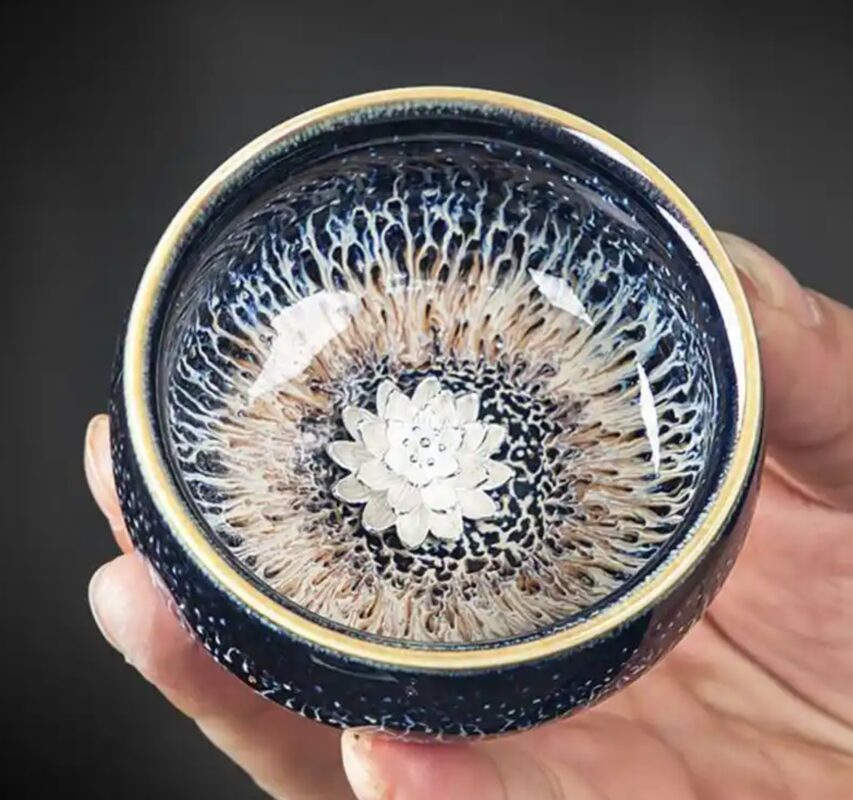
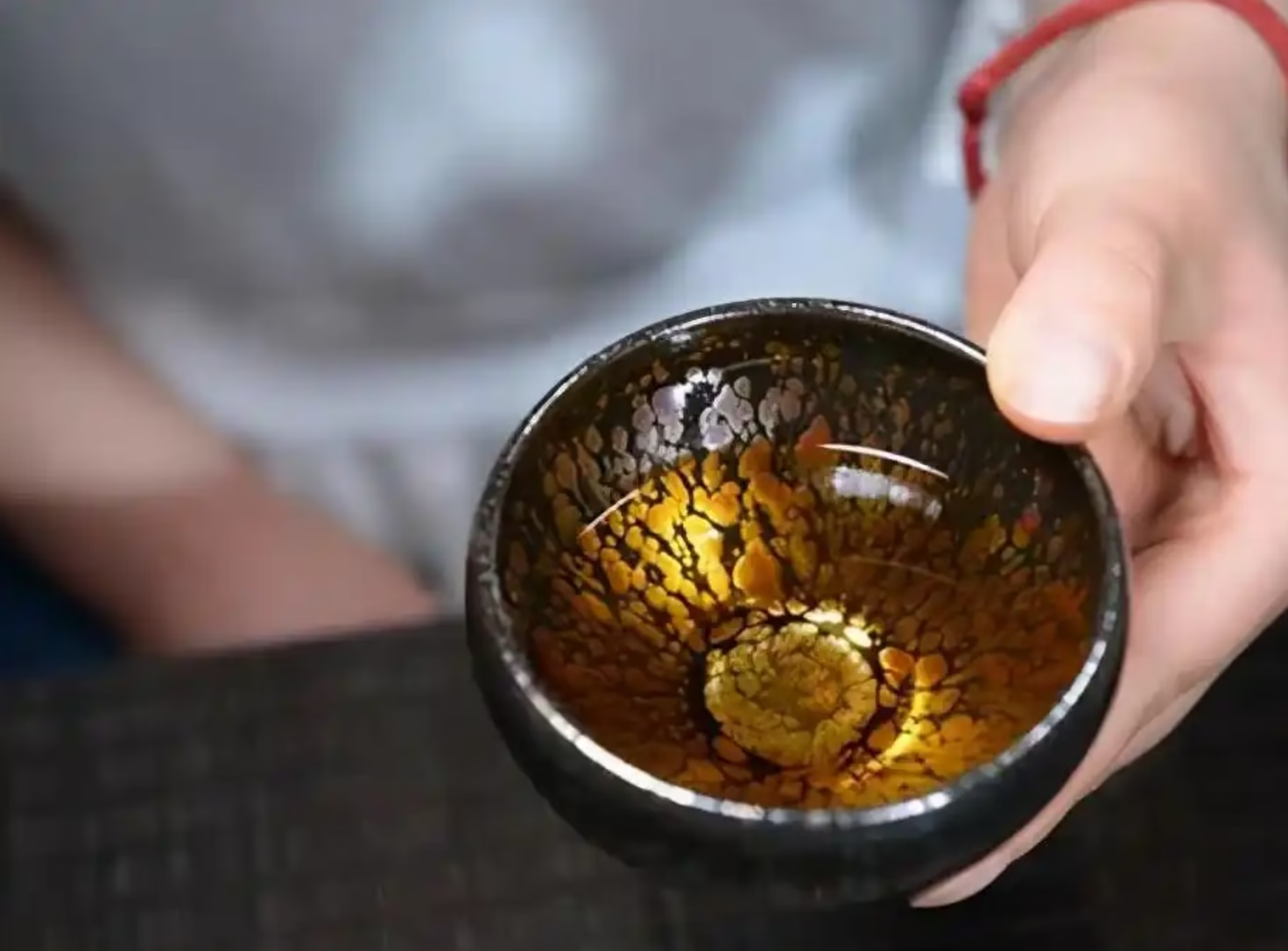
Traditional ceramic tea cups made from mineral-rich clay — especially handmade styles like Jianzhan (Tenmoku) — are often believed to soften the character of tea slightly over time.
Part of that comes from heat retention.
Part of it comes from the clay itself.
Jianzhan cups are made using iron-rich clay and fired at extremely high temperatures, creating a dense ceramic body with natural glaze variation.
Some tea drinkers describe the result as:
- Less bitterness
- Softer mouthfeel
- Fuller tea body
Subtle differences, yes.
But noticeable enough that many experienced tea drinkers continue using them for years.

Why heat retention matters more than people think
One of the biggest reasons tea tastes different in ceramic cups is temperature stability.
Tea changes rapidly as it cools.
Aroma fades.
Texture becomes thinner.
Bitterness can become more noticeable.
Ceramic naturally holds warmth longer than glass, helping tea maintain a more balanced flavor profile while you drink.
And certain traditional ceramics — especially thicker handmade tea cups — do this exceptionally well.
[CURATED PICK] — The Moment You Notice It
For many people, the difference doesn’t happen immediately.
It’s usually after a few days.
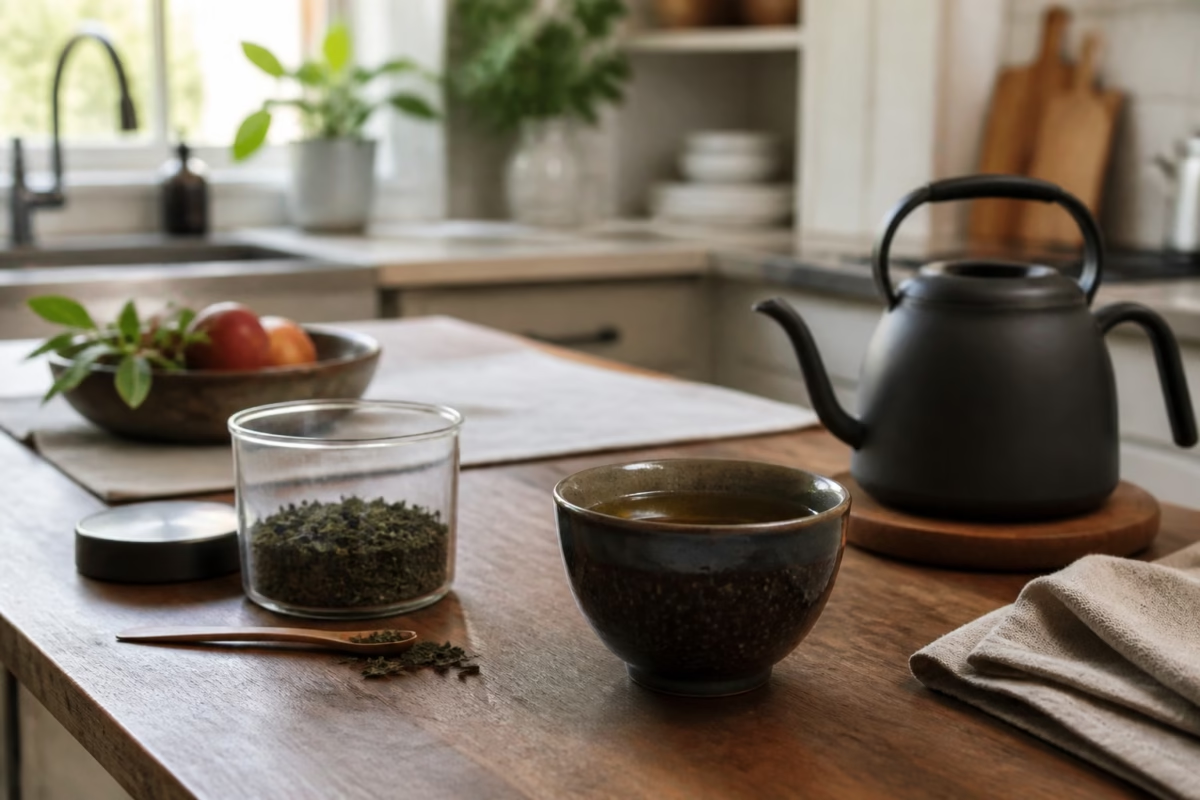
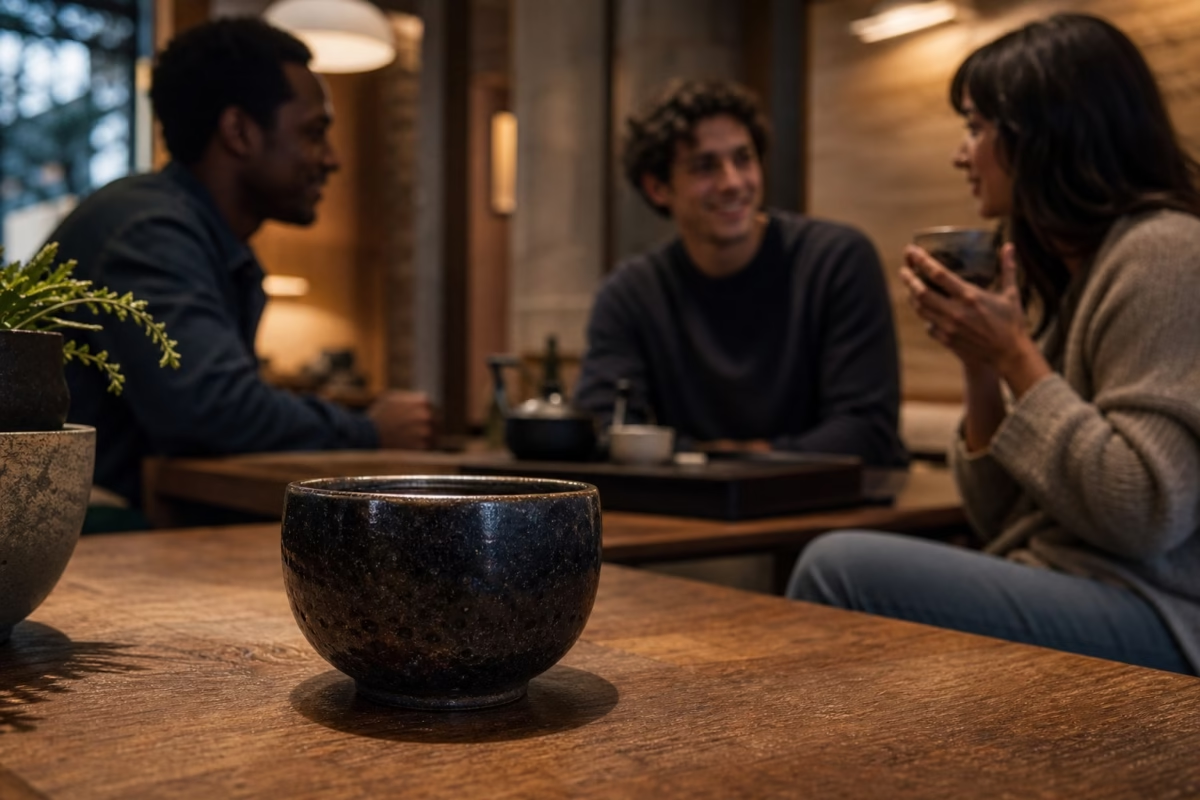
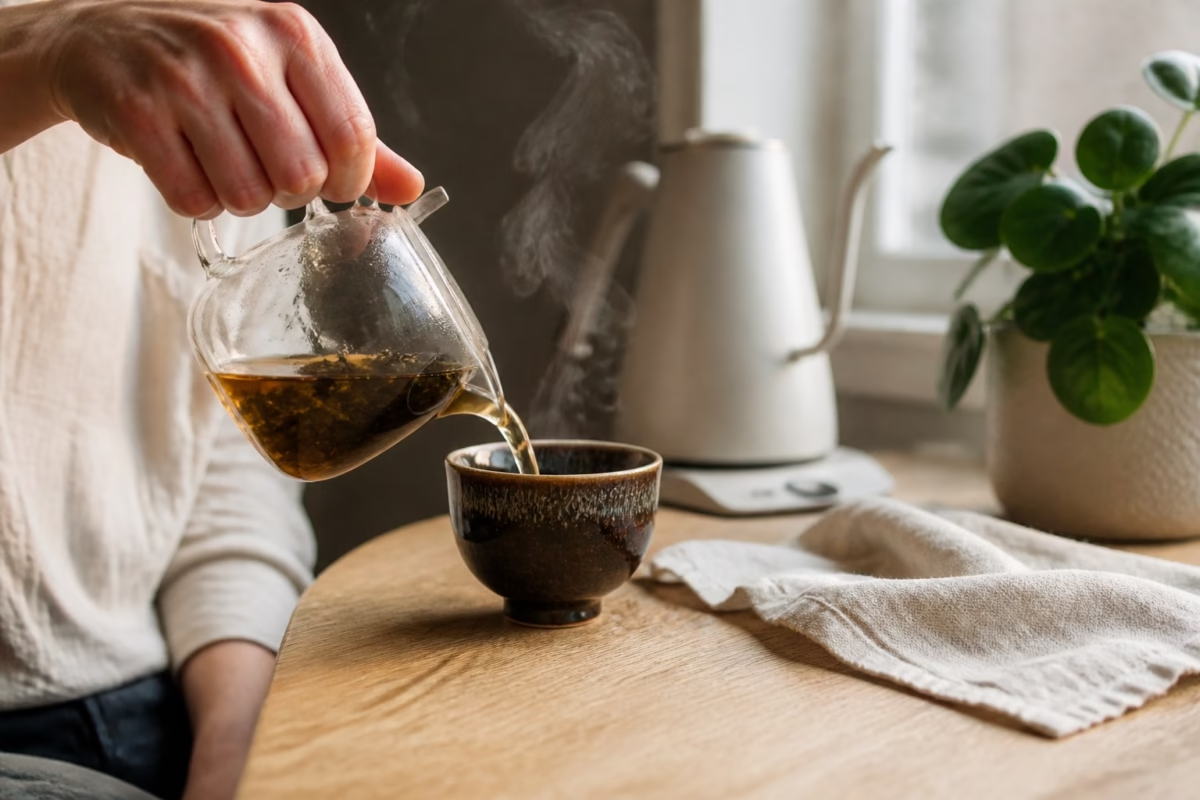
You make tea one morning, pick up a handmade Jianzhan cup, and suddenly realize the experience feels calmer somehow.
The warmth lasts longer.
The glaze catches the light differently.
The tea feels softer and slower.
Not because the tea changed.
But because the ritual did.

Ceramic Cups vs Glass Cups
Glass cups are beautiful for visual clarity.
You can fully see the tea color and movement, which is perfect for lighter teas or modern setups.
But for deeper tea sessions — especially darker teas, roasted teas, or slower tea rituals — ceramic often creates a more immersive feeling overall.
That’s why many long-time tea drinkers gradually shift toward handmade ceramic tea cups over time.
So… does tea really taste better?
Honestly, “better” depends on the person.
But ceramic cups absolutely change the experience.
And once you start paying attention to:
- warmth
- texture
- aroma
- pacing
…it becomes hard not to notice the difference.
Explore Handmade Jianzhan Tea Cups
If you’re curious about how ceramic changes the tea experience, explore our curated collection of handcrafted Jianzhan (Tenmoku) tea cups designed for everyday rituals and quiet luxury.
👉 Shop the Collection